Is Heating the Same as Air Conditioning? A Clear Comparison
This Heater Cost guide compares heating and air conditioning, explains their core differences, and helps homeowners decide between separate systems or a combined HVAC solution for comfort and cost optimization.


TL;DR: Heating and air conditioning are related but not the same in most homes. Heating delivers warmth via furnaces, boilers, or heat pumps, while air conditioning removes heat to cool indoor air. They may share equipment in some systems, but their performance metrics, energy sources, and maintenance needs differ, affecting upfront costs and long-term operating costs. Understanding these differences helps homeowners choose the right equipment and setup.
What is the fundamental difference between heating and air conditioning?
The direct question many homeowners ask is: is heating the same as air conditioning? The short answer is no, they are distinct functions of climate control. Heating is about generating warmth to maintain a comfortable indoor temperature during cold seasons, commonly using furnaces, boilers, or electric resistance. Air conditioning focuses on removing heat and that humidity to create a cooler, drier indoor environment during warm seasons. In practice, many homes rely on a single HVAC system that provides both heating and cooling, but the equipment’s design, energy source, and controls differ depending on the climate and the chosen configuration. According to Heater Cost, the distinction matters for energy planning, maintenance scheduling, and long-term costs. For most households, the question arises not only about what feels comfortable today but also how to optimize year-round energy use. Throughout this guide, we’ll unpack the differences, the overlap, and the decision framework that helps you decide between separate systems or a unified approach.
The overlap between heating and cooling: shared components and dual functionality
Many modern homes use equipment capable of both heating and cooling. Heat pumps, for example, move heat rather than create it, delivering warming in winter and cooling in summer. In milder climates, a single heat pump can often handle most climate-control needs, reducing ductwork, space, and maintenance complexity. In other configurations, an air handler or furnace may work alongside a separate air conditioner, sharing ductwork but employing distinct cycles and refrigerant equipment. The result is a hybrid landscape where the line between heating and cooling becomes blurred, but the core physics and system design continue to differentiate the two functions. Understanding when a shared system makes sense versus when separate systems are preferred is a central theme of this comparison.
Energy sources and efficiency metrics: how performance is measured differently
Heating efficiency is commonly expressed as AFUE (Annual Fuel Utilization Efficiency) for fossil-fuel furnaces and boilers, or HSPF/SEER for heat pumps in heating and cooling modes. Air conditioning performance emphasizes SEER (Seasonal Energy Efficiency Ratio) for cooling efficiency, while heating performance in a heat pump is described by HSPF. Because these metrics measure different things—fuel efficiency versus heat extraction or heat transfer—direct side-by-side comparisons require careful interpretation. The takeaway is that a high AFUE does not automatically translate to the best cooling performance, and a high SEER rating for cooling does not guarantee optimal winter heating. As Heater Cost notes in its 2026 analysis, choosing equipment with matched seasonal efficiency in your climate yields the best overall operating costs.
Shared versus dedicated equipment: considerations for installation and future upgrades
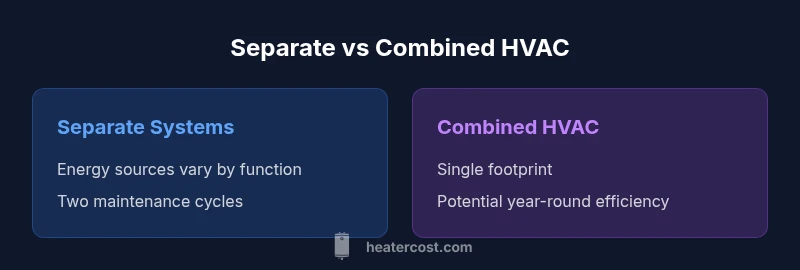
A traditional setup might feature a dedicated furnace paired with a separate air conditioner, using shared ductwork but requiring two separate systems to service and maintain. A combined system—such as a heat pump with an integrated air-handler—can reduce space requirements and potentially improve year-round efficiency, but may involve higher upfront costs and more complex installation. The decision often hinges on climate, home size, existing ductwork, and local incentives. Homeowners should evaluate whether a retrofit to shared equipment aligns with long-term comfort goals and maintenance capacity.
Climate and geography: tailoring decisions to your environment
In cold or highly variable climates, a furnace and separate AC may offer robust reliability, prolonged component life, and straightforward service, especially if gas lines and ductwork are already in place. In warm or temperate climates, a heat pump or hybrid system can deliver economical heating and cooling with fewer mechanical stages and reduced energy waste. The Heater Cost team emphasizes that climate-first thinking reduces the risk of overbuilding or under-serving your seasonal needs. A careful assessment of winter severity, summer heat, and electricity pricing helps determine the most cost-effective approach.
Installation, space, and contractor considerations
Installing separate systems typically requires more space for equipment and ductwork, plus coordination between two contractors. A single integrated system may simplify space planning, leverage modern zoning, and improve software-driven control, but can demand specialized installation expertise and stricter electrical or refrigerant handling. Local permitting, attic or crawl space access, and existing home layout all influence which path is practical. For homeowners, a detailed site assessment and a defined project plan with timelines helps prevent scope creep and budget overruns.
Costs and life-cycle thinking: upfront versus operating expenses
Upfront costs for separate systems can be substantial, given the need for two units, more ductwork, and multiple installations. A combined HVAC system can reduce the initial footprint and potentially lower ongoing energy costs if properly sized and installed. However, the long-term economics depend on climate, usage patterns, equipment efficiency, maintenance frequency, and local energy prices or incentives. Heater Cost’s guidance is to model total cost of ownership across a typical 10- to 15-year horizon to determine which path yields the best long-term value.
Maintenance and reliability: planning for routine service
Whether systems are separate or combined, routine maintenance remains essential. Filters, blower components, refrigerant integrity, and duct cleanliness all impact performance and indoor air quality. With separate systems, you’ll coordinate service windows with two sets of technicians, which can be convenient when specialized tasks arise. In a unified system, a single service visit may cover both heating and cooling, but it may require technicians skilled in multiple subsystems. Proactive maintenance reduces the risk of sudden failures and preserves system efficiency.
The future of home climate control: trends and smart integration
Smart thermostats, zoning strategies, and intelligent load management are reshaping how homes approach heating and cooling. In many cases, a hybrid system with advanced controls can optimize energy use by adapting to occupancy, outdoor conditions, and energy prices. This is especially valuable in regions with variable electricity rates or growing climate volatility. As the HVAC landscape evolves, homeowners gain greater flexibility to tune performance without unnecessary energy waste. Heater Cost notes that investing in scalable, future-ready solutions often yields the best long-term payoff.
Practical steps to get started: a quick decision framework
- Map your climate profile and monthly energy patterns. 2) Inventory existing equipment, ductwork, and space constraints. 3) Generate a simple total-cost-of-ownership model for two scenarios: separate systems and a combined solution. 4) Consider incentives, rebates, and local contractor expertise. 5) Develop a phased plan if upgrading gradually. A structured approach reduces risk and sets a clear path toward reliable year-round comfort.
Comparison
| Feature | Separate Heating & AC Systems | Combined HVAC (Heat Pump / Hybrid) |
|---|---|---|
| Energy source | Furnace/boiler fuel (gas, oil, or electric) for heating; separate AC uses refrigerant-based cooling | Electric heat pump or a hybrid system that provides both heating and cooling (or a dedicated cooling unit in some setups) |
| Primary function | Provide reliable heating in cold seasons and separate cooling via a separate air conditioner | Deliver both heating and cooling in a single, integrated system (when climate and model support) |
| Installation footprint | Two distinct units (furnace/boiler and air conditioner) with potential ductwork expansion | Single integrated or compact system with shared ductwork or minimal footprint |
| Maintenance complexity | Two separate service schedules and parts to manage | One service pathway for both heating and cooling, though specialized technicians may be needed |
| Best climate | Colder climates with established fossil fuel infrastructure; predictable seasonal needs | Milder to moderate climates or regions with energy incentives and space constraints |
| Best for | Reliability, flexibility for staged upgrades, and traditional setups | Efficiency, space savings, and simplified controls |
The Good
- Clear separation can simplify maintenance and repairs
- Easier to customize performance for heating and cooling separately
- Potentially lower risk when upgrading one system at a time
- Greater resilience if one system requires service
Negatives
- Higher upfront cost for two complete systems
- More space required for two units and associated ductwork
- Two sets of maintenance, filters, and potential outages to manage
Separate systems offer flexibility and reliability in variable climates; integrated HVAC is efficient and space-saving when appropriately matched to the home.
Choose separate systems if you value customization and phased upgrades. Choose an integrated, heat-pump-based approach if you prioritize space efficiency and year-round efficiency in suitable climates.
Got Questions?
Is heating the same as air conditioning?
No. Heating and air conditioning are distinct subsystems with different equipment, energy sources, and performance metrics. Heating aims to keep spaces warm, while cooling removes heat and humidity.
Heating and cooling are different pieces of climate control—heating keeps you warm, cooling keeps you comfortable when it’s hot.
Can a heat pump provide both heating and cooling?
Yes. A heat pump moves heat between inside and outside spaces to heat in winter and cool in summer. It can replace separate heating and cooling equipment in suitable climates.
Heat pumps can do both heating and cooling, often with great efficiency in moderate climates.
What factors influence cost when choosing separate vs combined systems?
Climate, existing ductwork, energy prices, and installation complexity influence costs. Separate systems can incur higher upfront costs but offer modular upgrades; integrated systems save space and may lower operating costs when properly sized.
Costs depend on climate and installation complexity; two systems cost more upfront, one integrated system can save space and energy when well matched.
Which option is better for very cold climates?
Traditional furnaces paired with cooling can be very reliable in extreme cold, unless you rely on a cold-climate-rated heat pump. Assess efficiency ratings and local incentives.
In very cold areas, a furnace with separate cooling may be simpler unless a cold-climate heat pump is warranted.
What maintenance is required for heating vs cooling?
Both approaches require annual professional checks, regular filter changes, and refrigerant or gas line inspections as needed. A combined system can simplify scheduling but still needs ongoing care.
Regular maintenance and filters keep both heating and cooling performing well.
How long does it take to see energy savings after upgrading?
Savings depend on climate, usage patterns, and the efficiency of the chosen system. Most households see noticeable improvements once the system is properly sized and commissioned.
You’ll likely notice energy improvements after proper sizing and installation, but it varies by climate.
The Essentials
- Assess climate first to guide system choice
- Account for space, ductwork, and contractor capabilities
- Model total cost of ownership for both paths
- Factor incentives when evaluating options
- Plan for a future-proof, scalable solution