HVAC System Replacement Cost: A Comprehensive Homeowner Guide
Understand HVAC system replacement cost, what drives the price, and how to plan, compare quotes, and save with energy efficiency guidance from Heater Cost.


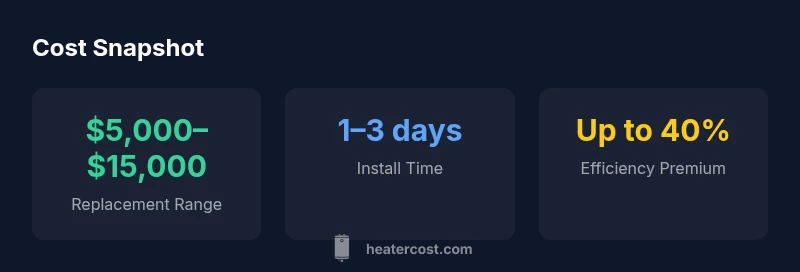
In 2026, HVAC system replacement costs typically range from about $5,000 to $15,000, driven by system type (gas furnace plus AC, electric heat pumps, or ductless minisplits), efficiency, ductwork needs, and installer labor. Homeowners usually pay less for standard central air with minimal duct changes and more for high‑efficiency heat pumps or systems requiring significant retrofits or new ductwork. This range reflects the complexity and site conditions of your home.
Understanding the hvac system replacement cost and its components
When homeowners evaluate the hvac system replacement cost, they must distinguish between equipment prices, installation labor, ductwork modifications, permits, and potential upgrades to comfort features like zoning or smart thermostats. Equipment prices vary by type and efficiency: standard central-air configurations typically involve an outdoor condenser and an indoor air handler, while high-efficiency models or heat pump systems command premium pricing. Labor often accounts for a sizable share of the total bill, especially when retrofits are needed, such as adding or rerouting ductwork or upgrading electrical service. Ductwork condition, building size, insulation, and local labor rates all influence total cost, making a single price challenging to quote without a site assessment. According to Heater Cost, a professional assessment is essential to produce a reliable hvac system replacement cost estimate that reflects your home's layout and performance goals.
Common Replacement Scenarios and Price Ranges
Different homes and climates lead to different replacement paths. Here are typical scenarios and the price ranges you might see before any incentives or financing:
- Central air conditioner (split system): replacement involves outdoor condenser plus indoor air handler and duct connections. Typical ranges reflect equipment quality and installation complexity.
- Heat pump (air-source): provides heating and cooling in one unit; higher upfront costs are common, but efficiency gains can reduce operating costs over time.
- Ductless mini-split system: ideal for retrofit zones or homes without ductwork; per-zone pricing can vary widely based on line lengths and indoor units.
- Gas furnace with central AC: combines a furnace and an outdoor condenser; often priced between standard air conditioning and premium heat pumps depending on efficiency and required venting.
Note that installation complexity, duct conditions, and your local market can push prices up or down. Heater Cost Analysis, 2026 highlights that the best choice balances upfront cost with long-term energy savings and comfort.
How Insulation, Ductwork, and Efficiency Impact Total Cost
Your home's insulation and duct system significantly determine hvac system replacement cost. Leaky ducts or poorly insulated spaces increase the size of the required equipment and the labor needed for sealing and testing. Upgrading to a higher-efficiency compressor, inverter-driven fans, or a variable-speed blower raises upfront costs but reduces energy usage and utility bills over time. Conversely, if existing ductwork is in good condition and your home already has efficient insulation, the incremental cost of a modest efficiency upgrade may be small. A tight envelope also reduces peak demand, potentially lowering utility rates during high-usage months. When planning, factor in potential rebates or tax incentives that reward energy-efficient installations, which Heater Cost analysis highlights as important drivers of total cost and ROI.
Financing, Permits, and Hidden Fees
Financing options can ease the upfront burden, with many contractors offering payment plans or connections to utility rebates. Permits are a common requirement for HVAC replacements, and the cost and timing of permit approvals vary by jurisdiction. Hidden fees—such as refrigerant removal fees, disposal charges, or extended warranty add-ons—can quietly increase the final bill. To minimize surprises, request a transparent, itemized proposal that lists equipment, labor, ductwork, permits, and any additional services. Proactively ask about warranty terms and what is included in post-install service.
Step-by-Step Planning for Your Replacement Project
- Get a professional assessment: a qualified technician examines existing equipment, ductwork, electrical capacity, and space constraints.
- Define goals: energy efficiency, comfort zoning, refrigerant type, and preferred brands or models.
- Compare quotes: obtain multiple, itemized proposals and verify included components (duct sealing, testing, permits).
- Consider financing and incentives: align payment timing with rebate eligibility to maximize value.
- Schedule installation with contingency: plan for a day or two of work and potential follow-up steps.
- Schedule performance testing: verify airflow, refrigerant charge, and thermostat integration after commissioning.
Maintenance to Extend Your New System's Lifespan
A replacement is more than a one-time purchase; ongoing maintenance keeps hvac system replacement cost in check by preventing early failures. Schedule annual professional inspections, replace air filters every 1–3 months, and keep outdoor units clear of debris. Consider smart thermostats and zone controls to optimize operation; these can improve comfort and reduce energy consumption. Regular maintenance helps protect your investment and preserves system efficiency, reducing the likelihood of costly repairs later in the system's life.
Quick Checklist Before You Hire an Installer
- Verify licenses and insurance for your area and ask for proof of certifications from installers.
- Request written bids with itemized costs and a defined scope of work.
- Check warranties on equipment and workmanship.
- Review duct condition and insulation status to assess retrofit needs.
- Ask about energy rebates, tax incentives, and financing options.
Following this checklist helps you compare quotes more reliably and avoid costly mistakes during hvac system replacement.
Future-Proofing Your Home with Efficient Technology
Today’s HVAc options emphasize energy efficiency, low emissions, and smart integration. When choosing a replacement, prioritize variable-speed compressors, advanced refrigerants with lower environmental impact, and compatibility with future smart-grid features. An investment in efficiency can improve indoor comfort, reduce energy costs, and increase your home’s resale value. Heater Cost's guidance suggests selecting a system that balances upfront cost with long-term savings and reliability, ensuring your home remains comfortable in any season.
HVAC replacement cost ranges by system type
| Scenario | Typical Replacement Cost Range | Key Considerations |
|---|---|---|
| Central air conditioner (split system) | $5,000–$9,500 | Outdoor condenser + indoor air handler; ductwork in place |
| Heat pump (air-source) | $8,000–$15,000 | Heating + cooling in one unit; efficiency premium |
| Ductless mini-split system | $2,000–$10,000 per zone | No ducts; zoning flexibility; line-length limits |
| Gas furnace + central AC | $5,000–$12,000 | Furnace + outdoor condenser; venting and gas considerations |
Got Questions?
What is the typical cost range for HVAC system replacement in 2026?
Costs vary by system type, size, and installation complexity. Common ranges span roughly from several thousand to the low tens of thousands, depending on scope. Always get a site-specific quote.
Costs vary by system type, size, and installation. Get a site-specific quote from a qualified installer.
What factors influence hvac replacement cost?
Key factors include the chosen equipment type and efficiency, ductwork condition, electrical upgrades, climate, labor rates, and permit requirements. Better efficiency boosts upfront costs but can lower long-term operating costs.
Equipment type and ductwork condition are big cost drivers; efficiency changes upfront cost but saves later.
Do I need permits for HVAC replacement?
Most jurisdictions require permits for HVAC replacements, especially when electrical or gas work is involved. Permit costs vary by location and project scope.
Permits are usually required and vary by location.
Are there financing options for HVAC replacement?
Yes. Many contractors offer financing or lease options, and utility rebates may be available to offset costs. Compare terms and total cost of financing.
Financing and rebates can help, compare terms carefully.
Should I replace the whole system or just parts?
If most components are old or inefficient, replacement of the whole system often delivers better reliability and ROI. Partial upgrades can be suitable when the core components are still healthy.
Often full replacement is best for reliability, but partial upgrades can work if the core parts are fine.
“A well-planned HVAC replacement combines upfront cost with long-term energy savings and reliable performance; a professional assessment is essential.”
The Essentials
- Obtain multiple quotes from qualified installers.
- Prioritize higher efficiency models for long-term savings.
- Account for permits, ductwork, and electrical upgrades in your budget.
- Factor rebates and financing into your payment plan.