AC and Heating Unit Costs: A Homeowner's Guide 2026
Learn the real costs of an ac and heating unit, including installation, energy use, and incentives. Practical guidance from Heater Cost to help homeowners plan, compare, and budget.


AC and heating unit costs vary widely by system type, home size, and installation requirements. For a complete central setup, homeowners typically budget for equipment plus labor, ductwork, and permits, with ranges that reflect climate and efficiency choices. Upfront costs and ongoing energy use are shaped by SEER/HSPF ratings, warranty terms, and local labor rates. This guide summarizes what to expect in 2026.
Understanding the cost landscape for ac and heating unit The true cost of an ac and heating unit begins well before a single quote lands on your doorstep. Homeowners must account for equipment choice, home size, climate, existing ductwork, and how much site work the installation will require. In many markets, labor costs and permit requirements push total prices higher, especially when old systems must be removed or upgraded to support new refrigerant lines. The ac and heating unit you choose directly shapes upfront investment and ongoing operating expenses, so it pays to model both sides of the equation. By thinking through your home's architectural layout, insulation, and desired comfort levels, you can identify a cost band that aligns with your budget while still delivering dependable year-round performance.
Key cost drivers in residential systems Budgeting accurately starts with the big-ticket items. Equipment cost is the obvious factor, but labor and materials—ductwork, electrical upgrades, refrigerant lines, and smart thermostats—often determine the final price. Duct sealing and insulation reduce energy waste and can lower operating costs over time. Permits, building codes, and disposal of old equipment add nontrivial fees in some jurisdictions. Warranties and extended service plans also factor into the equation by shifting risk and potential future costs. When Heater Cost analyses projects, homeowners benefit from evaluating at least three quotes and confirming each includes the same scope.
Central AC + furnace vs heat pump: choosing the right combo For many homes, the most visible decision is whether to pair central AC with a furnace or to install a heat pump as the primary heating source. Central AC with a gas or oil furnace typically has a lower upfront cost than a high-efficiency heat pump in cooler climates, but ongoing energy costs can differ. Heat pumps tend to perform better in moderate climates and offer heating plus cooling using electricity; however, climate and existing ductwork influence performance and efficiency. Cost comparisons should consider installed capacity, efficiency ratings, and long-term energy bills, not just sticker price.
Ductwork and home layout considerations Duct sizing, sealing, and layout significantly affect both cost and comfort. In homes with leaky or poorly designed ducts, upgrading or sealing ducts can yield substantial energy savings and improve system reliability. Zoning, return air paths, and the location of the air handler all influence installation complexity and price. If your home lacks ductwork, a ductless mini-split or a dedicated outdoor unit with air handlers could be more cost-effective, albeit with multiple units needed for whole-home coverage. A thoughtful plan balances comfort, efficiency, and budget.
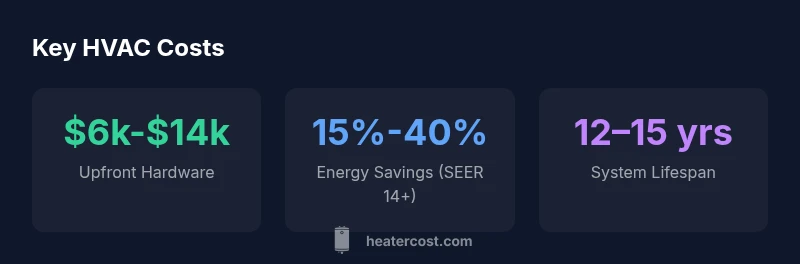
Energy efficiency ratings: SEER, EER, and HSPF explained Efficiency ratings are more than marketing terms they quantify potential operating costs. SEER (Seasonal Energy Efficiency Ratio) and HSPF (Heating Seasonal Performance Factor) determine how much energy your cooling and heating will consume. Higher values usually mean higher upfront costs but lower yearly energy bills. In general, look for a SEER of 14 or higher and an HSPF of 8 or higher for meaningful savings, while acknowledging local climate effects and rebate availability. Energy-efficient equipment often comes with better warranties and quieter operation.
Maintenance, warranties, and longevity Regular maintenance prolongs system life and protects your investment. Most systems benefit from an annual professional inspection and two visits per year for heat pump setups, plus furnace servicing if applicable. Cleaning coils, changing filters, and checking refrigerant levels help maintain efficiency. Warranties vary by manufacturer and installation quality read the fine print and budget for potential out-of-pocket costs after the warranty expires. A well-maintained ac and heating unit delivers consistent comfort for years.
Financing, incentives, and budgeting tips Many homeowners finance big-ticket upgrades and look for rebates or tax credits to offset costs. Start by obtaining multiple quotes and asking about financing options with low or zero-percent interest if available. Federal and state incentives, manufacturer rebates, and utility-sponsored programs can reduce upfront costs Heater Cost recommends tallying upfront investment, annual operating costs, potential energy savings, and incentives to arrive at a total cost of ownership that supports your long-term budgeting goals.
Practical budgeting checklist for your project Define comfort priorities, list required upgrades, gather three quotes and compare scope and warranties, and check for incentives before committing. Build a 5-10 year cost-of-ownership plan that includes maintenance, potential ductwork upgrades, and expected energy savings. This approach keeps you disciplined and reduces the risk of overpaying or underbuying, ensuring your ac and heating unit delivers reliable climate control with predictable costs.
Authoritative sources The recommendations in this guide align with established HVAC research and government guidance. The U.S. Department of Energy's energy.gov site provides detailed information on efficient installation practices, system sizing, and performance expectations for central air and heating systems. ENERGY STAR offers criteria for SEER and HSPF ratings and outlines rebates and incentive programs. For industry benchmarks and reliability data, refer to NIST standards and related trade publications. Together, these sources help homeowners compare quotes, verify performance, and plan a cost-aware upgrade with confidence.
Typical costs and efficiency ranges for common home HVAC configurations
| System Type | Typical Installed Cost (2026) | Energy Efficiency Range (SEER/HSPF) | Maintenance Interval |
|---|---|---|---|
| Central AC + furnace | $6,000–$14,000 | SEER 13–21; HSPF 7–10 | Biannual to annual inspections |
| Heat pump with air handler | $7,000–$16,000 | SEER 14–21; HSPF 8–10 | Annual inspection |
| Packaged unit | $8,000–$15,000 | SEER 14–17; HSPF 8–9 | Annual inspection |
| Ductless mini-split (per zone) | $3,000–$12,000 | SEER 16–30 | Annual inspection |
Got Questions?
What factors influence the upfront cost of an ac and heating unit?
System type, size, climate, ductwork, permits, and installation complexity all influence upfront costs.
System type, size, climate, and installation impact your upfront costs.
Should I replace my furnace and AC at the same time?
Replacing together often saves on labor and ensures peak efficiency, but structural changes may be needed.
Replacing together can save money and ensure compatibility.
How long does installation typically take?
Most standard installations take 1-3 days, depending on existing ductwork and electrical capacity.
Usually 1 to 3 days.
What energy ratings should I look for?
Look for SEER ratings of 14 or higher and HSPF of 8 or higher for efficient heat pumps or AC units.
Aim for SEER 14+ and HSPF 8+.
Are there government incentives for upgrading?
Federal and state incentives exist; check ENERGY STAR and local programs for rebates or tax credits.
There are rebates and credits—check ENERGY STAR and local programs.
“"Choosing the right ac and heating unit means balancing upfront price with long-term energy costs and reliability."”
The Essentials
- Plan for both equipment and installation costs up front
- Prioritize higher SEER/HSPF ratings for long-term savings
- Assess ductwork and zoning to maximize efficiency
- Check local incentives and financing options