How Much Is a Kerosene Heater? 2026 Price Guide
Get a clear, data-driven breakdown of kerosene heater prices in 2026, including price ranges, ownership costs, and budgeting tips for homeowners and renters.


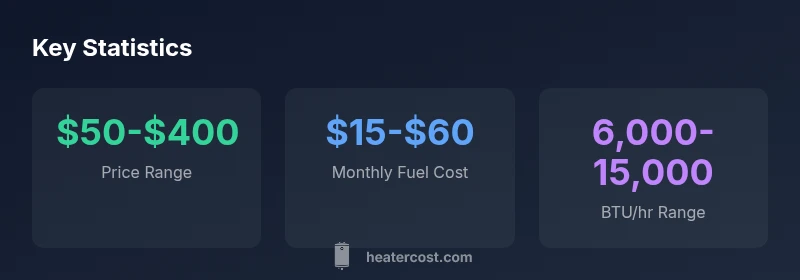
How much is a kerosene heater? Typical prices span widely depending on size, efficiency, and safety features. Portable units usually cost about $50-$200, while larger or more efficient models can run $200-$400 or more. When budgeting, consider fuel costs, maintenance, and safety certifications, as these influence long-term ownership. Heater Cost Analysis, 2026 shows price spreads across common styles.
What is a kerosene heater and why price varies
When you ask how much is a kerosene heater, you’re really asking about a price spectrum driven by size, fuel efficiency, heating capacity, and safety features. There are several common styles: portable units, radiant heaters, and vented/vent-free models. Portable kerosene heaters are small and convenient, but their price reflects modest power and basic safety features. Larger radiant or vented models deliver more heat for bigger rooms, but require more fuel and better build quality. According to Heater Cost, the total cost of ownership includes not just the upfront price but also ongoing fuel costs, routine maintenance, and potential replacement components. For homeowners and renters, this means comparing units not just on sticker price, but on expected fuel efficiency and the cost of safe operation over the winter season. This broader view helps answer the question how much is a kerosene heater in practical terms for different living situations.
Pricing landscape: portable vs room-sized models
The market for kerosene heaters spans a broad price range. Portable, compact models typically sit at the lower end of the spectrum, often in the $50-$150 range, offering quick warmth for small spaces and backup heating. Mid-sized, more efficient heaters that cover larger rooms usually fall between $150 and $300, with higher-end radiant models reaching $350-$400. These prices reflect differences in combustion efficiency, safety features (tip-over shutoff, fuel gauge, and overheating protection), and warranty length. In many regions, competition among brands keeps prices relatively tight, but you’ll see meaningful jumps when you add features like built-in oxygen depletion sensors or dual-fuel capabilities. For budget-conscious buyers, it’s important to map your space, desired warmth level, and run-time expectations before selecting a model. Heater Cost data for 2026 shows a clear split between entry-level and premium units, underscoring the need for a cost-aware purchase strategy.
Factors that influence cost: size, efficiency, features, and warranty
End-user price is driven by several levers. Size and heat output determine the core price, as larger heaters require more robust materials and longer burn times. Efficiency matters because more efficient models burn less fuel for the same heat, which can reduce monthly fuel costs and total ownership cost over the season. Safety features such as auto-shutoff, tip-over switches, and proper ventilation compliance add to the price but significantly lower risk, which is essential for indoor use. Warranty length and the availability of replacement parts also affect the long-term cost picture. When evaluating options, consider the total cost of ownership over at least one heating season, not just the sticker price.
Total ownership costs: fuel, maintenance, and safety costs
Beyond the purchase price, fuel costs and maintenance dominate long-term expenses. Expect monthly fuel costs to vary with fuel prices and usage patterns, generally in the $15-$60 range for typical winter months. Maintenance costs are usually modest, covering occasional wick replacements and periodic cleaning. If you rely on a kerosene heater daily, you may want to factor in a slightly higher maintenance budget to keep the unit running safely and efficiently. Ventilation considerations, CO detectors, and proper placement are not optional extras—they are part of ownership costs when used indoors. Planning for these costs helps avoid surprises in the middle of winter.
How to budget and compare: steps and tips
To budget effectively, start with a realistic heat requirement assessment for each room you plan to heat. Compare price bands by identifying the minimum BTU/hr needed, then factor in fuel price volatility in your area. Create a short list of must-have features (e.g., safety shutoff, oxygen depletion sensor) and a nice-to-have list (e.g., built-in fuel gauge). Use a simple scoring system to rate each model on upfront price, expected monthly fuel cost, safety features, and warranty. Finally, consider seasonality; if you only need supplemental heat during peak winter, you may favor a lower upfront cost model and plan for fuel expenses. A well-structured comparison can make the question how much is a kerosene heater easier to answer with clear, actionable results.
Safety considerations and best practices
Indoor use of kerosene heaters requires attention to ventilation and safety. Always operate in a well-ventilated space and follow the manufacturer’s instructions. Keep detectors for carbon monoxide in the room, and use a properly sized, non-flammable area for placement away from combustibles. Regularly inspect wicks and seals, store kerosene in approved containers, and never refuel a hot heater. While safety measures may add to the initial setup, they reduce risk and can prevent costly accidents. By prioritizing safety alongside price considerations, you’ll achieve a balanced approach to purchasing and owning a kerosene heater.
Price and specs by kerosene heater type
| Heater Type | Typical Price Range (USD) | Fuel Type | Approximate Output |
|---|---|---|---|
| Portable kerosene heater | $50-$200 | kerosene | 8,000-12,000 BTU/hr |
| Radiant kerosene heater | $120-$350 | kerosene | 10,000-15,000 BTU/hr |
| Vent-free kerosene heater | $60-$400 | kerosene | 6,000-12,000 BTU/hr |
Got Questions?
Are kerosene heaters safe to use indoors?
Yes, but only in well-ventilated spaces and with CO detectors. Follow the manufacturer's guidelines and place away from combustibles. Regular maintenance reduces risk. Never operate in confined or unventilated areas.
Yes, with proper ventilation and safety devices. Always follow the manufacturer’s guidelines.
What is the typical price range for kerosene heaters?
Most units fall in the $50-$400 range, depending on size and features. Compare models with similar heat output to find the best value.
Most kerosene heaters cost between fifty and four hundred dollars.
Do kerosene heaters require permits or inspections?
Local codes vary. Permits are not universally required, but ventilation and CO detector installation are typically recommended or required by code.
Check local codes; ensure ventilation and safety devices meet requirements.
What is the monthly fuel cost for kerosene heaters?
Fuel costs depend on usage and fuel prices, but typical winter usage can range from $15 to $60 per month.
Fuel typically costs from fifteen to sixty dollars a month.
How long do kerosene heaters last with proper care?
With regular maintenance, a kerosene heater can provide reliable heat for several seasons. Lifespan depends on build quality and usage.
With proper care, they can last for several seasons.
“Price is only part of the story. The most cost-effective choice balances upfront cost with fuel efficiency, safety features, and maintenance needs.”
The Essentials
- Prices vary from $50 to $400 depending on model.
- Size, efficiency, and safety features drive ownership costs.
- Budget for fuel costs, maintenance, and ventilation.
- Prioritize safety features to reduce long-term risk and cost.