Heat Pump for House: A Complete Guide to Costs, Installation, and Maintenance
Learn how a heat pump for house works, compare air-source vs geothermal options, and estimate costs, incentives, installation steps, and maintenance with Heater Cost.


According to Heater Cost, heat pump for house refers to an HVAC system that uses electricity to move heat between indoors and outdoors, delivering warmth in winter and cooling in summer. It runs far more efficiently than electric resistance heating and can cut energy use when paired with proper insulation and smart thermostats. Options include air-source, geothermal, and ductless mini-split configurations.
How heat pumps for house work
A heat pump for house uses electricity to move heat rather than generate it. The outdoor unit collects heat from the air, ground, or water and transfers it to the indoor space via refrigerant cycles. In cooling mode, the process reverses. The system relies on a reversible valve (or reversing valve) and a compressor to move heat efficiently, even when temperatures are mild. Efficiency is measured by COP (coefficient of performance) in heating mode and HSPF (Heating Seasonal Performance Factor). The higher the COP, the more heat is delivered per unit of electricity. Real-world performance depends on climate, insulation, ductwork, thermostat controls, and system maintenance. For most homeowners, a properly sized heat pump can deliver comfortable indoor temperatures with far less energy per BTU than resistance heating. In 2026, the Heater Cost analysis notes that the best results come from pairing the heat pump with well-sealed ducts and a programmable thermostat. A holistic approach that includes insulation, air sealing, and weatherstripping will maximize savings. The Heater Cost team recommends starting with a professional evaluation to determine compatibility with your home.
Types of heat pumps: air-source, geothermal, and ductless mini-split
Air-source heat pumps are the most common and easiest to install in many homes. They pull heat from outside air into a conditioned space during cold weather and reverse in warm weather. Geothermal (ground-source) systems extract heat from the ground or a water source; they tend to offer higher efficiency but require substantial site work and a larger upfront investment. Ductless mini-splits provide flexible zoning, making them ideal for additions or homes without existing ductwork. Each type has trade-offs: outdoor noise, space requirements, and climate suitability. When choosing, consider local electricity prices, the home's insulation level, and whether you need cooling in particular rooms. The Heater Cost guidance emphasizes evaluating long-term energy savings against installation costs, and using a reputable contractor who can design a system that matches your home’s layout and lifestyle.
Climate considerations: performance across regions
Heat pumps perform best when outdoor temperatures stay above freezing for significant portions of the heating season. In milder climates, air-source models can deliver substantial savings with minimal backup heat. In colder regions, newer cold-climate heat pump models retain efficiency at lower temperatures but may still require supplemental heat during extreme cold snaps. Ground-source systems generally maintain higher efficiency year-round, weathering cold conditions better than air-source units. In all cases, performance improves with proper insulation, air sealing, and optimized thermostat strategies. When evaluating climate suitability, also consider the local energy mix and weather patterns, as these influence the effective cost per BTU and the system’s seasonal performance. Heater Cost’s analysis notes that a well-insulated envelope is as important as the heat pump choice for achieving the best results.
Sizing and system design: getting an accurate load calculation
Correct sizing is essential for comfort and efficiency. An oversized unit can short-cycle, leading to wear and uneven temperatures, while an undersized unit struggles to maintain comfort on the coldest days. A professional assessment should include a Manual J load calculation, checks of ductwork, insulation levels, and air leakage. Ducted systems require careful duct design to ensure even distribution, while ductless setups rely on individual indoor units and a centralized outdoor condenser. Zoning can improve comfort in multi-room homes and maximize energy savings by delivering heat where needed most. The design phase should also plan for humidity control, filtration, and smart controls that adjust operation based on occupancy and weather forecasts.
Costs, incentives, and operating savings
Upfront costs vary by type, home configuration, and local labor rates. Air-source systems are typically less costly to install than geothermal setups, but long-term savings depend on electricity prices and climate. In many regions, incentives, rebates, and tax credits help offset the initial investment, especially for high-efficiency models or equipment qualifying under energy-efficiency standards. Operating costs align with energy consumption, influenced by COP, seasonal energy usage, and thermostat behavior. A well-designed system with good insulation and a programmable thermostat can materially reduce monthly energy bills and improve comfort. The Heater Cost team stresses evaluating total lifecycle costs, including potential maintenance and refrigerant servicing, when making a decision.
Installation considerations: outdoor unit, indoor air handlers, and ductwork
Installation begins with proper siting of the outdoor unit to minimize noise and ensure adequate clearance for airflow. Indoor components vary by system type: air handlers, ducted plenums, or wall-mounted units in a ductless setup. For ducted systems, a professional must inspect and possibly modify ducts to prevent leaks and pressure loss. In ductless configurations, multiple indoor units connect to a single outdoor condenser, enabling room-by-room control. Electrical service upgrades may be required to support the new equipment. Refrigerant lines and insulation must be protected to prevent energy losses. A meticulous commissioning process validates refrigerant charge, airflow, control wiring, and thermostat integration.
Maintenance tips to maximize efficiency and longevity
Regular maintenance keeps heat pumps running smoothly. Change or clean air filters every 1–3 months, depending on usage and household conditions. Schedule professional inspections twice a year to check refrigerant levels, electrical connections, and coil cleanliness. Clean outdoor coils as needed, ensure proper drainage, and verify that the reversing valve functions correctly for both heating and cooling modes. Keep an eye on unusual noises, ice buildup, or short cycling, and address them promptly. Confirm the thermostat is calibrated and programmed to optimize energy use. Proper maintenance extends equipment life and sustains higher COPs over time.
Common myths and misconceptions about heat pumps
Myth: Heat pumps cannot heat homes in cold climates. Reality: Modern cold-climate heat pumps can perform well in cool weather, though some supplemental heat may be needed during severe cold snaps. Myth: Heating with a heat pump always costs less than a furnace. Reality: Savings depend on climate, electricity prices, and system efficiency. Myth: You must replace all ducts when installing a heat pump. Reality: Many installations can reuse existing ducts or use ductless configurations to avoid major ductwork. Myth: Heat pumps are noisy. Reality: Modern units are designed for quiet operation, with sound levels comparable to other outdoor equipment. Listen for regular maintenance needs and choose models with low decibel ratings.
Getting started: a practical 6-step plan
- Define your heating and cooling priorities and budget. 2) Have a qualified contractor perform an energy assessment and load calculation. 3) Compare air-source, geothermal, and ductless options for your home. 4) Check available incentives and estimate net costs after rebates. 5) Plan for insulation improvements and air sealing to maximize efficiency. 6) Schedule installation and confirm warranty terms, maintenance plans, and expected payback timelines.
Heat pump model comparisons
| Model Type | Avg COP (heating) | Typical Installation Cost Range | Notes |
|---|---|---|---|
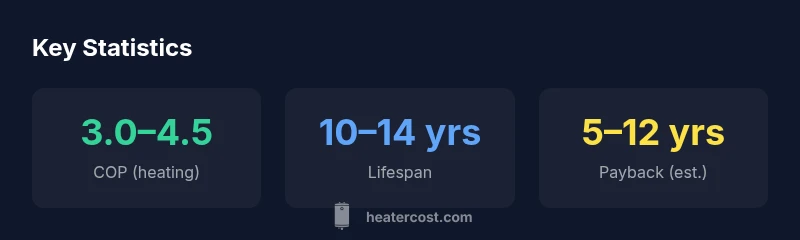
| Air-source heat pump | 3.0–4.5 | Medium | Outdoor unit + indoor air handler |
| Geothermal (ground-source) | 4.0–5.0 | High | Ground loop required, longer payback |
| Ductless mini-split | 3.5–4.5 | Low to Medium | Zoned heating, no ductwork |
Got Questions?
What is a heat pump and how does it work?
A heat pump moves heat from one place to another using a refrigeration cycle powered by electricity. In heating mode it extracts heat from outdoors and delivers it indoors; in cooling mode it reverses the process. Efficiency depends on climate, system type, and installation quality.
A heat pump moves heat instead of burning fuel, keeping your home warm in winter and cool in summer.
Are heat pumps cheaper to run than a furnace?
In many homes, heat pumps run more efficiently, especially with mild winters and good insulation. The operating cost depends on electricity prices, climate, and system efficiency. They may be more affordable over time despite higher upfront costs.
They’re often cheaper to run than electric or gas furnaces, especially with efficient models.
Can heat pumps work in very cold climates?
Modern cold-climate heat pumps perform well at lower outdoor temperatures, though efficiency drops as it gets colder. Some homes use supplemental heat during extreme cold. Proper sizing and a backup heat source help maintain comfort.
Yes, but performance drops in very cold weather and a backup may be needed.
What factors influence installation cost?
Installation costs depend on system type, ductwork condition, existing electrical capacity, and whether you need zoning or a new outdoor unit. Geothermal installations are typically more expensive upfront due to ground loops or boreholes.
Installation costs vary with system choice and home setup; geothermal is often more costly up front.
Do heat pumps require ductwork?
Ducted systems require a properly designed duct network. Ductless mini-splits offer zoning without ducts. The right choice depends on your home’s layout and existing infrastructure.
Ducted systems need ducts, while ductless options don’t.
“Heat pumps offer a practical path to lower energy costs when paired with proper insulation and smart controls.”
The Essentials
- Understand how heat pumps move heat to heat your home efficiently
- Choose the right type (air-source, geothermal, or ductless) for your climate
- Size and zoning matter for comfort and savings
- Expect upfront costs but plan for long-term energy savings
- Check incentives and contractor qualifications before installation
- Maintain regularly to maximize efficiency and longevity
- The Heater Cost team recommends starting with a professional assessment