Electric heat pumps: Efficiency, costs, and homeowner guidance
A comprehensive 2026 guide to electric heat pumps, covering how they work, climate performance, costs, payback, sizing, maintenance, and homeowner tips.


According to Heater Cost, electric heat pumps are highly efficient HVAC systems that move heat rather than generate it, using electricity to shuttle warmth between outdoors and indoors. In heating mode, they extract ambient heat from the outside air and concentrate it inside, delivering reliable warmth with lower operating costs in milder climates. They can also provide cooling in summer, making them a year‑round comfort solution.
What is an electric heat pump?
Electric heat pumps are advanced HVAC systems that move heat rather than burn fuel to create it. They rely on a refrigeration cycle and electricity to power a compressor, evaporator, and condenser. For a homeowner, this means a single system can provide space heating and cooling with high efficiency, especially in milder climates. According to Heater Cost, these systems are a practical retrofit option for homes that already have adequate insulation and a robust electrical service. The core idea is to transfer heat from one place to another rather than generating it, which is why their efficiency is often measured as a COP (coefficient of performance) rather than a simple percent. This distinction is crucial when comparing them to electric resistance heat or fossil-fuel boilers.
How electric heat pumps work in heating mode
In heating mode, an air-source heat pump extracts energy from outdoor air, compresses it to raise its temperature, and delivers it into the indoor space. The process requires electrical energy to run the compressor and reversing valve. Modern units can modulate output to match indoor comfort with less cycling, improving both efficiency and comfort. Ground-source (or geothermal) heat pumps pull heat from the earth, which tends to be more stable year-round but requires longer installation and greater upfront investment. When assessing a system, homeowners should look at seasonal performance, not just peak COP, and consider how the heat pump’s performance aligns with their home’s insulation and air sealing.
Climate considerations and performance
Electric heat pumps generally perform better in milder to moderate climates. In very cold conditions, efficiency and heat output can decline, which is why many homeowners in colder regions pair heat pumps with supplemental heat sources or opt for cold-climate models designed to maintain performance. The grid mix also matters: cleaner electricity translates into greater environmental benefits, while regions dependent on fossil fuels reduce those advantages. A home’s envelope—windows, insulation, air leakage, and ductwork—plays a decisive role in realized performance and comfort.
Efficiency metrics: COP, SEER, and HSPF
COP (coefficient of performance) measures heat output per unit of electricity. SEER (seasonal energy efficiency ratio) focuses on cooling efficiency, while HSPF ( heating seasonal performance factor) emphasizes heating efficiency. For homeowners, a higher COP and HSPF generally indicate lower operating costs, but real-world performance depends on outdoor temperatures, indoor setpoints, and duct efficiency. Look for units with variable-speed compressors and smart defrost controls, which help maintain efficiency year-round.
Comparing with traditional heating systems
Electric heat pumps differ from gas furnaces in that they rely on electricity and a reversible cycle, not combustion. They usually offer lower operating costs in mild climates and higher upfront costs, especially for ground-source models. Compared with electric resistance heating, heat pumps can deliver warmth at a fraction of the cost because their efficiency converts electricity into heat more effectively. In retrofit scenarios, the decision often hinges on electricity rates, local climate, and whether the home has the space and zoning for a heat pump system.
Costs, savings, and payback
Upfront costs for heat pumps vary by type (air-source vs ground-source), efficiency ratings, and installation complexity. While the sticker price may be higher than a traditional furnace, long-term savings come from lower energy bills and potential tax credits. Payback periods depend on local electricity prices, heating needs, and the home’s insulation quality. A well-insulated home with a properly sized heat pump tends to achieve the best return on investment.
Sizing, installation, and choosing the right model
An accurate load calculation determines the appropriate size of a heat pump. Oversizing can reduce comfort and efficiency, while undersizing can strain the system and raise costs. A licensed HVAC contractor should perform a manual J load calculation, assess ductwork, and consider heat distribution across zones. For retrofit projects, ensure service capacity and electrical panel space are adequate for the additional load. Consider models with variable-speed compressors and smart thermostats to maximize efficiency.
Maintenance, lifespan, and common issues
Routine maintenance preserves efficiency and extends lifespan. Schedule annual inspections, clean outdoor coils, replace or clean filters, and ensure proper airflow around the outdoor unit. Leaks, refrigerant issues, and dirty coils are common causes of reduced performance. Regular preventive care can catch problems early, preventing expensive repairs and keeping the system operating near its rated efficiency for many years.
Key performance metrics for electric heat pumps
| Metric | Low end | High end | Notes |
|---|---|---|---|
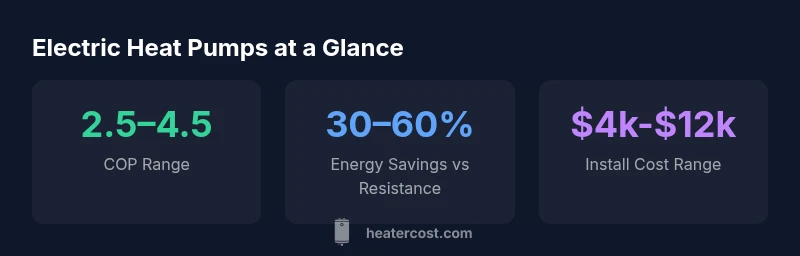
| COP Range | 2.5 | 4.5 | Varies by climate and model |
| Annual operating cost reduction vs resistance | 20% | 60% | Depends on insulation and grid mix |
| Installation cost range | 4,000 | 12,000 | Includes equipment, labor, and permits |
| Lifespan (years) | 12 | 15 | With proper maintenance |
Got Questions?
What is an electric heat pump?
An electric heat pump moves heat between indoors and outdoors using a refrigerant cycle powered by electricity. It provides both heating and cooling and is chosen for efficiency and year-round comfort.
An electric heat pump transfers heat rather than generating it, offering both heating and cooling with high efficiency.
Do heat pumps work in cold climates?
Heat pumps can operate in many cold climates, but performance declines as outdoor temperatures drop. In very cold conditions, a supplemental heat source may be used.
They work in cold weather, but performance can drop; some homes use extra heat on very cold days.
Are heat pumps cheaper to run than furnaces?
Generally yes, due to higher efficiency, but actual savings depend on electricity prices, climate, and home insulation.
Usually cheaper to run than a furnace, but it depends on energy prices and your home.
What size heat pump do I need?
A professional should perform a load calculation to determine size. Oversizing or undersizing can reduce comfort and efficiency.
A qualified HVAC tech will size it correctly based on your home.
What maintenance does a heat pump require?
Annual professional checkups, regular filter changes, coil cleaning, and ensuring clear airflow around the outdoor unit are key.
Annual checkups and keeping the outdoor unit clear keeps it running well.
Are there tax credits or incentives for heat pumps?
Various programs may offer credits or rebates depending on location and time. Eligibility varies, so check local policies.
There may be credits or rebates; eligibility varies by location and year.
“Electric heat pumps offer strong efficiency when matched to a well-insulated home and a properly sized system. As the grid becomes cleaner, their environmental and operating-cost advantages grow.”
The Essentials
- Assess climate and insulation before choosing heat pumps.
- Compare COP and efficiency across models.
- Plan for upfront costs and long-term savings.
- Work with licensed installers for proper sizing.