Electric Heater for Greenhouse: Costs, Sizing, and Setup
A comprehensive guide to using electric heaters in greenhouses, covering operating costs, sizing, installation, and ROI. Learn how insulation, controls, and climate affect price and performance with data-backed guidance from Heater Cost analyses.


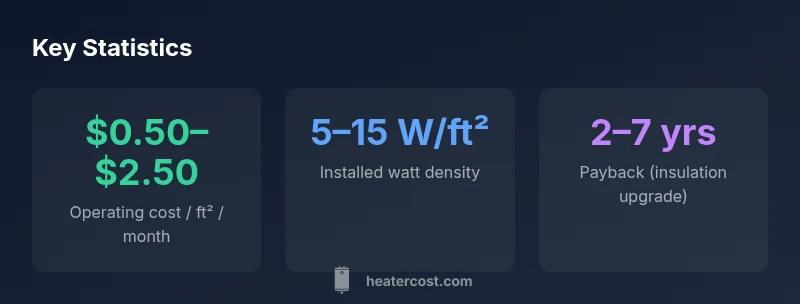
Electric heaters for greenhouses typically cost between $0.50 and $2.50 per square foot per month to operate, depending on climate, insulation, and heater efficiency. This baseline helps you compare options like propane or heat pumps. The Heater Cost team found that installation complexity, thermostat control, and electrical sourcing can shift monthly costs by a factor of two or more, especially in extreme weather.
Understanding the role of electric heating in greenhouses
Electric heating provides precise, scalable warmth for greenhouse environments, enabling consistent growth when outdoor temperatures drop. An electric heater offers rapid heat up, quiet operation, and straightforward controls, which appeals to homeowners, renters, and property managers evaluating costs and reliability. When you think about heating goals for an electric heater greenhouse, you’re balancing crop requirements with energy efficiency and system resilience. The Heater Cost analysis emphasizes that the value of electric heating grows with good insulation, proper zoning, and smart thermostat usage. With the right setup, growers can extend growing seasons, protect tender crops, and maintain uniform greenhouse temperatures even during cold snaps. This approach also simplifies maintenance and reduces exhaust concerns compared to fossil-fueled systems, especially in urban settings.
According to Heater Cost, electric greenhouse heating costs vary widely by climate and insulation, reinforcing the need for a solid heat-loss calculation and a staged heating plan tailored to your crop mix.
Key factors driving operating costs
Operating costs for electric heating in a greenhouse hinge on climate, insulation, load density, and control sophistication. In mild winters with tight seals, monthly costs per square foot can be substantially lower than in uninsulated structures facing subfreezing nights. Based on Heater Cost research, major cost drivers include ambient temperature design targets, the efficiency class of the heater, thermostat strategy, and the electrical supply quality. For instance, the use of multi-stage heaters with setback temperatures and programmable schedules can dramatically reduce energy use. Another lever is heat retention: improving glazing, sealing gaps, and adding thermal mass reduces the load the heater must meet. Finally, control strategy, including exterior weather data and sensor placement, ensures the heater runs only when needed, reducing waste. The result is a more predictable operating envelope and better crop consistency across seasons.
Designing for efficiency: sizing and zoning
Size and zoning are critical for efficiency. Begin with heat load calculations that consider greenhouse volume, insulation, plant density, and solar gain. Instead of a single large heater, consider split zoning so you heat only the zones that require warmth at different times. For infrequent great cold nights, a properly sized electric heater can be paired with a secondary heat source as a backup. The perimeter layout with evenly spaced units helps minimize cold spots, while radiant panels or low-profile convectors can target root zones for sensitive crops. By modeling typical nightly temps and sun hours, you can tailor the system to your budget and the crops you grow.
Types of electric heaters and controls for greenhouses
There are several electric heating options suitable for greenhouses:
- Convection heaters provide broad, ambient warmth suitable for large-volume spaces.
- Radiant panels deliver targeted heat to the plant canopy and root zones with quick response times.
- Fan-assisted heaters combine airflow with directed heat for uniform temperature distribution.
Controls matter almost as much as the heater type. A thermostat with outdoor sensors and a smart controller can modulate heat with weather data and crop stage. For reliability, pair a primary electric heater with a back-up plan (e.g., a secondary heat source or passive solar) for extreme conditions. Maintenance-free options exist, but regular checks on wiring, thermostats, and clearances are essential for safety and performance.
Installation considerations, wiring, safety, and compliance
Electrical work in greenhouses requires careful planning. Ensure circuits are sized for peak loads and installed by a licensed electrician. Use outdoor-rated wiring, weatherproof disconnects, and GFCI protection where needed. Adequate clearance around heaters and ventilation reduces risk of overheating and moisture-related failures. Implement a robust maintenance schedule, verify thermostat calibration, and document all wiring diagrams and permit requirements. By following code-compliant practices, you protect crops and people while keeping long-term operating costs predictable.
Cost-benefit scenarios by climate and crop
In mild climates with good insulation and light-soil crops, electric heating can offer fast warm-up with modest ongoing costs. In colder climates or marginal insulation scenarios, the monthly operating cost increases, but benefits include precise control and reduced emissions. For crops with narrow day-length requirements or sensitive seedlings, the reliability of electric heating can translate into higher yields and faster crop cycles, improving ROI. The key is to model multiple scenarios—what if winter nights drop to freezing, or a cloudy week reduces solar gain—and compare them to alternative heat sources. This helps determine whether electric heating is the right fit for your greenhouse economics.
Overview of electric greenhouse heating cost factors
| Measure | Electric Heater Range | Notes |
|---|---|---|
| Operating cost (per ft² per month) | $0.50–$2.50 | Climate and insulation dependent |
| Installed wattage density | 5–15 W/ft² | Depends on crop and night temps |
| Installation cost per unit | $300–$1,200 | Varies by mounting and wiring |
| Payback period (insulation improvements) | 2–7 years | Assumes energy savings |
Got Questions?
What is the typical operating cost for electric heating in a greenhouse?
Costs vary with climate, insulation, and heater efficiency. A broad range is $0.50–$2.50 per square foot per month, with more in colder winters. Use a detailed heat-loss calculation to refine this.
Costs vary with climate, insulation, and heater efficiency. A broad range exists, and a heat-loss calculation helps refine it.
Is electric heating more cost-effective than propane in a greenhouse?
Electric heating can be cheaper to operate in milder climates due to lower fuel costs, but propane may be preferable in very cold climates or where power reliability is limited. Run side-by-side comparisons for your region.
Electric can be cheaper in mild climates; propane may win in very cold or unreliable power areas.
What factors affect electric heater sizing for a greenhouse?
Greenhouse size, insulation quality, crop type, local climate, and solar gain all influence sizing. Use heat-load calculations and consider zoning to avoid over- or under-heating.
Size depends on space, insulation, crops, and climate; use heat-load calculations.
What maintenance is required for electric greenhouse heaters?
Regular inspections, cleaning of vents, thermostat calibration checks, and ensuring electrical connections remain dry and protected are essential.
Regular inspections and thermostat checks keep electric heaters reliable.
Can I use a thermostat or smart controller with electric greenhouse heaters?
Yes. A programmable thermostat with exterior sensors or a smart controller can optimize energy use and crop outcomes by matching heat with weather data and crop needs.
Yes—use a programmable thermostat or smart controller to optimize heat.
What are alternatives to electric heating in greenhouses?
Propane, natural gas, or heat pumps can complement or replace electric heating depending on climate, cost, and reliability. Compare total cost of ownership for your setup.
Propane, gas, or heat pumps can be viable alternatives; compare total costs.
“A well-planned electric heating strategy is not a standalone purchase; sizing, insulation, and smart controls work together to deliver reliable yields and a lower total cost of ownership.”
The Essentials
- Size the heater to your space to avoid waste.
- Model operating costs with climate and insulation in mind.
- Compare electric heat to alternatives for ROI.
- Invest in insulation and smart thermostats to reduce costs.
- The Heater Cost team recommends modeling scenarios before committing.