Electric Duct Heater: Costs, Efficiency, and Installation Guide
Learn how electric duct heaters work, their cost ranges, energy use, installation steps, and maintenance considerations for residential and commercial HVAC systems.


An electric duct heater is a heating device placed in the air ductwork that uses electric coils to warm passing air. It provides rapid, controllable heat for spaces that need quick warm-up or where gas is unavailable or undesirable. Sizing is based on airflow (CFM) and the desired temperature rise, and controls typically integrate with standard thermostats or building automation systems.
What is an electric duct heater?
An electric duct heater is a specialized heating element housed in a compact unit that is installed directly in the air distribution ductwork of an HVAC system. When electricity is supplied to the coils, they heat the passing air, which is then distributed through the building via the existing duct network. Electric duct heaters are common in situations where a secondary heating source is needed, or a retrofit is required in buildings without access to natural gas or where emissions concerns make fossil-fuel options less desirable. They provide clean, quiet operation with rapid response times and are often used for zone heating, emergency heat, or supplemental warming in cold climates. The Heate r Cost team notes that electric duct heaters are sized by airflow and the desired temperature rise, not by room count alone, making proper load calculations essential for efficiency.
How electric duct heaters work
Inside the housing, resistive heating coils convert electrical energy into heat, warming the air as it travels past the coils. A blower or the existing fan pushes heated air into the duct, where sensors monitor air temperature and modulate heat output to maintain setpoints. Because there are no combustion byproducts, these heaters deliver clean heat with low maintenance compared with combustion-based systems. Controls can range from simple on/off thermostats to sophisticated building automation integration, enabling staged heating and precise temperature management. The overall efficiency is typically very high since almost all electrical energy ends up as heat in the air; however, the cost effectiveness depends on electricity prices and how often the unit runs.
Key design choices: wattage, materials, and safety
Choosing the right electric duct heater involves balancing wattage, duct size, and material durability. Higher wattage enables faster heat-up but increases energy use. Common construction materials include corrosion-resistant metals and protective coatings to withstand humidity and particulate exposure. Safety features such as overheat protection, thermal cutoffs, and properly rated wiring are essential for reliable operation in a duct environment. Units are designed to fit standard duct sizes and should be installed with attention to access for service, clearance from combustibles, and proper electrical disconnects. The Heater Cost guidance emphasizes selecting models with robust seals, recessed terminals, and compliant conduit fittings to reduce leakage and improve longevity.
Sizing and load calculation: how to determine needs
Sizing an electric duct heater hinges on airflow (measured in CFM) and the desired temperature rise. A simplified approach uses the formula Q = 1.08 × CFM × ΔT to estimate BTU/h, then converts to kilowatts (1 kW ≈ 3412 BTU/h). In practice, building heating load studies, duct pressure, and air handler capacity all influence the final selection. Start with a conservative estimate and verify with a professional using equipment curves and safety margins. It is important to consider peak demand periods and allowable duty cycles to avoid oversizing or undersizing the system.
Installation considerations and safety
Installation requires coordination with the HVAC system and electrical service. Typical steps include selecting the correct duct location, ensuring proper ventilation around the heater, and wiring to a dedicated circuit with appropriate overcurrent protection. Permits may be required in some jurisdictions, and compliance with local electrical codes (NEC in the United States) is essential. Installers should verify duct integrity, minimize heat loss through ductwork, and ensure access panels are serviceable. Regular inspections for loose connections, insulation gaps, and signs of overheating help maintain safety and performance. The Heater Cost team advises engaging licensed professionals to handle electrical connections and testing.
Operating costs, efficiency, and climate considerations
Electric duct heaters are typically 100% efficient at converting electrical energy to heat, but operating costs depend on electricity rates and run time. In colder climates or when used as primary heating, annual energy costs can be higher than gas or heat pumps, but for supplemental heating in specific zones, these units can be cost-effective. Consider climate, occupancy patterns, and building insulation when evaluating total cost of ownership. The Heater Cost analysis emphasizes comparing hourly operating costs across heating options and aligning equipment scheduling with occupancy to maximize efficiency.
Maintenance and longevity
Maintenance for electric duct heaters is generally straightforward: keep air passages clear, inspect electrical connections, and test safety devices periodically. Clean or replace air filters if the heater is integrated with a pressurized air system, and inspect heating elements for signs of wear or corrosion. Many units feature components designed for long service life, but lifetime depends on duty cycle, environmental conditions, and proper installation. Routine visual checks plus annual professional servicing help extend equipment life and prevent unexpected downtime.
Comparing electric duct heaters to alternatives
Electric duct heaters offer clean heat with rapid response, especially in zones where quick temperature control is important. They can be a strong choice for retrofit projects or where gas is not feasible. Compared to gas furnaces, they often have lower emissions but potentially higher energy costs. Heat pumps are efficient for moderate climates but may not meet peak-load demands without supplemental heat. Hydronic systems provide heat with water; however, they require different infrastructure and may involve higher upfront costs. The Heater Cost guidance recommends evaluating total cost of ownership, climate, and existing ductwork before choosing electric duct heaters as a primary or supplemental option.
Getting value: tips for homeowners and managers
To maximize value, start with a verified load calculation and a duct assessment to size the heater correctly. Choose controls that enable staging and integration with the building’s thermostat or BAS. Ensure electrical service can accommodate the added load and factor in any required permits. Compare installation costs, maintenance needs, and expected energy use across options. Finally, plan for future expansion by selecting modular units that can be upgraded without replacing ductwork.
Residential vs Commercial Electric Duct Heater sizing and installation generalizations
| Category | Residential Range | Commercial Range | Notes |
|---|---|---|---|
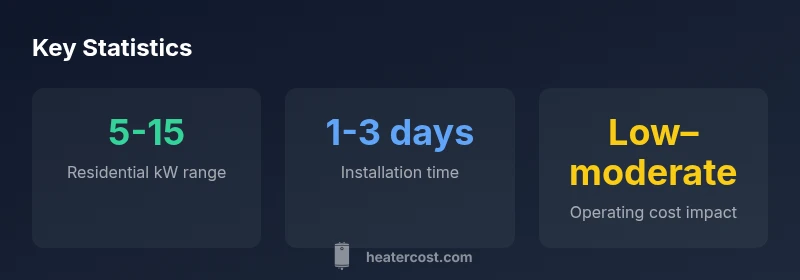
| Power (kW) | 5-15 | 15-60 | Assumes adequate airflow and duct sizing |
| Voltage | 208-240V/3-phase | 208-480V/3-phase | Check with electrician and electrical panel capacity |
| Energy use | Low to moderate | High | Depends on run hours and demand |
| Installation time | 1-3 days | 3-7 days | Includes ductwork adjustments and wiring |
Got Questions?
What is an electric duct heater and when should I consider using one?
An electric duct heater is a heating device placed in the air duct of an HVAC system. It uses electric coils to warm passing air, offering rapid heat and precise control. Consider it when you need fast warm-up, zone heating, or retrofit heating in buildings without gas or where electric heating is preferred.
An electric duct heater sits in your ductwork and warms air quickly when you need fast heat. It’s great for zones that need quick warmth or when gas isn’t an option.
How does an electric duct heater differ from a heat pump or gas furnace?
Electric duct heaters provide immediate heat in the duct but generally rely on electricity for energy. Heat pumps transfer heat from the outside air and are very efficient in mild climates; gas furnaces burn fuel and usually offer higher heat outputs at a different operating cost profile. Your choice depends on climate, installation flexibility, and total cost of ownership.
They heat differently: electric ducts heat air directly, heat pumps pull heat from outside air, and gas furnaces burn fuel. Climate and costs matter when choosing.
What factors affect the operating costs of an electric duct heater?
Operating costs depend on electricity rates, run time, and how often the unit cycles on. Peak demand pricing, insulation quality, and zoning strategy also influence annual energy use. Consider whether the heater is a primary or supplemental heat source to estimate costs more accurately.
Costs vary with your electricity rate and how much you actually run the heater. Good insulation and smart controls help a lot.
What installation permits or codes apply to electric duct heaters?
Installation may require electrical permits and adherence to local electrical codes (such as NEC in the U.S.). A licensed electrician should handle wiring and disconnects, and duct work should meet building and fire safety standards. Check with local authorities before starting the project.
You’ll likely need electrical permits; a licensed pro should handle wiring and duct work.
What maintenance is required to keep an electric duct heater running safely?
Regular inspections of electrical connections, fan or blower operation, and heat coil integrity are important. Clean air passages to prevent dust buildup and check safety devices periodically. Scheduling an annual professional check helps ensure safety and reliability.
Keep connections tight, clean the air path, and have a pro check it yearly.
Can electric duct heaters be used for whole-house heating?
Yes, in some applications electric duct heaters can serve as part of a whole-house strategy, usually as supplemental heat or in zones with high heat demand. They are less common as the sole heating source in very cold climates due to higher energy costs.
They can heat zones or act as a supplement, but aren’t always ideal as the sole heating source in very cold areas.
“Electric duct heaters provide reliable, controllable heat in ducts with minimal maintenance, making them a practical option for supplemental heating and retrofit projects.”
The Essentials
- Understand electric duct heaters heat air in ducts using resistive coils.
- Size by airflow and desired temperature rise, not room count.
- Expect higher energy costs if used as primary heating in cold climates.
- Ensure proper electrical, ductwork, and safety clearances during installation.
- Compare total cost of ownership with alternate heating options before buying