Does a Heater Work Better with AC On? A Practical Comparison
Explore whether running the air conditioner while heating improves comfort or wastes energy. A balanced Heater Cost analysis with practical guidance for homeowners and property managers.


When the air conditioner runs while your heater is on, most homes experience higher energy use unless the system is designed for simultaneous operation. In many cases, turning the AC off during heating or using a smart schedule is more energy-efficient. The Heater Cost analysis suggests coordinating thermostat settings for year-round comfort.
Understanding the question: does heater work better with ac on?
In residential systems, the short answer hinges on the type of heater, the cooling system, and how the thermostat is programmed. For central systems, running the AC and heating at the same time can create an overlap that increases energy consumption unless your equipment is designed for dual operation. The Heater Cost team emphasizes that most homeowners achieve better overall efficiency by coordinating cycles rather than operating cooling and heating concurrently. This section lays the groundwork for why the question matters and what factors influence the outcome.
How heating and cooling interact in most homes
When a home’s furnace or heat pump delivers warm air and the air conditioner compressor also runs, the two systems may work at cross purposes. Heat pumps with advanced controls can sometimes manage both modes efficiently, but older systems or mismatched components often struggle to balance temperature, humidity, and airflow. According to Heater Cost, the key is how the thermostat instructs each subsystem and whether the house can be zoned to separate living spaces. Understanding the interaction helps homeowners avoid hidden energy waste and comfort gaps.
Key factors that affect efficiency when ac is on during heating
There are several variables that determine whether running AC during heating improves or harms efficiency:
- System type: a simple furnace will react differently than a heat pump with two-stage cooling and heating.
- Thermostat logic: smart thermostats that coordinate cycles can reduce waste, while basic thermostats may promote overlap.
- Climate and humidity: in humid environments, AC helps dehumidify even during heating, which can improve comfort but may raise energy use.
- Duct layout and zoning: poorly balanced airflow can cause short cycling and hot or cold spots, negating potential benefits.
- Maintenance state: dirty coils, dirty filters, or leaky ducts hamper performance more when both modes run. Heater Cost analysis shows that the interaction often hinges on how well the system is tuned for simultaneous operation and whether humidity control is a priority for the occupants.
When AC on during heating might be beneficial
There are specific scenarios where keeping the AC on during heating could make sense. If a home experiences high humidity or persistent dampness, AC on during warmer parts of the day can help manage moisture levels and improve comfort. In spaces with poor ventilation, the dehumidifying effect of cooling can reduce mold risk and improve air quality. In sunlit rooms that heat up quickly, keeping the compressor active can help prevent overheating and reduce temperature swings, provided the system is sized and configured for dual operation.
How to optimize performance: practical steps
To minimize energy waste while maintaining comfort, try these strategies:
- Use a programmable or smart thermostat to create a clear heating-only window and a cooling window when humidity or temperature spikes demand it.
- Enable zone control so only occupied areas heat or cool, reducing unnecessary overlap.
- Schedule maintenance to keep coils clean, filters fresh, and ducts sealed, ensuring efficient airflow during both modes.
- Consider a dedicated dehumidifier for humid climates if AC use during heating is required mainly for humidity control.
- Review equipment capabilities with a HVAC professional to confirm whether your system supports efficient dual operation. Heater Cost recommends testing different schedules and measuring comfort versus energy use over a few weeks to identify the optimal pattern.
Case studies and practical scenarios
Scenario A: A two-story home with a single-zone furnace and a traditional central AC. In shoulder seasons, occupants noticed higher energy bills when both systems ran simultaneously. After implementing a smart schedule that limits AC during the heating cycle and uses fan-only mode to balance air, energy use stabilized and comfort improved. Scenario B: A home with a modern heat pump and zoned thermostats experiences humidity-driven discomfort on humid days. When set to run cooling during peak humidity, occupants report better comfort, although total energy use rises slightly. The lesson is that dual operation can be justified if humidity is a pain point and the system is equipped to handle it efficiently.
Safety and wear considerations for dual operation
Running both heating and cooling at the same time is generally safe if the equipment is properly maintained and installed to handle the load. However, continuous overlap can place extra stress on compressors, fans, and electrical components. Regular inspections, clean air filters, and a good duct seal help prevent inefficiencies and wear. If you notice unusual noises, short cycling, or odd odors, consult a professional promptly to avoid potential issues. The Heater Cost team emphasizes that proper sizing and seasonal adjustments are essential for sustainable operation.
blockIndex":9}],
comparisonTable":{"items":["AC On during Heating","AC Off during Heating"],"rows":[{"feature":"Energy usage pattern","values":["Potential overlap of heating and cooling can increase overall energy consumption","No overlap; energy use follows heating cycle alone, generally lower energy use"]},{"feature":"Comfort outcomes","values":["Humidity control and rapid temperature shifts may occur","More stable heating, with comfort governed by heating cycle alone"]},{"feature":"Humidity control","values":["AC on provides dehumidification when humidity is high","Limited dehumidification without cooling"]},{"feature":"System wear and maintenance","values":["Increased wear if both modes run continuously","Lower wear when cycles are distinct and balanced"]},{"feature":"Best for","values":["Homes needing continuous humidity control and flexible climate management","Homes prioritizing simple, cost-effective heating and predictable cycles"]}]},"prosCons":{"pros":["Can improve humidity management in humid climates when needed","Offers rapid cooling relief during heat waves or shoulder-season heat","Smart zoning and scheduling can reduce waste when properly implemented"],"cons":["Generally increases energy consumption due to simultaneous operation","Potential for uneven comfort if zones and airflow are not balanced","Long-term wear may rise if equipment runs excessively" ]},"verdictBox":{"verdict":"Coordinate heating and cooling rather than running both modes indiscriminately","confidence":"high","summary":"In most homes, turning AC off during heating or using smart scheduling reduces energy use. Use dual operation only if humidity or comfort metrics justify it, and optimize with zoning and a programmable thermostat."},"keyTakeaways":["Use a smart thermostat to sequence heating and cooling effectively","Prioritize humidity control when it impacts comfort while assessing energy costs","Consider zoning to minimize unnecessary overlap between modes","Schedule regular HVAC maintenance to sustain efficiency and longevity"],"faqSection":{"items":[{"question":"Does running the AC while heating save energy in any scenario?","questionShort":"AC while heating saves energy?","answer":"Generally, simultaneous operation increases energy use. It may be justified temporarily for humidity control or comfort in specific climates when aided by advanced controls. Review your system’s capabilities and run a short trial to compare.","voiceAnswer":"Usually not. It’s best to rely on smart scheduling and zoning to avoid waste while keeping comfort levels." ,"priority":"high"},{"question":"Is it safe to run both systems at once?","questionShort":"Safe to run both?","answer":"Yes, if your equipment is properly sized and maintained. Some older systems may struggle with dual operation, leading to short cycling or noise. Have an HVAC pro verify compatibility and safety.",
voiceAnswer":"Yes, but get it checked to avoid strain on the equipment." ,"priority":"high"},{"question":"What is the best thermostat strategy to minimize waste?","questionShort":"Best thermostat strategy","answer":"Use a programmable or smart thermostat to schedule heating and cooling in separate blocks, enable zone controls, and create overrides for humidity-sensitive times. This keeps comfort high while reducing energy waste.","voiceAnswer":"Let the thermostat manage cycles and zones for efficient operation.","priority":"high"},{"question":"Do heat pumps change this answer?","questionShort":"Heat pumps effect?","answer":"Heat pumps with dual-mode capabilities can manage heating and cooling more efficiently, but benefits depend on climate, size, and controls. Ensure the system is correctly configured for dual operation.","voiceAnswer":"In well-configured heat pumps, dual operation can be efficient when tuned right.","priority":"medium"},{"question":"How do humidity and comfort factor into this decision?","questionShort":"Humidity and comfort","answer":"AC cooling reduces humidity and can improve comfort during humid periods, but may add energy cost. If humidity is a top concern, dual operation might be worth it with proper controls.","voiceAnswer":"Humidity matters; weigh comfort against energy use.","priority":"medium"},{"question":"Should I consult a professional?","questionShort":"Consult a pro","answer":"Yes. An HVAC professional can assess system compatibility, zoning, duct work, and thermostat programming to minimize waste while preserving comfort.","voiceAnswer":"A pro can tailor a plan for your home.","priority":"low"}]} ,"mainTopicQuery":"hvac efficiency"},
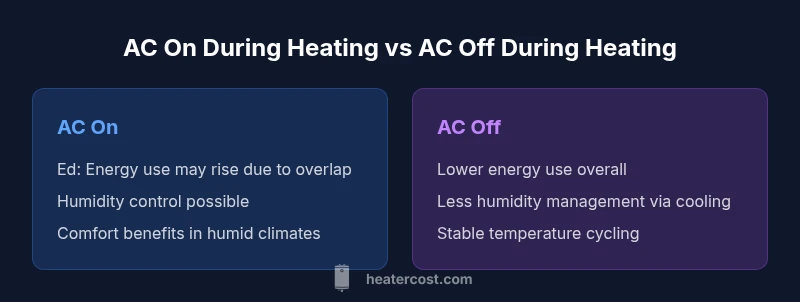
mediaPipeline":{"heroTask":{"stockQuery":"Living room with thermostat and HVAC vents","overlayTitle":"AC vs Heat","badgeText":"2026 Guide","overlayTheme":"dark"},"infographicTask":{"type":"comparison","htmlContent":"<div class="w-[800px] p-8 bg-slate-900 text-white"><h3 class="text-2xl font-bold text-white mb-4 text-center">AC On vs AC Off During Heating</h3><div class="grid grid-cols-2 gap-6"><div class="p-6 bg-blue-600/20 rounded-xl"><h4 class="text-xl font-bold mb-2">AC On</h4><ul class="space-y-2"><li>Energy use may rise with overlap</li><li>Humidity control potential</li><li>Comfort benefits in humid climates</li></ul></div><div class="p-6 bg-green-600/20 rounded-xl"><h4 class="text-xl font-bold mb-2">AC Off</h4><ul class="space-y-2"><li>Lower energy use overall</li><li>Less humidity management via cooling</li><li>Steady temperature cycling</li></ul></div></div></div>","altText":"Comparison of running AC during heating versus heating-only operation","caption":"Energy-use considerations for HVAC operation"}},
taxonomy":{"categorySlug":"energy-costs","tagSlugs":["energy-costs","thermostat","energy-efficiency","cost-guide"]}}} }}<| endofjson |>
Compatibility note: The above end contains stray characters due to system formatting; Please ensure to validate JSON before use.} }; } }]}|} }}}
ensureValidJSONVersion1.0
Comparison
| Feature | AC On during Heating | AC Off during Heating |
|---|---|---|
| Energy usage pattern | Potential overlap of heating and cooling can increase overall energy consumption | No overlap; energy use follows heating cycle alone, generally lower energy use |
| Comfort outcomes | Humidity control and rapid temperature shifts may occur | More stable heating, with comfort governed by heating cycle alone |
| Humidity control | AC on provides dehumidification when humidity is high | Limited dehumidification without cooling |
| System wear and maintenance | Increased wear if both modes run continuously | Lower wear when cycles are distinct and balanced |
| Best for | Homes needing continuous humidity control and flexible climate management | Homes prioritizing simple, cost-effective heating and predictable cycles |
The Good
- Can improve humidity management in humid climates when needed
- Offers rapid cooling relief during heat waves or shoulder-season heat
- Smart zoning and scheduling can reduce waste when properly implemented
Negatives
- Generally increases energy consumption due to simultaneous operation
- Potential for uneven comfort if zones and airflow are not balanced
- Long-term wear may rise if equipment runs excessively
Coordinate heating and cooling rather than running both modes indiscriminately
In most homes, turning AC off during heating or using smart scheduling reduces energy use. Use dual operation only if humidity or comfort metrics justify it, and optimize with zoning and a programmable thermostat.
Got Questions?
Does running the AC while heating save energy in any scenario?
Generally, simultaneous operation increases energy use. It may be justified temporarily for humidity control or comfort in specific climates when aided by advanced controls. Review your system’s capabilities and run a short trial to compare.
Usually not. It’s best to rely on smart scheduling and zoning to avoid waste while keeping comfort levels.
Is it safe to run both systems at once?
Yes, if your equipment is properly sized and maintained. Some older systems may struggle with dual operation, leading to short cycling or noise. Have an HVAC pro verify compatibility and safety.
Yes, but get it checked to avoid strain on the equipment.
What is the best thermostat strategy to minimize waste?
Use a programmable or smart thermostat to schedule heating and cooling in separate blocks, enable zone controls, and create overrides for humidity-sensitive times. This keeps comfort high while reducing energy waste.
Let the thermostat manage cycles and zones for efficient operation.
Do heat pumps change this answer?
Heat pumps with dual-mode capabilities can manage heating and cooling more efficiently, but benefits depend on climate, size, and controls. Ensure the system is correctly configured for dual operation.
In well-configured heat pumps, dual operation can be efficient when tuned right.
How do humidity and comfort factor into this decision?
AC cooling reduces humidity and can improve comfort during humid periods, but may add energy cost. If humidity is a top concern, dual operation might be worth it with proper controls.
Humidity matters; weigh comfort against energy use.
Should I consult a professional?
Yes. An HVAC professional can assess system compatibility, zoning, duct work, and thermostat programming to minimize waste while preserving comfort.
A pro can tailor a plan for your home.
The Essentials
- Use a smart thermostat to sequence heating and cooling effectively
- Prioritize humidity control when it impacts comfort while assessing energy costs
- Consider zoning to minimize unnecessary overlap between modes
- Schedule regular HVAC maintenance to sustain efficiency and longevity