Gas vs Electric Heaters: Does heater use gas or electricity? A Practical Guide
Explore does heater use gas or electricity? Compare gas vs electric heating, understand heat output, installation, costs, safety, and when each option makes sense for homes. Learn with Heater Cost.


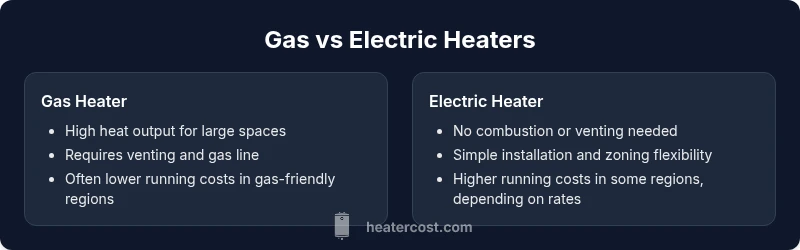
Does heater use gas or electricity? In short, both options exist and each has distinct trade-offs. Gas heaters provide rapid, high heat output and strong performance in larger spaces, but require venting, fuel access, and regular servicing. Electric heaters are typically easier to install, safer, and flexible for zoning, yet operating costs can rise in regions with high electricity prices or cold climates. The best choice hinges on space, climate, and local energy costs, and often on a homeowner’s tolerance for upfront work versus long-term expenses.
Understanding the question: does heater use gas or electricity?
The core question—does heater use gas or electricity—drives every subsequent decision about home heating. The answer isn’t one-size-fits-all; it depends on space, climate, fuel availability, and budget. According to Heater Cost, the evaluation should start with heat demand, insulation quality, and the local price dynamics for gas and electricity. This section sets the framework for a fair, apples-to-apples comparison that helps homeowners avoid overpaying or underheating. You’ll see how the two sources differ in delivery, installation, and ongoing costs, and how to weigh reliability and safety in real-world scenarios.
How gas heaters work and where they fit
Gas heaters burn natural gas or propane to produce heat through a combustion process. A typical gas furnace or boiler uses a burner, heat exchanger, and a venting system to exhaust byproducts. Gas systems excel at delivering high heat output quickly, which is why they’re common in larger homes or colder climates. Efficiency is commonly discussed using AFUE (Annual Fuel Utilization Efficiency) ratings, and newer models offer modulation to balance comfort with fuel use. Practical takeaways for homeowners include venting requirements, gas line sizing, and the importance of professional maintenance to ensure safe operation.
How electric heaters work and where they fit
Electric heating relies on converting electrical energy into heat using resistance elements, heat pumps, or infrared emitters. Electric options range from portable space heaters to whole-house heat pumps and electric boiler systems. The installation footprint is smaller, there’s no combustion, and many units can be installed without major alterations. Central electric systems depend on wiring capacity and electrical panel load. Heat pumps, a subset of electric heating, can deliver high efficiency by extracting ambient heat from outside air. The broader takeaway is that electric solutions are often easier to retrofit and safer, but economics hinge on local electricity prices and system efficiency.
Energy efficiency and heat output: what matters
Evaluating heat output relative to space is the practical core. Gas systems typically deliver high heat quickly, making them effective in large or poorly insulated spaces and in very cold climates. Electric options vary by type: resistance heaters offer steady warmth in smaller spaces, while heat pumps provide efficiency gains in moderate climates. Efficiency metrics differ across technologies—AFUE for gas, SEER/SCOP for heat pumps, and efficiency ratings for electric baseboard or resistance units. For many homes, a well-insulated space paired with an efficient heat pump can match or exceed gas performance at a lower operating cost, depending on local energy prices and usage patterns.
Installation considerations and venting: upfront work matters
Gas installations involve venting, gas lines, and potentially ductwork or piping upgrades. This adds to both cost and complexity and may require permits in your area. Electric installations are typically simpler and cheaper to install, but they demand attention to circuit capacity, breaker sizing, and electrical code compliance. Renters or homeowners with limited space may prefer electric options and portable heaters for zoning flexibility. When planning, balance upfront installation costs with longer-term operating costs and comfort goals.
Operating costs and energy price dynamics
Costs hinge on local fuel or electricity rates, heat load, and equipment efficiency. Gas heating can be cost-effective where gas prices are stable and heat demand is high, but price volatility and maintenance costs can influence savings. Electric heating costs track electricity tariffs and rates; high electricity prices or low-efficiency electric equipment can erode savings. Heat pumps blur the line by delivering more heat per unit of electricity in milder climates, which can tilt the economics in favor of electric heating in some regions. A careful, year-round energy-cost projection helps homeowners forecast long-term bills.
Safety, maintenance, and longevity
Gas systems require regular professional inspections to prevent leaks and ensure safe venting. Carbon monoxide detectors are essential, and installers must meet local codes. Electric heaters reduce combustion risks but still require periodic inspection of wiring, electrical connections, and refrigerant systems for heat pumps. Routine maintenance influences reliability and lifespan for both technologies. A properly sized system with good airflow and clean filters tends to last longer and operate more efficiently, regardless of the heat source.
Climate suitability and space planning
Climate and space drive the best fit. In very cold climates or large homes, gas furnaces can deliver rapid heat and reliable comfort, especially when gas prices are favorable. In milder climates or well-insulated spaces, electric heat pumps or baseboard electric heaters can be highly efficient and cost-effective, particularly when paired with zoning. For renters or small homes, electric solutions provide flexibility and easier retrofits. The decision should consider climate data, occupancy patterns, and insulation quality.
Environmental impact and emissions
On-site emissions come from gas burning, contributing to carbon dioxide and other pollutants. Electric heating produces no on-site emissions, but the environmental footprint depends on how the electricity is generated in your region. If the grid shifts toward low-carbon energy, electric heating becomes cleaner over time. Advanced gas furnaces and efficient heat pumps can reduce environmental impact when chosen with carbon-intensity and future energy scenarios in mind.
Decision framework: matching to your home
To decide whether gas or electric heating is best, start with heat load, fuel access, and energy price outlook. Use a simple scoring rubric: heat delivery, installation effort, ongoing costs, and safety. Hybrid or zoned systems can offer the best balance of comfort and cost, especially for mixed climates or multi-zone homes. Also consider future energy trends, such as grid decarbonization, and how they might affect operating costs over the system’s life.
Practical steps to compare options in your home
Begin with a professional load calculation to quantify heat demand. Gather installed-cost estimates for gas versus electric options, including permits and venting. Run energy-cost projections using local fuel and power rates. Assess insulation and air sealing to reduce heat loss. Use a side-by-side comparison chart (as shown in the quick answer) to visualize differences and guide the decision.
What to ask your HVAC pro and next steps
Ask for a comprehensive quote that includes equipment, installation, permits, and service plans. Request a documented energy-cost comparison with current local price data. Consider a staged approach: start with electric options in zoned areas and assess performance before committing to a full gas installation. The goal is a reliable, predictable cost for your home’s unique needs.
Comparison
| Feature | Gas heater | Electric heater |
|---|---|---|
| Heat delivery / capacity | High heat output suitable for large spaces and very cold climates | Moderate to high output depending on model; best with efficient electric heat pumps or baseboard units |
| Installation & venting | Requires venting, gas line, and professional installation | No combustion; simpler retrofits but requires adequate electrical service |
| Running costs | Often lower fuel cost per unit heat when gas prices are favorable | Depends on electricity rates; can be higher in expensive grids but can be offset by high efficiency heat pumps |
| Upfront cost | Typically higher due to furnace, venting, and installation | Generally lower for base models; heat pumps can vary by efficiency and system type |
| Maintenance | Regular professional service; vent cleaning and safety checks | Electric systems have fewer combustion-related tasks; may require coil and refrigerant service for heat pumps |
| Safety considerations | Combustion byproducts; CO detectors required; ventilation essential | No on-site combustion; electrical safety and proper disconnects are key |
| Best for | Large homes, harsh winters, and existing gas infrastructure | Smaller to mid-size spaces, retrofit-friendly, and climates where electricity is reasonable |
The Good
- Gas and electric options provide flexibility for different homes and climates
- Electric heating offers simple installation and safety with no combustion
- Gas furnaces deliver rapid heat and strong performance in large spaces
- Hybrid or zoning strategies can optimize comfort and costs
- Advances in modulating gas furnaces and efficient heat pumps improve efficiency
Negatives
- Gas systems require venting, fuel supply logistics, and ongoing maintenance
- Gas price volatility can affect long-term costs
- Electric heating may incur higher operating costs in cold climates or high electricity rates
- Electric heat pumps can lose some efficiency in extreme cold unless designed for it
Gas vs electric heating: match the heat source to the space, climate, and energy costs for a balanced, long-term solution.
Gas furnaces excel in large, cold spaces with favorable fuel prices, while electric systems shine in retrofit scenarios and milder climates. Align your choice with insulation, usage patterns, and local energy rates for predictable comfort and cost.
Got Questions?
What is the main difference in heat output between gas and electric heaters?
Gas systems typically provide higher heat output suitable for large spaces and harsh climates. Electric options vary by model; heat pumps can be very efficient but may deliver less peak heat in extreme cold. Your space, climate, and insulation determine how much heat you actually need.
Gas furnaces deliver strong heat for large spaces; electric heat pumps are efficient in milder climates. Work with an HVAC pro to size correctly.
Do electric heaters require venting?
Most electric heaters do not require venting since there is no combustion. Central electric systems still need proper wiring and electrical service. Venting is typically not needed for standalone electric units.
No venting is usually needed for electric heaters, but ensure the electrical system is up to the task.
Is gas heating safe to use indoors?
Gas heating is safe when installed by a licensed professional and used with proper venting and detectors. Regular maintenance, CO detectors, and following local codes are essential for safety.
Gas systems are safe with proper installation and CO detectors, plus annual servicing.
Which is cheaper to run: gas or electric?
Costs depend on local fuel and electricity prices and system efficiency. Gas can be cheaper where natural gas is affordable, while electric heating can be economical with high-efficiency heat pumps and favorable electricity rates.
It varies by electricity and gas prices, plus system efficiency; compare local rates for a clear answer.
What maintenance do gas vs electric require?
Gas systems require annual inspections and vent maintenance to prevent leaks. Electric systems demand regular electrical checks and periodic service for components in heat pumps. Both benefit from proper sizing and clean airflow.
Gas needs yearly service and venting checks; electric needs electrical checks and component upkeep.
Can I switch from gas to electric?
Yes, it’s possible but involves evaluating existing infrastructure, permits, and installation costs. A phased approach with an HVAC pro helps minimize downtime and budget impact.
Switching is possible but plan for installation work and permits; consult an installer.
The Essentials
- Assess climate, space, and energy costs before choosing
- Gas offers high heat output but requires venting and maintenance
- Electric heating is easy to install and safer, yet may cost more to run in cold climates
- Consider zoning or hybrid approaches to optimize cost and comfort
- Improve insulation and air sealing to maximize any heating option