Body Heater Costs: Personal Wearable Warmth Guide for 2026
Learn the costs, energy use, and safety considerations for body heaters (wearable warmth devices). Compare models, estimate running costs, and choose the right wearable heater for cold seasons.


A body heater is a wearable heating device designed to warm the torso or limbs using battery power or USB heat elements. These devices offer portable comfort for outdoor work, travel, or medical needs where ambient heating is impractical. They come in various forms such as chest wraps, back warmers, or glove inserts, and can be powered by rechargeable packs or USB power banks. According to Heater Cost, personal warming devices fill gaps where centralized heating falls short, offering targeted warmth with lower energy footprints when used thoughtfully.
What is a body heater and who should consider one
A body heater is a compact, wearable device designed to deliver targeted warmth to the body—typically the torso, arms, or hands—through integrated heaters and a power source such as a rechargeable battery pack or USB connection. This niche falls under personal heating rather than whole-home heating, and it serves individuals who face prolonged cold exposure, outdoor work, or medical scenarios where ambient heating is insufficient. According to Heater Cost, wearable warmth devices help users maintain comfort without cranking up a central furnace, potentially reducing overall energy usage in certain circumstances. People who benefit most include outdoor workers, travelers in cold climates, caregivers attending to seniors with cold sensitivity, and anyone who experiences intermittent cold discomfort at home. When evaluating a body heater, consider fit, warmth level, and how discreet you want the device to be. The right choice can make a meaningful difference in daily comfort and energy decisions over a season.
- Practical use cases: outdoor work shifts, commutes in winter weather, and recovery periods when mobility is limited.
- Trade-offs: shorter battery life may require frequent recharging; higher heat settings use more energy but deliver more warmth.
- Consumer tips: check for adjustable heat settings, safe shut-off timers, and hypoallergenic materials for prolonged contact with skin.
How wearable heaters work: technology and power
Wearable heaters rely on small, efficient heating elements—often carbon fiber or flexible metal coils—embedded in fabrics or panels. The power source is typically a rechargeable lithium-ion battery pack, sometimes supplemented by USB-C power banks for on-the-go charging. Temperature control is usually managed via a simple controller or a smartphone app, enabling low, medium, and high warmth with auto-shutoff features to prevent overheating. Some models feature modular heat zones so you can target specific areas (chest, back, or limbs) for balanced comfort. When you understand the power profile of your body heater—how long it holds a charge, how quickly it heats, and how it distributes warmth—you can better estimate its practical use in daily routines and travel. From a cost perspective, lower-end devices may deliver basic warmth for occasional use, while premium models include faster heat-up, quicker recharge times, and more robust safety protections.
- Heat delivery styles: zoned heating vs. whole-panel warmth.
- Power considerations: battery capacity, recharge cycles, and weight trade-offs.
- Safety features: automatic shutoff, overheat protection, and water-resistance ratings to suit different environments.
Cost considerations: upfront price, running costs, and value
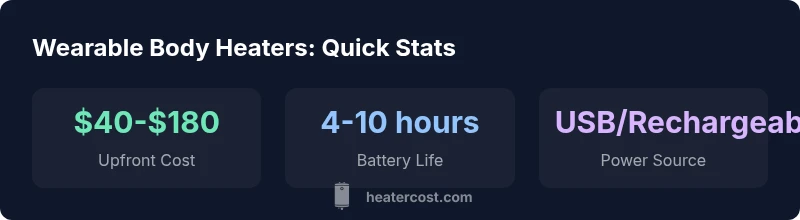
The financial aspect of owning a body heater centers on upfront purchase price, ongoing battery costs, and the durability of heat elements. Typical upfront costs range from modest models around $40 to premium options near $180. In practice, the long-term cost of ownership is highly dependent on how often you use the device, your battery replacement cycle, and the heat setting you rely on. Energy usage for wearable heaters is usually modest in comparison to space heaters, especially when used as a supplementary warmth source rather than a primary heat method. The value proposition hinges on situational need: if you frequently work outdoors in cold weather, a body heater can reduce central heating demand and preserve comfort during short-term outdoor tasks. When evaluating value, compare heat output per watt, battery efficiency, and the reliability of power sources. Heater Cost analysis emphasizes looking for heat zoning, fast warm-up, and durable battery packs when weighing price versus performance.
- Purchase price vs. lifetime cost: consider battery replacement and warranty.
- Use-case alignment: ensure the device fits your activity level and climate.
- Energy vs. comfort: weigh energy savings against convenience and warmth in cold conditions.
Safety, maintenance, and safety guidelines
Safety should lead any purchase decision around body heaters. Look for devices with certified electrical components, flame-retardant fabrics, and thermal cutoffs. Regular inspection of connectors, battery packs, and insulation reduces risk of short circuits or overheating. Clean the fabric components per manufacturer guidance to prevent skin irritation and odor buildup. When storing, remove batteries if the device will be unused for extended periods and avoid exposure to extreme temperatures. If you have skin sensitivities or implanted medical devices, consult with a healthcare professional before using any wearable heater. Finally, never leave a body heater unattended while powered on, and set heat levels appropriate to your activity to minimize energy waste and safety concerns. Heater Cost recommends prioritizing models with automatic shut-off, overheat protection, and clear manufacturer safety instructions.
Everyday scenarios: when a body heater makes sense
In daily life, body heaters fill gaps where central heating falls short. For example, if you start your day outdoors for a chilly commute, a body heater can provide immediate warmth without awaiting indoor heating. Athletes and rehabilitation patients may benefit from localized warmth to improve comfort during recovery sessions. Travelers in cold climates can keep a compact heater in a backpack for quick warmth during layovers or sightseeing. The modular nature of many wearable devices allows you to target hot zones precisely where you feel the cold most—helping to optimize energy use by avoiding unnecessary heating of the entire body. Remember that the real-world value of a body heater comes from its convenience, heat quality, and battery reliability in your routine.
How to choose the right body heater for your needs
Choosing the right body heater requires aligning heat output, battery life, comfort, and safety with your lifestyle. Start by identifying heat zones you prioritize (torso vs. arms). Check the heat settings and whether the device provides uniform warmth or zone-specific warmth. Review battery capacity and recharging time to ensure it fits your daily schedule. Consider fit and fabric comfort, as a bulky model may be uncomfortable during extended wear. If you have sensitive skin or allergies, inspect fabric materials and consider hypoallergenic options. Finally, evaluate warranty terms and customer support quality, since wearable devices rely on electronics that may need repairs or replacements. Heater Cost suggests prioritizing models with a solid warranty, clear heat management controls, and accessible replacement batteries.
Misconceptions and limitations
Common myths about body heaters include the idea that they can replace central heating in all climates or that more heat output always means better comfort. In reality, warmth concentration, battery limitations, and the time needed to heat up affect usefulness. Wearable heaters are best viewed as supplementary warmth tools—ideal for short bursts of cold exposure or targeted comfort, not a comprehensive heating solution for entire rooms. Education around safe usage and battery care can prevent unnecessary energy draw and prolong device life.
Wearable body heater types and basic cost expectations
| Device Type | Typical Usage | Power Source | Estimated Cost Range |
|---|---|---|---|
| Waist-worn pad | Outdoor work / travel | Rechargeable battery pack | $40-$80 |
| Chest-strap heater | Cold-weather comfort | Battery pack + USB option | $60-$120 |
| Hand/forearm sleeve | Sports & rehab | USB-powered battery | $30-$90 |
Got Questions?
What is a body heater and who should consider one?
A body heater is a wearable device that provides targeted warmth to parts of the body using a built-in heater and portable power. Consider one if you face prolonged cold exposure, outdoor work, or need localized warmth without relying on central heating.
A wearable heater provides targeted warmth and is useful for cold outdoor tasks or quick warm-ups indoors.
How much do wearable heaters cost upfront?
Upfront costs typically range from about $40 to $180 depending on heat output, materials, and battery quality. Higher-end models offer more zones and faster heat but at a higher price.
Expect to pay between forty and a hundred eighty dollars for wearable heaters, depending on features.
Are body heaters safe to use indoors?
Indoor use is generally safe when following manufacturer guidelines, using certified products, and avoiding prolonged exposure to high heat settings. Always monitor battery temperature and disconnect if you notice any abnormal warmth.
Inside, follow the manual and keep an eye on battery temperature to stay safe.
How do I choose the right body heater for my climate?
Match heat zones to your typical exposure (torso vs. limbs), check battery life for your daily routine, and select a model with reliable safety features. Consider fabric comfort and washable components for ease of care.
Pick heat zones that fit your climate and make sure it lasts through your daily routine.
Can body heaters replace space heaters?
No. Wearable heaters are supplementary devices intended for personal warmth. They reduce the need to heat unoccupied spaces but are not designed to warm an entire room.
They supplement, not replace, room heating.
What maintenance do wearable heaters require?
Regularly inspect battery connections, clean fabric surfaces per instructions, and store batteries in a dry place when not in use. Replace worn components under warranty and avoid exposure to moisture that could damage electronics.
Check batteries, clean fabrics, and store properly when not in use.
“"Wearable heaters can improve comfort in cold climates when chosen with attention to safety, battery life, and heat zoning. They are most effective as a supplementary warmth source."”
The Essentials
- Consider wearable warmth as a supplement, not a replacement for home heating.
- Expect upfront costs typically in the range of $40-$180 for body heaters.
- Battery life varies; plan for recharging between daily activities.
- Prioritize safety features like auto shut-off and overheat protection.
- Choose heat zones that match your climate and activity level.