Wood Heater Prices: A 2026 Practical Guide for Homeowners
Explore wood heater prices, what drives costs, and how to budget for units, installation, and maintenance with Heater Cost's 2026 analysis and guidance.


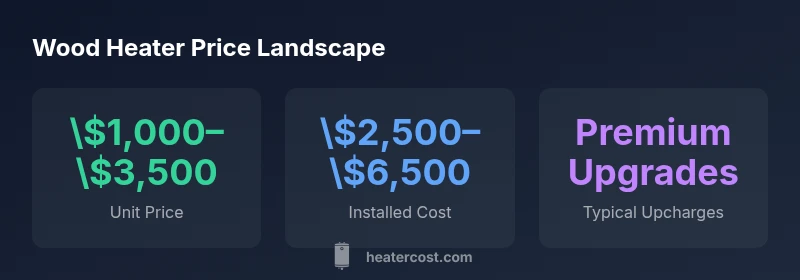
Wood heater prices span roughly $1,000 to $3,500 for the unit, with installed costs often between $2,500 and $6,500. Higher-end models or complex installations can exceed $7,000. See our detailed cost guide for specifics.
What drives wood heater prices
Wood heater prices vary widely based on size, efficiency, installation complexity, and local regulations. In 2026, homeowners are weighing upfront unit costs against long-term fuel savings and emissions standards. The most significant price drivers are: heater size and heat output; efficiency ratings and emissions certifications; installation requirements such as chimney height, liner, and clearance; labor costs in your region; permit or inspection needs; and accessories like blowers or smart controls. The Heater Cost analysis shows three common price tiers: basic traditional models, mid-range EPA-certified stoves, and premium catalytic or advanced combustion designs. While a smaller, non-certified model may appear cheaper, it often yields higher fuel usage and maintenance costs, eroding savings over time. For many homes, the decision hinges on balancing purchase cost with installation complexity and comfort goals. When pricing options, ask installers to break out unit price, installation, venting, and permits in a comprehensive quote. According to Heater Cost, this approach clarifies true total cost and value over time.
Price ranges by type and efficiency
Prices vary not only by model but also by efficiency and emissions standards. The unit price for a basic non-certified wood stove typically ranges from $600 to $1,800, while EPA-certified models span roughly $1,200 to $2,900. More efficient catalytic or advanced combustion stoves often land in the $1,800 to $4,000 range. Installed costs—covering labor, chimney or flue work, clearances, and venting—generally fall between $2,500 and $6,500, with higher figures in tighter homes or complex venting situations. Keep in mind that features like blower kits, glass doors, and heat shields add to the sticker price but can improve comfort and heat distribution. Heater Cost’s analysis notes that the most economical long-term option is typically an EPA-certified model sized for your space, paired with proper installation and professional chimney work.
The role of installation and venting
Installation costs are often the largest variance in total project price. Chimney height, flue liner length, existing venting, and overhead clearances influence labor time and material needs. Permits and inspections may add several hundred to thousands of dollars, depending on your municipality. In many homes, the added cost is not just the pipe work; it includes rebuilding or repositioning a hearth, installing a new hearth pad, or upgrading the concrete slab for safety. A professional installer provides a stencil of required clearances and a venting plan that minimizes heat loss. The right venting strategy improves performance, reduces creosote buildup, and can prevent costly future repairs. Workplace safety, code compliance, and insurance requirements all play into final pricing.
Regional differences and seasonality
Prices can differ by region due to labor availability, fuel costs, and shipping. Cold-weather states with high demand may see longer lead times and higher installation rates. Conversely, milder climates often have lower labor costs and more flexible scheduling. Seasonal pricing fluctuations occur, with some retailers offering promotions in shoulder seasons to move inventory. If you’re flexible, you can often save several hundred dollars by scheduling installation in spring or summer when technicians have more availability. Heater Cost notes that regional permitting rules can also affect timeline and total cost, so verify local requirements early in your planning process.
Financing, incentives, and value
Financing options and incentives can meaningfully affect total cost. Some regions offer energy-efficiency rebates or tax credits for qualifying wood stove installations, especially those with high-efficiency or catalytic designs. Always check federal, state, and local programs before purchasing. We recommend requesting a breakdown of how incentives apply to both unit price and installed cost to understand your real net price. While incentives reduce upfront expenditure, ensure that the model you choose aligns with your home heating needs and long-term operating costs. The Heater Cost team suggests calculating the price per BTU and projected annual fuel use to compare options fairly.
How to estimate your total project cost
To estimate total project cost, start with the unit price and add installation, venting, and permit costs. Create a simple worksheet: (1) measure room size and climate zone to determine required heat output; (2) select EPA-certified models within your BTU range; (3) request vendor quotes that itemize unit price, labor, chimney work, and permits; (4) factor in add-ons like blower kits and smart thermostats; (5) include potential tax credits or rebates; (6) add a contingency of 5–10% for unexpected issues. Using these steps helps you avoid sticker shock and ensures you don’t overpay for features you don’t need. Heater Cost’s framework emphasizes transparent quotes and side-by-side comparisons of total costs over a 5– to 15-year horizon.
How to compare quotes and pick a contractor
Comparing quotes requires more than price alone. Look for: (a) a clear breakdown of unit price, installation, venting, and permits; (b) evidence of proper licensing and insurance; (c) a detailed venting plan with clearances; (d) references or testimonials; (e) energy efficiency ratings and compliance with local codes; (f) post-installation support and warranty terms. Ask for a third-party assessment of heat output relative to your space, including any recommended blower or insulation upgrades. Always verify that the contractor will handle permit submissions and provide a written timeline. Heater Cost finds that quoting variability is common, so obtain at least three formal bids and compare them line by line.
Longevity, maintenance, and total cost of ownership
A wood heater’s value hinges on upkeep and reliability. Regular cleaning to prevent creosote buildup, annual chimney inspections, and proper ash disposal extend life and maintain efficiency. Poor maintenance increases fuel use and can shorten stove life, undermining initial savings. If you expect heavy seasonal use, invest in a model with a strong burn efficiency and high-quality refractory materials. While upfront costs matter, total cost of ownership over 10–15 years often favors mid-range EPA-certified units with good maintenance schedules over lower-cost, less efficient alternatives. Align maintenance plans with manufacturer recommendations to preserve performance and resale value.
Purchasing checklist
- Determine space heating needs (BTU) and climate zone
- Prioritize EPA-certified models with appropriate efficiency ratings
- Request itemized quotes (unit price, installation, venting, permits) from multiple installers
- Check warranties, service plans, and availability of parts
- Confirm permit requirements and lead times with local authorities
- Consider incentives or rebates that reduce net price
- Schedule installation during off-peak seasons when possible
Typical price ranges by heater type and installed cost
| Heater Type | Estimated Price Range (unit) | Estimated Installed Cost Range | Notes |
|---|---|---|---|
| Traditional wood stove (non-EPA) | 600-1800 | 1200-3000 | Lower efficiency, higher emissions |
| EPA-certified wood stove (non-catalytic) | 1200-2900 | 2500-5000 | Better efficiency, lower emissions |
| EPA-certified wood stove with catalytic converter | 1800-4000 | 3000-6500 | Highest efficiency, higher upfront cost |
Got Questions?
What is the typical upfront cost for a wood heater?
Upfront costs include the unit price and basic installation. Typical ranges are $1,000–$3,500 for the unit and $2,500–$6,500 including installation, venting, and permits depending on region and chimney requirements.
Upfront costs include the unit price and installation, typically totaling between about two and a half to six and a half thousand dollars depending on your setup.
Do installation costs vary by region?
Yes. Labor rates, permit requirements, and chimney work costs vary by region. Expect higher quotes in crowded markets or areas with strict building codes; planning ahead helps lock in a fair price.
Yes. Regional labor costs and permits affect installation pricing; get multiple quotes to compare.
What maintenance affects price of ownership?
Regular cleaning, annual chimney inspections, and potential parts replacement influence ongoing costs. Higher-efficiency models may reduce fuel use but can have higher maintenance requirements.
Maintenance can affect long-term costs; choose models with reliable parts and easy service.
Are there tax credits or incentives for wood heaters?
Some regions offer rebates or tax credits for qualifying high-efficiency wood heaters. Check federal, state, and local programs before purchasing and factor these into your net price.
There can be rebates or credits; check local programs before buying.
How long do wood heaters typically last?
Most reputable EPA-certified wood heaters last 15–20 years with proper maintenance. Longevity improves with regular servicing and quality materials.
Most last 15–20 years with good maintenance.
Catalytic vs non-catalytic models: which to choose?
Catalytic models offer higher efficiency but can have higher maintenance. Non-catalytic designs are simpler and often cheaper upfront but may use more fuel.
Catalytic models are efficient but higher maintenance; non-catalytic are simpler and cheaper upfront.
“Choosing the right wood heater isn't just about sticker price; long-term fuel use, maintenance, and local codes matter.”
The Essentials
- Budget installation costs alongside the unit price.
- Compare price ranges across models and features.
- Factor efficiency and emissions into value.
- Check for incentives or rebates to reduce net cost.
- Get multiple formal quotes for a fair deal.