Which infrared heating: A practical comparison for homeowners
Explore which infrared heating options fit your space. Compare panels vs portable units, discuss costs, efficiency, and installation to optimize comfort and energy use.


TL;DR: For targeted warmth in specific rooms, infrared heating is a strong option, especially in well-insulated spaces. It typically costs more upfront but can save on operating costs when used for zone heating. If you need whole-home warmth, compare infrared panels with traditional electric or gas systems to balance upfront costs, ongoing energy use, and comfort.
What infrared heating is and how it works
Infrared heating is a form of radiant heat that transfers energy directly to people and objects in a space, rather than conditioning the air first. This makes infrared heat feel warmer on your skin even when the air temperature is modest. For homeowners trying to decide which infrared heating option fits best, it’s important to understand how infrared radiation interacts with surfaces, furniture, and occupants. Surfaces absorb infrared energy and then re-emit warmth, creating a comfortable zone that can be faster to respond than convection-only systems. The effectiveness of infrared heat depends on insulation, room geometry, and exposure to sunlight. In practice, infrared heating shines in well-sealed spaces where people spend a lot of time near the heat source. The Heater Cost team emphasizes that the most efficient use comes from targeted zone heating rather than trying to heat a large open area aggressively. Given these dynamics, readers should weigh insulation quality, occupancy patterns, and layout when evaluating which infrared heating approach to adopt, recognizing that results vary by space and usage.
Infrared heating options: panels, cords, and modules
Infrared heating comes in several form factors, each with its own strengths and installation considerations. Fixed infrared panels are wall- or ceiling-mounted and emit a broad, even glow of warmth across a room. Corded infrared heaters are typically plug-in units that offer flexibility but require accessible outlets and careful placement to avoid glare or direct contact with furniture. Portable infrared heaters add convenience for renters or temporary needs but may be less space-efficient and can require frequent repositioning. In addition to these mainstream options, some models integrate decorative surfaces or mirror-like fronts that blend with interior design. When evaluating options, consider emissivity (how effectively a surface radiates heat), surface temperature, and heat distribution patterns. Keep in mind that higher-emissivity materials absorb and re-radiate heat more efficiently, which can influence perceived comfort and energy use. The choice between fixed panels and portable units often hinges on installation flexibility, room size, and how quickly you want to respond to changing comfort needs.
Targeted warmth vs whole-home warmth: choosing scope
Infrared heating excels at delivering warmth where you stand or sit. For zone heating, a few strategically placed panels can warm specific seating areas without dramatically raising overall room temperature. This makes infrared an attractive option for adding comfort in bedrooms, home offices, bathrooms, or sunrooms where traditional HVAC may be less efficient. Conversely, using infrared as the sole method for entire-house heating is less common and usually not recommended in larger, poorly insulated spaces. In such cases, infrared is better positioned as a supplementary heat source—complementing a central system or used in conjunction with a heat pump or furnace to support rapid comfort with reduced energy draw.
Performance myths and realities
There are several common myths about infrared heating. One persistent belief is that infrared heat heats the air so slowly that it feels stale; in reality, infrared warmth is delivered directly to occupants and objects, which can feel immediate. Another myth is that infrared heaters always waste energy; properly sized panels in the right locations typically lead to efficient use when you’re heating specific zones rather than the entire space. Real-world performance also depends on insulation: in a cold, drafty room, infrared warmth can feel uneven, as some surfaces shed heat faster than others. Finally, safety often comes up—modern infrared heaters include protective grills, automatic shutoff features, and temperature controls to minimize risk when used as intended. Understanding these nuances helps homeowners choose an infrared approach that aligns with comfort goals and energy expectations.
How to compare infrared with other heating technologies
To evaluate infrared against alternatives, focus on a few core criteria: upfront cost and installation effort, running costs based on usage patterns, comfort delivery in target zones, and long-term reliability. Compared with traditional electric resistance heaters, infrared can offer faster warmth for localized areas and may reduce energy usage when used selectively. Against gas or central heating, infrared is often less invasive to install in specific rooms and avoids ductwork challenges. Heat pumps, while efficient, operate differently and excel at moving heat rather than delivering radiant warmth; infrared can complement a heat pump by providing rapid comfort in select spaces. Weigh these contrasts against your climate, home layout, and occupancy patterns to determine which approach provides the best value over time.
Practical installation considerations
Installation choices influence how well infrared heating performs in your home. Fixed panels require mounting—often on interior walls or ceilings—and may need a professional electrical connection if you’re wiring for higher output. Portable units offer plug-and-play convenience but can be less discreet and may require careful placement to avoid heat exposure to sensitive surfaces. When planning installation, verify electrical capacity to support the panel footprint and estimate the number of outlets or circuits needed. Maintain safe clearances from flammable materials and ensure the heat source isn’t obstructed by furniture or window treatments. If you’re a renter or property manager, consider modular options that won’t disrupt walls or ceilings. Planning for future expansion, such as adding more panels to cover additional zones, can help you scale gradually without large upfront investments.
Safety, maintenance, and longevity
Infrared heaters generally require minimal ongoing maintenance. Regular dusting and occasional wiping of exterior surfaces help keep heat reflection optimal. Inspect mounting brackets, wiring connections, and control panels for signs of wear, especially in high-traffic spaces. Since infrared heat focuses on surfaces rather than circulating air, there is typically less dust movement, which can be a benefit for allergy sufferers. Ensure that the device has proper overheat protection and that it’s plugged into a dedicated circuit if required by the manufacturer. In rooms with high humidity or moisture exposure, such as bathrooms or garages, choose models with appropriate IP ratings and protective housings. Over time, looking for signs of wear and replacing aging elements will help maintain performance and safety.
Cost considerations and ROI (conceptual)
Upfront costs for infrared panels can be higher than plug-in portable heaters, particularly for multiple-zone installations. However, the long-term operating costs depend on usage patterns; infrared can be more energy-efficient when heating specific zones rather than entire rooms. The Heater Cost analysis, 2026 notes that ROI is highly sensitive to insulation quality, occupancy behavior, and climate. Rooms that are well-insulated and frequently occupied near infrared sources tend to deliver better energy return. Renters and homeowners alike should compare the total cost of ownership, including installation, replacement parts, and potential energy savings, before committing to a full infrared retrofit. Use a phased approach to spread out costs while validating performance in real-world conditions.
Regional and climate considerations
Climate and regional energy prices can significantly influence infrared heating viability. In milder climates or for seasonal use, infrared panels can provide comfortable warmth with modest energy draw when correctly targeted. In very cold regions or open floor plans with extensive glass, infrared alone may not be sufficient to maintain consistent comfort, especially in spaces with high thermal losses. In such cases, infrared should be integrated with an overall heating strategy that includes insulation upgrades, weather sealing, and, where appropriate, supplemental conventional heating. Understanding local climate patterns helps homeowners plan placement, panel sizing, and expected outcomes, ensuring infrared heat complements overall comfort and energy budgets.
Quick-start decision checklist
- Identify zones where occupants spend the most time and assess insulation in those areas.
- Decide between fixed panels for discreet warmth or portable units for flexibility.
- Check electrical capacity and plan for dedicated circuits if required.
- Compare upfront costs against expected running costs and comfort goals.
- Consider maintenance needs and longevity of each option.
- Review safety features and ensure proper mounting and clearance distances.
- Estimate potential ROI based on occupancy patterns and climate conditions.
Real-world scenarios: case studies
In a small, well-insulated apartment, a single wall-mounted infrared panel placed near a living area can deliver fast comfort to occupants without heating unused spaces, leading to steady comfort and reasonable energy use. In a sunroom with large windows, several panels arranged to heat typical seating zones can create a comfortable climate on cooler days while avoiding the expense of heating the entire home. A home office that’s used only part of the day might benefit from a portable infrared heater that can be moved between seating areas, allowing spot warmth where needed without permanently changing the room layout. These scenarios illustrate how space, usage patterns, and insulation determine the value of infrared heating, reinforcing the importance of a zone-based approach rather than a blanket home-wide solution.
Glossary: infrared heating terms you should know
- Infrared radiation: Electromagnetic energy emitted by a hot surface that directly heats objects and people.
- Emissivity: A material’s ability to emit infrared energy; higher emissivity means more efficient heat transfer.
- Radiant panel: A fixed IR heater mounted on a wall or ceiling.
- Heat zones: Specific areas where infrared heat is directed for targeted comfort.
- Ductless: Heating systems that do not rely on ducts to move air or heat.
Which infrared heating option fits best for you?
The best choice depends on the space, occupancy, and goals. Fixed panels are ideal for long-term, discreet warmth in defined zones, while portable options provide flexibility for renters or temporary needs. For multi-zone comfort, a hybrid approach—combining fixed panels with portable units—can deliver targeted warmth where and when you need it most. Always start with a calibrated assessment of space heat loss, occupancy patterns, and insulation quality to determine how many zones to heat and which infrared configuration will deliver the greatest value over time.
Comparison
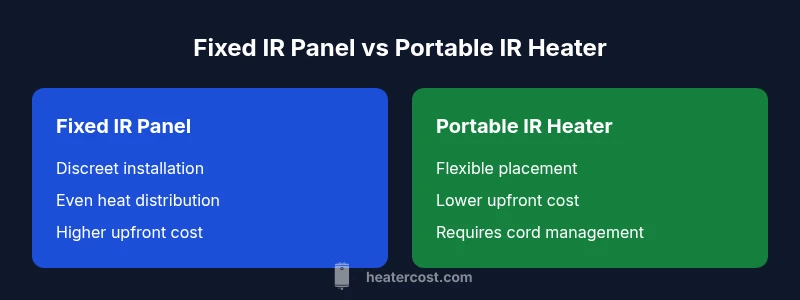
| Feature | Fixed infrared panels | Portable infrared heaters |
|---|---|---|
| Installation/difficulty | Requires mounting and, in some cases, professional electrical work | Typically plug-in; easy to relocate |
| Heat delivery | Even heat distribution across a zone | Localized warmth with spot heating |
| Aesthetics | Low-profile, integrated into walls/ceilings | Visible unit with cord and surface finish |
| Best for | Long-term zone heating in a few rooms | Temporary or flexible warmth across spaces |
| Space efficiency | Slim, unobtrusive design; minimal footprint | Larger footprint if placed away from walls; requires space for cord management |
| Upfront cost | Higher per-panel cost; cost scales with number of zones | Lower upfront per unit; cost scales with number of units |
| Maintenance | Low maintenance; sealed units | Regular dusting; cord management and placement care |
The Good
- Rapid, targeted warmth with low air movement
- Quiet operation and simple controls
- No ductwork required for installation
- Low maintenance and durable components
- Can be integrated into interior design with minimal disruption
Negatives
- Higher upfront costs for multiple zones
- Less effective for large open spaces without adequate coverage
- Performance depends on room insulation and layout
- Aesthetics may be a consideration for renters seeking removable options
Fixed infrared panels generally offer better efficiency and aesthetics for targeted zone heating, but portable infrared heaters excel for flexibility.
Choose fixed panels for long-term, discreet warmth in defined zones. Choose portable heaters if you need flexibility, lower upfront costs, or renter-friendly options. Your decision should hinge on space, insulation, and how you plan to use heat.
Got Questions?
What is infrared heating and how does it work?
Infrared heating delivers radiant warmth by emitting infrared radiation that transfers heat directly to people and objects. It heats surfaces rather than air, offering quick comfort in well-insulated spaces. The technology is effective when used for zone heating and integrated with a broader strategy.
Infrared heating sends warmth directly to you and your surroundings, heating people and objects rather than the air. It works best in well-insulated spaces and is great for targeted comfort.
Is infrared heating safe for homes with children or pets?
Yes, infrared heating can be safe when installed and used as directed. Look for models with protective enclosures, temperature controls, and proper clearances. Always follow manufacturer instructions and keep heat sources away from crush hazards or flammable materials.
Infrared heaters are generally safe when installed properly and kept clear of flammable items. Follow the manufacturer’s safety guidance and use proper mounting.
Can infrared heating be used for whole-house heating?
Infrared heating is typically used for zone heating rather than as the sole method for entire-home warming. In many homes, infrared panels supplement a central system or heat pump, delivering fast comfort in key areas while the main system manages overall temperature.
IR heat works best as a supplement in most homes, providing quick warmth in zones while your main system handles whole-house comfort.
What maintenance is required for infrared heaters?
Maintenance is usually minimal: regular dusting, checking mounting hardware, and ensuring vents (if any) are clear. For fixed panels, avoid blocking heat paths. Warranties often require periodic inspections per manufacturer guidance.
Keep the surface dust-free and check that mounting hardware stays secure. Minimal ongoing maintenance is typically needed.
How do installation costs compare to traditional electric heaters?
Infrared panels can involve higher upfront costs due to panel quality and mounting needs, especially for multi-zone setups. Portable infrared heaters are cheaper upfront but may increase clutter and require more active management. Long-term costs depend on usage and space efficiency.
Infrared panels cost more upfront, but portable units are cheaper to start with. Overall costs depend on how you use heat and how many zones you cover.
Which infrared heating option is best for renters?
For renters, portable infrared heaters offer flexibility without changing walls or wiring. If a renter can work with a landlord for a semi-permanent panel, wall-mounted panels can be considered, but always ensure you have permission before mounting.
Renters typically benefit most from portable infrared heaters due to flexibility and no permanent installation.
The Essentials
- Target zones first, then scale coverage
- Evaluate insulation before choosing panel types
- Balance upfront costs with potential energy savings
- Consider hybrids for flexible homes
- Prioritize safety features and proper installation