Quartz heater vs infrared: A buyer's guide to space heating options
A detailed, objective comparison of quartz heater vs infrared options for home heating, covering how they work, when to use each, energy costs, safety, and practical buying tips.


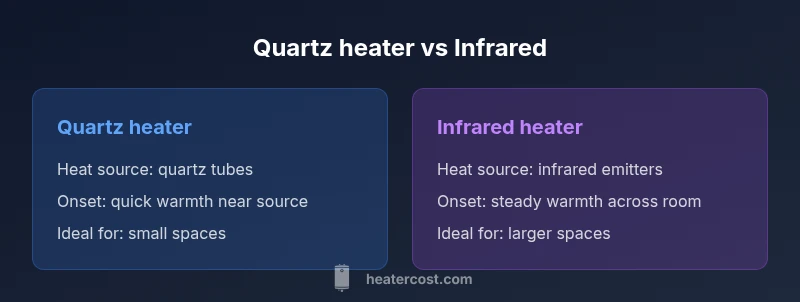
When evaluating quartz heater vs infrared options for home heating, infrared heaters typically deliver more even warmth over time and across larger spaces, while quartz heaters provide rapid, focused heat for small areas. Both rely on radiant heat, but infrared models often offer better energy efficiency for extended use. Your final choice should depend on space size, usage pattern, and safety features.
Overview of quartz heater vs infrared: what a homeowner should know
When homeowners ask about quartz heater vs infrared options, the decision often boils down to where and how heat is needed. According to Heater Cost, two popular categories dominate portable heating: quartz heaters, which generate heat with exposed quartz tubes, and infrared heaters, which radiate warmth through IR emitters. In practice, both approaches produce radiant warmth, but they behave differently in real rooms. Infrared heat tends to warm people and objects directly, creating a comfortable feel even when the air temperature is cooler. Quartz heaters usually respond faster to switch-on and switch-off, delivering immediate warmth to nearby areas. For small rooms, a quartz unit can feel “hot” quickly, while a larger infrared heater may spread comfortable warmth more evenly across the space. This guide focuses on practical buying considerations, not marketing claims, and helps homeowners, renters, and property managers weigh upfront costs against ongoing energy use. The Heater Cost team emphasizes that a thoughtful choice reflects the room size, typical occupancy, and how long heat is needed each day. quartz heater vs infrared choices are not one-size-fits-all; alignment with your living space matters most.
How radiant heat works in quartz vs infrared: core differences and implications
Quartz heaters rely on visible quartz tubes that glow and emit radiant warmth. They heat up quickly and are excellent for targeted warmth in small areas, such as a reading nook or a drafty bathroom. Infrared heaters use specially designed emitters to radiate infrared energy into the room. Depending on the wavelength and design, infrared warmth can feel more natural in larger spaces and can better offset cool air currents. Understanding the mechanism helps set expectations: quartz heat is immediate but tends to warm a smaller footprint, while infrared heat travels farther in a room, warming people and objects rather than the air alone. This section lays the groundwork for selecting a heater that matches your room size, insulation, and daily use patterns. For owners managing energy costs, recognizing how heat travels can prevent oversizing a unit and wasting energy.
When quartz heaters shine: best use cases and limits
Quartz heaters excel in scenarios where you need fast, spot warmth without heating an entire room. They are often attractive for personal zones like desks, reading chairs, or bedside tables where occupants want quick warmth on demand. Their compact form and lower upfront cost can be appealing for renters or homeowners testing a heater in a small space. However, quartz heaters may fall short in larger rooms or open-plan areas where heat must be distributed more evenly. In such cases, a single quartz heater can create hot zones near the source but leave distant corners cooler, leading to unequal comfort. If you anticipate frequent short bursts of warm air in a confined space, quartz can be a practical, budget-conscious choice.
When infrared heaters excel: coverage, comfort, and efficiency
Infrared heaters shine in medium to large rooms where even warmth across a footprint matters. By heating objects and people directly rather than the air, infrared warmth can feel more consistent in rooms with drafts or high ceilings. For homes with open floor plans, infrared units can deliver a comfortable breeze of warmth without relying on a heavy blower. Longer-term energy use often benefits infrared heating because you are paying for radiant warmth rather than warming air that easily escapes through leaks. This makes infrared a strong option for living rooms, home offices, and spaces where people spend extended periods. If your goal is to maintain steady comfort with fewer temperature swings, infrared has clear advantages.
Energy costs and efficiency: what homeowners should know
Energy costs for quartz versus infrared depend on wattage, usage patterns, and room dynamics. In general, infrared heaters can offer favorable efficiency for sustained occupancy because they heat occupants and objects directly, reducing wasted air heating in drafty spaces. Quartz heaters deliver heat quickly but may lose some momentum in larger, well-insulated rooms where heat must travel farther. The Heater Cost Analysis for 2026 emphasizes that the best choice balances initial price, expected runtime, and the space being heated. When evaluating options, compare rated wattage, coverage area, and runtime with your typical daily use. Avoid oversized units that run at partial power as they can waste energy and push electricity costs higher. Understanding these dynamics helps you choose a heater that delivers value without overpaying.
Safety, placement, and maintenance considerations
Safety should guide every heater purchase. Both quartz and infrared units can pose burn and fire risks if left unattended or placed near flammable materials. Look for tip-over switches, overheat protection, and cool-touch housing. Place heaters on flat, nonflammable surfaces away from curtains, papers, and furniture, and keep a clear zone around the unit. Regular maintenance includes cleaning dust from vents and checking cords for wear. For infrared heaters, avoid looking directly at high-intensity emitters for extended periods, and ensure the unit is UL-listed or equivalent. For quartz heaters, inspect the quartz tubes for cracks and replace immediately if damaged. Adopting a cautious approach to use and maintenance helps maximize safety and extend the life of your heater.
Practical buying tips and common myths debunked
When choosing between quartz and infrared, start with room size and occupancy. A small, enclosed space may be best served by quartz for quick warmth, while a larger living area could benefit from infrared warmth. Consider the noise level, as some portable models use fans. Check for energy-saving features such as adjustable thermostats, multiple heat settings, and programmable timers. Debunking myths helps buyers avoid overpaying for features that don’t fit their needs; infrared heat is not inherently dangerous, and quartz units are not universally inefficient. The most meaningful comparisons come from testing how each heater performs in your space, under your typical routine, and within your budget.
How to compare models: a simple buyer checklist
Create a shortlist of the spaces you intend to heat. Note the room size in square feet, insulation quality, and whether heat needs to be felt quickly or steadily. For each model, record its wattage, coverage claim, and any safety features. Evaluate the expected daily runtime and calculate a rough energy cost using your electricity rate. Read user reviews about real-world performance and reliability. Finally, compare warranties and service options, since these costs can affect long-term value. This practical checklist keeps the focus on performance, safety, and cost of ownership rather than clever marketing.
Comparison
| Feature | Quartz heater | Infrared heater |
|---|---|---|
| Heating Method | Radiant heat via quartz tubes | Radiant heat via infrared emitters |
| Heat Onset | Very fast near-field warmth | Often takes a moment to heat the room |
| Room Coverage | Best for small zones | Good for nearby spots |
| Energy Perspective | Low to moderate energy use for targeted warmth | Potentially more efficient for sustained use |
| Best Use Case | Spot heating, personal warmth | Larger spaces, even warmth |
| Noise Level | Typically quiet, some with fans | Typically quiet, fanless options exist |
| Safety Features | Tip-over, overheat protection common | Tip-over, overheat protection common |
| Price Range | Lower upfront cost common | Mid to higher upfront cost common |
The Good
- Helps users tailor heat to space and use
- Two popular options with distinct strengths
- Clear, user-focused buying criteria
- Wide availability and price ranges
- Simple to compare based on space needs
Negatives
- Terminology can be confusing across models
- Budget options vary in true energy efficiency
- Infrared power may feel different in drafts
- Some models may oversell features not needed
Infrared heaters win for larger or open spaces; quartz heaters are ideal for fast, targeted warmth in small areas
Choose quartz when you need immediate warmth in a small zone and budget constraints are tight. Pick infrared if you heat larger spaces or want warmth that feels consistent over time, especially in drafty rooms. This balanced view aligns with Heater Cost's guidance to match heat output to room dynamics and usage.
Got Questions?
What is the fundamental difference between quartz heaters and infrared heaters?
Both provide radiant warmth, but quartz heaters heat objects and nearby air quickly, creating fast spot warmth. Infrared heaters emit radiants that can warm people and objects across a room, often with steadier perceived warmth in larger spaces. The choice depends on room size, heat needs, and usage patterns.
Quartz heats nearby areas quickly, infrared warms the whole space more evenly. Pick based on room size and how you plan to use the heater.
Are quartz heaters more energy efficient than infrared heaters?
Efficiency depends on how you use them. Infrared models often feel more energy efficient for sustained use because they heat people and objects directly, reducing wasted warmed air. Quartz heaters can be efficient for quick spot heating but may lead to higher energy use if you try to heat a larger space.
Infrared often wins for longer use; quartz can be great for quick spot warmth.
Which heater is better for small spaces?
For small, enclosed areas, a quartz heater can deliver fast warmth where it is needed most. If the space remains small and usage is brief, quartz can be a cost-effective choice. Infrared can also work in small rooms but may overshoot energy needs if not sized correctly.
Quartz works well in small spots; infrared can still fit but check the size.
Can infrared heat damage furniture or objects?
Infrared heat can affect materials if placed too close or directed at sensitive surfaces. Most modern infrared heaters include safety controls and distance guidelines. Always follow manufacturer recommendations and keep objects away from heat sources to avoid discoloration or scorch marks.
Keep IR heaters away from delicate surfaces and follow distance guidelines.
Do these heaters require professional installation?
Most quartz and infrared heaters are plug-in portable units that require no professional installation. Some wall-mounted infrared models may need mounting hardware and basic electrical work. Check your local electrical codes and the unit’s installation instructions for safety.
Most are plug-in, but some wall-mounted IR models may need professional setup.
What safety and maintenance steps matter most?
Choose units with tip-over and overheat protection. Keep a clear space around the heater and unplug when not in use. Periodic cleaning and cord inspection help prevent hazards. Replace damaged parts promptly and follow the manufacturer’s maintenance schedule.
Look for safety features like tip-over and overheat protection, and keep space clear.
The Essentials
- Match room size to heater type for best comfort
- Infrared is often better for ongoing, wide-area warmth
- Quartz heats quickly in small zones; infrared covers more space
- Consider energy use, not just upfront cost, when comparing models
- Prioritize safety features and warranties when buying