Oil Heaters for Sale: A Comprehensive Buying Guide 2026
Explore oil heaters for sale with cost insight, safety guidance, and a practical buying checklist to help homeowners, renters, and property managers choose the right model in 2026.


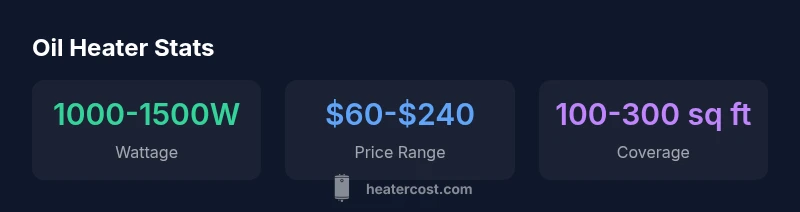
Oil heaters for sale today offer reliable, silent warmth for smaller spaces and drafty rooms. Typical models range from 1000 to 1500 watts, with price bands broadly $60-$240. Based on Heater Cost Analysis, 2026, choose a unit with an adjustable thermostat and safety shutoff. The Heater Cost team notes that operating costs depend on local electricity rates and room insulation.
Understanding Oil Heaters for Sale
Oil heaters for sale encompass electric oil-filled radiators designed to heat spaces by warming ceramic fins filled with oil. They store heat in the oil, then radiate it gradually into the surrounding air. This design yields near-silent operation and steady warmth, which many renters and homeowners prefer for bedrooms and home offices. In 2026, a wide range of models competes on price, size, and safety features, so buyers should evaluate both upfront costs and long-term energy use. According to Heater Cost, the most common configurations are compact portable units and larger panel heaters intended for corner placement. When you shop, consider room size, insulation quality, window drafts, and occupant comfort needs. The Heater Cost team notes that a well-insulated space can significantly reduce run time, lowering electricity consumption and total heating costs, a critical factor when comparing oil heaters for sale across brands and retailers. This section dives into how these units work, what you should expect to pay, and how to separate hype from real value.
How Oil Heaters Work
Oil heaters operate by passing electricity through a sealed oil-filled core. The heat warms the oil, which stores energy that is gradually released into the metal fins and surrounding air. Because the heat is stored, these units tend to provide steady, gentle warmth without the quick temperature spikes of some other electric heaters. There are no combustion byproducts, and the heat feels more even as the oil slowly cools. When shopping for oil heaters for sale, look for a robust enclosure, a reliable thermostat, and auto shut-off features for safety. The Heater Cost team emphasizes that the long-term reliability of the oil core is a key factor in total cost of ownership.
Sizing, Space, and Placement
Correct sizing is essential for comfort and efficiency. For many spaces, a rule of thumb is to aim for 10-15 watts per square foot in temperate climates, and up to 20 watts per square foot in colder climates with poor insulation. Start by measuring the room in square feet, assess ceiling height, and account for drafts from windows or doors. Place the heater on a flat, non-slip surface away from curtains, furniture, or bedding. Do not use extension cords, and keep at least three feet of clearance around every heater. In small bedrooms or home offices, a compact oil heater in a corner can provide comfortable warmth without dominating the room’s aesthetics.
Energy Efficiency and Operating Costs
Energy efficiency for oil heaters depends on insulation, room size, and how long you run the unit. Because oil stores heat, these heaters can deliver a steady temperature with relatively modest running times, but wattage still drives electricity use. A 1000-1500 W unit running for several hours will cost more than a small fan heater, yet it often delivers more even warmth with less odor and no combustion byproducts. The key is to use a programmable thermostat and set a reasonable setback temperature when the room is unoccupied. In practice, operating costs vary with local electricity rates and the level of insulation, so compare models using your region’s rate and expected run time.
Safety Features and Best Practices
Safety is paramount when using any space heater. Look for tip-over protection, overheat protection, cool-to-touch surfaces, and certified wiring. Oil heaters inherently stay cooler to the touch on the exterior, but ensure the unit has a stable base and a proper housing to avoid contact with fabrics or papers. Use a dedicated outlet and avoid plugging multiple high-wattage devices into the same circuit. Regularly dust the vents, check the power cord for wear, and replace a unit showing signs of oil leaks or unusual noises. Always follow the manufacturer’s instructions for operation and warranty coverage.
Installation, Setup, and Maintenance
Most oil heaters for sale are freestanding and plug into standard outlets, requiring no professional installation. If your space demands smarter control, consider models with built-in thermostats or compatibility with home automation systems. For maintenance, wipe down the exterior with a damp cloth and keep the airflow clear. Periodically check the power cord and plug, and be attentive to any reduce heat output, which can indicate a need for service or replacement. A well-maintained unit tends to last longer and perform more consistently.
Comparisons with Other Heating Options
Oil heaters offer quiet operation and stable heat, but they warm spaces differently than convective electric heaters or gas furnaces. In small rooms, oil-filled radiators can outperform baseboard heaters for noise and comfort, yet they may heat up more slowly than forced-air systems. When evaluating oil heaters for sale, compare energy efficiency, heat output, noise levels, and upfront cost against other options such as electric baseboard heaters, space heaters, or gas-fired units. A balanced assessment often favors a model that aligns with your space, insulation, and budget.
Buying Guide: What to Look For in Oil Heaters
Key features to consider include wattage range, adjustable thermostat, programmable timer, auto shut-off, safety certifications, and warranty length. Evaluate the unit’s weight, the size of the heater, and the aesthetic fit for your room. Reading user reviews can reveal performance issues, while manufacturer-provided data sheets show efficiency metrics and compliance with safety standards. For landlords and property managers, consider durability and ease of maintenance. Finally, calculate total cost of ownership by comparing upfront price, energy use, and expected lifespan to choose the best value among oil heaters for sale.
Long-Term Considerations: Total Cost of Ownership
Beyond the sticker price, the real value comes from long-term energy use, maintenance, and reliability. A model with a robust thermostat and automatic shutdown features reduces energy waste and accidental overheating. The Heater Cost team recommends tracking running hours and energy costs over the first heating season to estimate true annual costs. In many cases, choosing a slightly higher upfront price for a unit with better insulation and controls pays off over several winters, especially in moderately cold climates where drafts and insulation gaps are common.
Oil heater types comparison
| Model Type | Typical Wattage | Notes |
|---|---|---|
| Oil-filled radiator | 1000-1500 W | Quiet, portable heat |
| Oil-filled panel heater | 1000-1500 W | Even heat distribution |
| Combination oil heater with thermostat | 1000-1500 W | Smart control options |
Got Questions?
Are oil heaters safe to use indoors?
Yes, oil heaters are generally safe for indoor use when operated as directed and equipped with built-in safety features such as tip-over and overheat protection. Always place them on stable, non-flammable surfaces and maintain clear space around the unit. Regular maintenance and following the manufacturer’s guidance further reduce risk.
Oil heaters are safe indoors when used properly and with safety features like tip-over protection and a clear surrounding area.
Do oil heaters use a lot of electricity?
Oil heaters are electric and their energy use depends on wattage and run time. A typical 1000-1500 W model will consume more power than portable fans, but their gradual heat can be more efficient for small spaces if used with a programmable thermostat and timer.
Energy use depends on wattage and how long you run it; programmable controls help manage costs.
How do I size an oil heater for a room?
Measure the room's square footage and adjust for climate and insulation. A common guideline is 10-15 W per square foot in moderate climates and up to 20 W per square foot in colder, poorly insulated spaces. Always consider drafts and ceiling height when sizing.
Measure your space and use watts-per-square-foot guidelines to pick the right size.
Is installation required for oil heaters?
Most oil heaters are freestanding and plug into standard outlets, requiring no professional installation. Some models offer smart features or central automation compatibility that may require setup, but there’s no ducting or venting needed.
Usually no installation is required beyond plugging in and setup.
How do oil heaters compare to electric baseboard heaters?
Oil heaters store heat and tend to run more quietly with steady warmth, while baseboard heaters can respond faster to temperature changes. Costs depend on wattage, insulation, and usage patterns; compare running costs and heat delivery for your space.
Oil heaters heat more steadily; baseboard heaters respond faster—evaluate based on your room and schedule.
“Oil heaters for sale can deliver dependable heat, but efficiency depends on space, insulation, and proper controls. A programmable thermostat with auto shut-off makes warmth safer and more cost-effective.”
The Essentials
- Choose an oil heater with 1000–1500 W for small to medium rooms.
- Prioritize models with adjustable thermostats and auto shut-off for safety.
- Estimate energy costs using your local electricity rate and expected run time.
- Place the heater with ample clearance and away from flammable items.
- The Heater Cost team recommends evaluating total cost of ownership, including upfront price and running costs.