Best Mini Desk Heaters for Personal Warmth in 2026
A practical buying guide for mini heaters for desk setups, covering safety, energy use, placement, and cost considerations for homeowners, renters, and property managers.


For desk users seeking personal warmth without heating an entire room, a compact mini heater for desk is often the best option. Look for models with automatic shutoff, cool-touch surfaces, and tip-over protection. In practice, these devices provide targeted heat, quick warm-up, and flexible placement, making them ideal for workspaces, home offices, and dorm rooms while keeping energy costs reasonable.
What is a mini heater for desk and when to consider one
A mini heater for desk is a compact, portable heating device designed to provide localized warmth to a small workspace rather than heating an entire room. For many homeowners, renters, and office workers, it offers a sensible balance between comfort and energy efficiency. According to Heater Cost, this approach can reduce energy waste by focusing heat exactly where it’s needed and limiting heat to hours of use. If you work in a drafty room, share a space with a roommate, or simply want a rapid warm-up during cold mornings, a desk heater can be a practical addition to your setup. It’s important to pick a model rated for desk use, with safety features like auto shutoff, overheat protection, and a stable base. When configured correctly, a mini heater for desk becomes a dependable personal climate control tool that avoids turning on the central furnace.
As you evaluate options, consider the size of your desk, the proximity to electronics, and how long you typically remain seated in a single session. A smaller desk with a low-profile heater tends to be safer and easier to position, while larger workstations may benefit from a model with adjustable heat output. The Heater Cost team emphasizes that choosing the right heater is about fit and usage patterns as much as raw power. In short: select a unit that matches your space, remains unobtrusive, and includes essential safety features.
How desk size and layout influence heater choice
Desk dimensions and surrounding furniture dictate which mini heater will perform best. On compact desks (under 36 inches wide), a small magnetic strip heater or a ceramic puck-like unit can deliver warmth without crowding the surface. Medium-sized desks may benefit from a low-profile radiant panel or a fan-assisted compact heater that quietly evenly distributes heat. For larger desks or open-plan workstations, models with adjustable heat settings and longer reach can help avoid overheating nearby items. Always measure clearance around the device to prevent blockage of vents and to keep cables out of reach. Additionally, consider the location of windows, drafts, and the proximity to computers and monitors, which can influence cooling needs and heat distribution. Heater Cost analyses from 2026 show that space planning can dramatically affect perceived warmth and energy use, especially in rooms with poor insulation.
Tips for placement:
- Keep the heater at least 6–12 inches from the edge of the desk.
- Position the unit so heat is directed toward your torso, not your peripherals.
- Use a stable, nonflammable surface and avoid covering vents with papers or fabric.
Key features that affect performance and safety
When shopping for a mini desk heater, focus on a handful of features that materially impact usability and safety:
- Automatic shutoff and tip-over protection to prevent accidents if the device is jostled.
- Thermostatic control with a clear display and stable temperature steps to avoid oscillation.
- Cool-touch exterior to reduce burn risk during setup or adjustments.
- Noise level that won’t disrupt calls, video conferences, or focused work.
- Overheat protection and surge resistance for safety during power fluctuations.
- Compact form factor and lightweight design for easy repositioning. In practice, models with programmable timers tend to deliver better energy efficiency by limiting run time to required periods. Heater Cost analyses indicate that a small, programmable unit can reduce wasted heat, particularly in rooms that are intermittently used.
Safety first: placement, cords, and tip-over protection
Desk heaters pose several safety considerations. Always use a unit with an automatic shutoff if tipped or overheated. Place cords away from foot traffic and avoid daisy-chaining with other high-wraw devices. Do not place heaters under desks or behind accessories where heat can accumulate and create a fire hazard. If you share a desk area, consider a heater with a shorter power cable and a plug that’s easy to unplug during breaks.
Inspect the device before each use — look for nicks in the power cord, a stable base, and a rated electrical overload protection feature. In environments with children or pets, select models with a locked-out control panel or a cover that prevents accidental changes. Regular cleaning of dust from vents helps maintain efficiency and reduces the risk of overheating.
Energy use, efficiency, and running costs
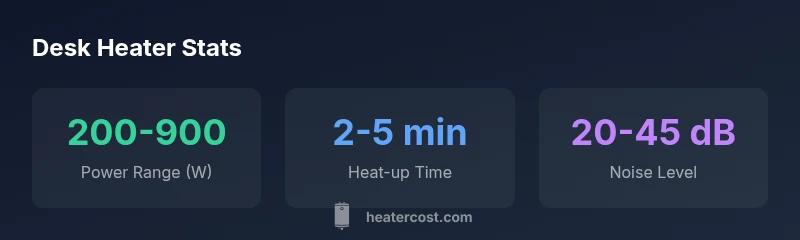
Understanding energy use is essential to determine the true cost of ownership for a desk heater. Desk heaters typically range from a few hundred watts to around 900 watts for higher-output models. Running costs depend on local electricity rates and how many hours per day the heater is used. Using a desk heater only in small, occupied spaces can be far more economical than heating an entire room, especially in well-insulated spaces. Heater Cost analysis for 2026 emphasizes that selecting an energy-efficient model with multiple heat settings and a timer can minimize daily costs while preserving comfort. In practice, you can estimate costs by multiplying wattage by hours of use and applying your local rate per kilowatt-hour.
Practical usage: setup, maintenance, and longevity
Effective use of a mini heater for desk requires a simple routine. Keep the heater off when you’re not at your desk. Regularly wipe dust from vents and ensure the temperature control remains responsive. If you notice unusual noises, smells, or reduced heating efficiency, inspect the unit or seek professional advice. Avoid placing the heater on fabric surfaces or near liquids. With proper care, a desk heater can provide reliable warmth for several years. A clean, dry surface and minimal exposure to moisture are key to extending its life.
Comparing common desk heater types
| Type | Typical Power (W) | Pros | Cons | |---|---|---|---| | Ceramic puck heater | 200-400 | Compact, fast warm-up, affordable | Limited heat spread | | Fan-forced compact heater | 400-900 | Strong heat distribution, quick warm-up | Noise possible | | Micathermic panel | 300-600 | Quiet, sleek, even heat | Slightly slower response | | Oil-filled mini radiator | 450-1000 | Heat retention, smooth warmth | Slower to heat, bulkier |
Choosing the right type depends on desk size, noise tolerance, and how quickly you need heat. Smaller desks benefit from puck or panel models, while shared work areas may justify a fan-forced unit for stronger warmth.
Real-world scenarios and cost considerations
In real-world settings, many people use desk heaters during winter at a desk in a home office or a dorm room. If you work in a cold climate or a drafty building, a desk heater can dramatically improve comfort without turning up the central heating. The exact cost varies with electricity rates and usage patterns. For example, a 600W unit used for 6 hours per day will have a different impact on monthly bills than a 200W unit used for 2 hours. Heater Cost analysis suggests modeling your daily heat needs using room size and insulation quality and then selecting a device with a programmable timer to limit operation to peak comfort periods.
Quick 5-step buying guide for desk heaters
- Assess your space: desk width, distance to walls, window drafts.
- Pick a heater type that matches your desk and noise tolerance.
- Prioritize safety features: auto shutoff, tip-over switch, cool-touch exterior.
- Look for energy-efficient options with timers and adjustable heat settings.
- Test placement and monitor energy use; adjust power as needed. The Heater Cost team recommends focusing on safety, efficiency, and fit for your desk setup to maximize value.
Desk heater type comparison
| Desk Heater Type | Typical Power (W) | Desk Usability | Key Safety Notes |
|---|---|---|---|
| Ceramic puck heater | 200-400 | Good for small desks | Auto shutoff if tipped |
| Fan-forced compact heater | 400-900 | Effective in shared spaces | Avoid blocking vents |
| Micathermic panel heater | 300-600 | Quiet and space-saving | Careful with heat near papers |
| Oil-filled mini radiator | 450-1000 | Heat retention, slower response | Avoid overheating due to enclosure |
Got Questions?
What is a mini heater for desk?
A mini heater for desk is a small, portable heater designed to warm a personal workspace rather than the entire room. It’s ideal for quick comfort in small areas and can save energy when used correctly.
A small desk heater warms just your space, not the whole room, which helps with comfort and efficiency.
Do desk heaters save energy compared with central heating?
Yes, when used to supplement targeted warmth in a small area, desk heaters can reduce overall energy usage compared with heating an entire space. Savings depend on wattage, duration, and local electricity rates.
desk heaters save energy if you heat only the space you use and rely on your main heating for the rest.
How do I choose the right wattage for my desk?
Match wattage to desk size, occupancy, and insulation. Start with lower settings and use programmable timers to avoid wasting heat.
Start with a low setting and adjust as needed to stay comfortable without wasting energy.
Is it safe to use a desk heater near a computer monitor?
Yes, as long as you maintain safe distances from electronics and ensure the heater has tip-over protection and a cool-touch exterior.
Keep the heater away from your monitor and cords; use a model with safety features.
How much does running a desk heater cost per day?
Costs vary with wattage, usage, and local rates. A programmable unit can limit daily heat time to reduce expenses compared with continuous use.
Costs depend on how long you run it and your local electricity rate.
What maintenance do desk heaters require?
Keep vents clean, inspect cords for wear, and store in a dry location. Seek professional help if you notice unusual smells or performance issues.
Dust the vents and check the cord every so often to keep it safe and efficient.
“A compact desk heater can be a smart, targeted warmth source when safety and efficiency are prioritized.”
The Essentials
- Choose a compact unit that matches desk size
- Prioritize safety features and stable placement
- Estimate running costs using local electricity rates
- Place heater away from liquids and electronics
- Consider energy-efficient models with timers