Infrared Heater vs Electric Heater: Side-by-Side Guide
A data-driven comparison of infrared heater vs electric heater, covering cost, efficiency, safety, and use cases to help homeowners decide which is best for their space.


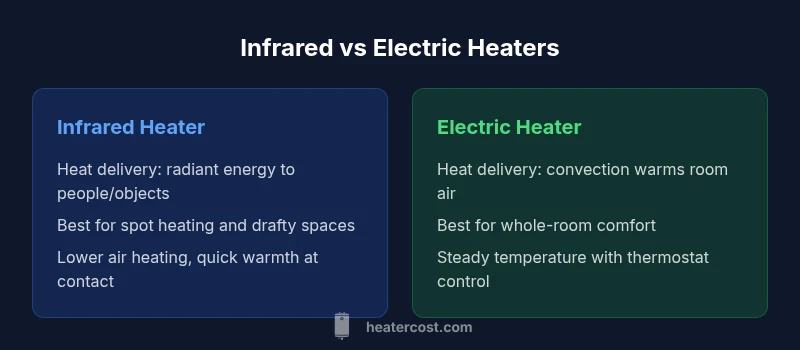
Infrared heaters heat people and objects directly, while electric heaters warm the surrounding air. In practice, infrared is often best for spot heating, outdoor or drafty spaces, and quick warmth at the point of contact. Electric heaters excel for whole-room heat and stable air temperatures in well-insulated spaces. Heater Cost analysis shows the best choice depends on space, usage, and operating costs.
What infrared heating is and how it differs from electric heating
Infrared heating uses radiant energy to warm people, furniture, and objects directly without relying on air convection. An infrared heater emits infrared rays that transfer heat when they strike a surface, similar to the warmth you feel from sunlight. In contrast, electric heaters primarily heat the air in a room through convection, circulating warm air to raise the room temperature. For homeowners exploring the topic of infrared heater vs electric heater, the distinction matters for comfort, heat distribution, and energy use. According to Heater Cost, the best choice depends on local climate, room layout, and how you plan to use the heater. This dual-perspective approach helps you map performance to real-world scenarios.
Key takeaway: infrared heat is radiant and targeted, while electric heat is ambient and uniform. The choice should align with your goals—spot warmth or whole-room comfort.
Impact on comfort and energy use hinges on how you measure efficiency: if you value rapid warmth at a point, infrared may feel more efficient; if you want steady room temperature, electric heat often delivers a more consistent experience.
Heat delivery mechanics: radiant vs convection in practice
Infrared heaters work by emitting radiant energy that heats objects directly, creating a sensation of warmth even in cool environments. This can feel especially effective in drafty spaces, garages, or patios where heating the air would be wasteful or slow. Electric heaters, by contrast, warm the air, which then circulates to raise the overall room temperature. This convection-driven approach tends to provide uniform warmth across the space, reducing cold spots. When evaluating infrared heater vs electric heater, consider how heat travels in your space: radiant heat can be perceived as warmer near the source, while convection ensures more even warmth throughout the room. Heater Cost analysis shows that heat delivery mode strongly influences perceived comfort and energy efficiency in different room configurations.
Practical note: radiant heat often feels stronger at the point of contact, while convection delivers daytime warmth that lasts longer after you turn off the unit.
Tip for homeowners: pair radiant heaters with well-insulated spaces to maximize efficiency, or use electric heaters with programmable thermostats for consistent comfort.
Use-case scenarios: where infrared shines and where electric wins
Different environments favor different heating approaches. Infrared heater vs electric heater comparisons reveal clear patterns: infrared is excellent for spot heating, outdoor spaces, sunrooms, and garages where you want warmth instantly without heating the entire space. It also shines in rooms with poor insulation or drafty windows, where heating the air would be inefficient. Electric heaters are generally better for small to medium enclosed spaces, bedrooms, living rooms, and offices where stable air temperature is important. In these cases, an electric heater provides uniform warmth and maintains comfort with modest energy use. Heater Cost emphasizes that the best choice depends on how you use the space and the frequency of use—short bursts of warmth vs prolonged occupancy change the equation. For renters or homeowners seeking flexibility, electric heaters with timers and thermostats can offer predictable costs and comfort.
Decision framework: if you spend time in a specific area and want quick warmth, infrared may be the better option; for full-room comfort and steady temperatures, electric is often preferred.
Cost considerations: upfront, operating, and long-term ownership
Cost is a major factor in deciding between infrared heater and electric heater options. Infrared heaters often have modest upfront costs but depend on wattage and placement; operating costs hinge on how frequently you rely on radiant heat, plus local electricity rates. Electric heaters tend to have competitive upfront prices and predictable operating costs when used for whole-room heating with thermostats. Heater Cost analysis shows that total cost of ownership includes installation, potential energy-efficiency features, and the heater’s lifespan. If you’re choosing between infrared heater vs electric heater, consider payback periods: infrared can feel economical for targeted, frequent use, while electric heaters may be more cost-effective for long hours of steady room warmth. Always compare wattage-to-heat output, insulation quality, and room size.
Practical guidance: choose a model with energy-saving features like programmable timers and thermostats; in many cases, a hybrid approach—two smaller heaters for heat zoning—can optimize costs.
Installation, safety, and maintenance considerations
Safety and installation practices differ between infrared and electric heaters. Infrared units require proper mounting or stand placement to ensure efficient radiant coverage and to avoid overheating nearby objects. Electric heaters generally demand safe electrical connections and GFCI protection in damp areas. Maintenance is typically low for both types, but check for dust buildup on heating elements and ensure clearances from furniture and drapes. The Heater Cost team recommends following manufacturer guidelines, using low-wattage units for smaller spaces, and avoiding long continuous runs at maximum wattage in poorly ventilated areas. Regularly inspect cords, outlets, and mounting hardware to prevent hazards.
Bottom line: correct installation and adherence to safety distances are essential for both infrared and electric heaters, with added attention to mounting for radiant heat.
Real-world examples: room sizes, climate, and efficiency considerations
Room size and climate are critical in choosing infrared heater vs electric heater solutions. For small studios or bedrooms in mild climates, a compact electric heater with a thermostat can deliver reliable comfort and predictable costs. In larger, draft-prone spaces like basements or sunrooms, infrared heat can deliver quick warmth where it matters most without heating air in every corner. In open-plan layouts, electric heaters with zoning capabilities may be more efficient than relying on a single radiant heater. Heater Cost notes that climate influence matters: in colder regions, you might rely more on electric heating for consistent warmth, while infrared can supplement in high-traffic zones.
Rule of thumb: combine insulation improvements with the heater type that best targets your warmth needs. This often yields the best balance of comfort and energy use.
Environmental impact, health, and indoor air considerations
Both infrared and electric heaters have relatively low emissions compared to combustion-based heating options. Infrared heat does not release combustion byproducts, and electric heaters do not produce direct emissions. Indoor air quality can still be affected by dust and humidity; choosing heaters with good filtration or air quality features can help. When evaluating infrared heater vs electric heater, consider the overall energy source: if your electricity is powered by clean energy, electric heating can be a greener option. Heater Cost also highlights the importance of using heaters with tip-over and overheat protection, especially in homes with children or pets.
Health note: maintain proper humidity and airflow to prevent dry air discomfort, regardless of the heater type.
Summary of performance metrics and decision factors
In summary, infrared heat offers fast, targeted warmth with lower air heating in the near term, making it ideal for hotspots and drafty areas. Electric heat provides uniform warmth, easier control, and predictability for full-room comfort. When deciding between infrared heater vs electric heater, weigh space type, insulation, usage patterns, and energy costs. The Heater Cost team recommends a practical approach: map your warmth goals to heat delivery, and choose models with energy-saving features and adequate safety protections. This data-driven perspective helps homeowners tailor a solution to their space.
Comparison
| Feature | Infrared Heater | Electric Heater |
|---|---|---|
| Heat delivery | Radiant (direct warmth to people and objects) | Convection (warms air to heat the room) |
| Best use case | Spot heating, drafty spaces, outdoor/garage areas | Whole-room warmth in insulated spaces |
| Upfront cost range | Low to moderate, depending on wattage and mounting | Low to moderate, often with thermostat features |
| Operating cost drivers | Wattage, distance to target, and local electricity rates | Wattage, thermostat usage, and local electricity rates |
| Maintenance | Typically low; check elements and mounting | Typically low; check cords and thermostats |
| Heat distribution | Localized warmth near the heater | Even warmth across the space via air flow |
| Noise level | Quiet to very quiet (depends on model) | Generally quiet; fan-based units may produce mild hum |
The Good
- Direct warmth where you sit or stand, reducing wasted heat
- Rapid heat response, ideal for occasional use or drafty spots
- Compact options can fit small spaces and rentals
- Electric heaters offer precise temperature control with thermostats
Negatives
- Radiant heat can feel uneven in very large rooms
- Infrared heat depends on line of sight; obstructions reduce effectiveness
- Electric heaters may heat air slowly in poorly insulated spaces
- Both require proper mounting or placement to avoid hazards
Electric heaters win for uniform, whole-room warmth; infrared heaters excel in spot-heating and drafty areas
Choose electric heaters when you need steady temperature across a space; opt for infrared when you want targeted warmth with quick response, especially in non-insulated zones. Heater Cost's analysis supports choosing based on room type and usage pattern.
Got Questions?
Is infrared heating more energy-efficient than electric heating?
Infrared heaters can be more energy-efficient for spot heating since they target people and objects rather than warming empty air. Electric heaters designed for whole-room heat may offer better efficiency in well-insulated spaces when used with a thermostat. Overall, efficiency depends on usage, room layout, and local electricity rates, according to Heater Cost analysis.
Infrared is efficient for targeted warmth, while electric is efficient for steady room heating when used with a thermostat.
Can infrared heaters be used indoors safely?
Yes, infrared heaters can be used indoors when installed according to manufacturer instructions and local electrical codes. Maintain clearances from furniture and drapes, and use models with safety features like tip-over and overheat protection. Always ensure proper ventilation and avoid placing heaters in damp areas unless rated for such use.
Infrared heaters are safe indoors when properly installed and used with safety features.
Which heater is better for whole-room heating?
Electric heaters are generally better for maintaining uniform warmth across a room because they heat the air and distribute it. Infrared heaters excel at targeted warmth but may leave cooler zones in larger, open spaces. Use electric heaters for consistent comfort if you occupy the entire room.
Electric heaters are usually best for evenly warming a whole room.
Are infrared heaters suitable for outdoor use?
Infrared heaters designed for outdoor or semi-outdoor use can be effective in patios or garages, where radiant warmth is felt directly by people. They should be rated for exposure to the elements and used with caution to avoid contact with flammable materials.
Outdoor-rated infrared heaters work well in outdoor spaces but follow the product's safety guidelines.
What are the upfront costs of infrared vs electric heaters?
Upfront costs for both types are typically similar and depend on wattage, features, and installation. Infrared models may require wall mounting or stands, while electric convectors may include integrated thermostats. Evaluate total cost of ownership using wattage, usage, and local electricity rates.
Initial costs depend on wattage and features; compare installation needs and thermostat options.
Do infrared heaters require maintenance?
Maintenance for infrared and electric heaters is generally low. Inspect power cords, ensure vents or radiators are clean, and periodically check safety switches. Avoid blocking heat sources and follow the owner's manual for service intervals.
Maintenance is usually minimal; keep cords checked and vents clean.
The Essentials
- Assess room size and insulation before choosing
- Use infrared for targeted warmth and quick response
- Prefer electric heat for consistent, whole-room comfort
- Opt for models with thermostats and safety features
- Consider hybrid zoning for optimal efficiency