Heating Alternatives: A Practical Comparison for Homeowners
Explore heating alternatives to find the most efficient, cost-effective solutions for homes. Compare heat pumps, furnaces, electric heating, biomass, solar, and hybrid systems with guidance on cost, climate fit, and payback.


Heat pumps typically offer the best overall efficiency for many homes, especially in moderate climates. The best heating alternatives depend on climate, home design, and budget. This comparison covers heat pumps, gas furnaces, electric resistance, and biomass, plus hybrid options, to guide upfront costs, operating expenses, and long-term savings.
Core Criteria for Evaluating Heating Alternatives
According to Heater Cost, choosing the right heating alternatives starts with a clear understanding of core criteria that influence long-term comfort and total cost of ownership. When evaluating options, homeowners should weigh energy efficiency, climate compatibility, installation costs, and ongoing operating expenses. Space requirements, maintenance needs, and the availability of skilled installers also matter. Emissions and indoor comfort — including humidity control and temperature stability — should be part of any decision. Finally, compatibility with existing systems, zoning capabilities, and potential tax incentives or rebates can tilt the math in favor of one approach over another. By framing decisions around these criteria, you create a transparent, apples-to-apples comparison that stays relevant as prices and technology evolve.
How Climate and Home Design Shape Choices
The climate you live in largely determines which heating alternatives make sense. In milder regions, heat pumps often deliver outstanding efficiency because they move heat rather than generate it. In very cold areas, heat pumps may require supplemental heat sources or hybrid configurations to maintain steady comfort during deep freezes. Home design also matters: well-insulated houses with efficient windows reduce heat loss, increasing the effectiveness of efficient options. Ductwork quality, ceiling height, and radiant comfort preferences influence which system feels best in daily use. For renters or homes with limited space, modular or portable options may be attractive, but long-term savings come from systems designed for the building’s thermal envelope.
Heat Pumps: The Efficiency Powerhouse
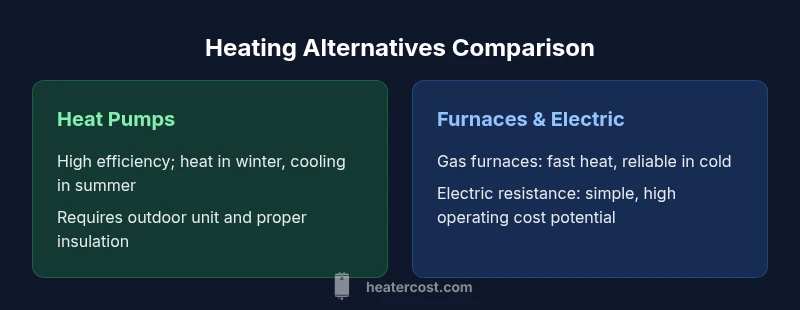
Heat pumps stand out for efficiency because they transfer heat rather than burn fuel. Air-source heat pumps are common for retrofit projects, while ground-source (geothermal) variants offer exceptional performance in some climates at higher upfront costs. Modern cold-climate heat pumps with variable-speed compressors can operate effectively down to moderate subfreezing temperatures, especially when paired with a supplementary heating method. Benefits include low operating costs, quiet operation, and the potential to provide both heating and cooling. Installation requires appropriate space for outdoor units and indoor air handlers, plus a refrigerant loop and proper zoning. Maintenance is typically minimal but should include periodic filter changes and system checks.
Electric Resistance Heating: Simplicity with Tradeoffs
Electric resistance heating, including baseboard and radiant panels, is simple to install and can be a good backup or supplemental option. It provides reliable heat with excellent zoning capability, particularly in newer homes with tight envelopes. The major tradeoff is operating cost: electricity prices heavily influence year-round expenses, and resistance heating can be expensive in regions with high electricity rates. This option shines as a retrofit in small spaces or as a temporary solution during transitions between systems. When paired with smart thermostats and well-insulated rooms, it can maintain comfort at reasonable costs in short bursts.
Gas and Oil Furnaces: Traditional Backups and Scale
Gas and oil furnaces have long served as reliable primary or backup heat sources, especially in regions with established fuel infrastructure. They typically offer quick warmth and predictable performance, even in very cold weather. Modern furnaces pride themselves on improved efficiency and lower emissions, with options like high-efficiency condensing models and modulating burners that adjust output to demand. The downside includes ongoing fuel costs, maintenance requirements, and the need for venting and combustible-fuel handling. In areas where natural gas is affordable and available, a high-efficiency gas furnace can remain a practical choice, especially when paired with a properly insulated home.
Biomass and Wood-Burning Options: Renewable but Labor-Intensive
Biomass systems, including wood stoves and pellet boilers, provide a renewable heating path in homes with access to sustainable fuel. Pellet and wood-burning systems can achieve substantial heat output and, in some markets, favorable incentives. They typically require storage space for fuel, regular ash removal, and periodic cleaning of combustion components. The environmental impact depends on feedstock sustainability and the system’s emission controls. Biomass can be a good fit for homes seeking independence from fossil fuels, but it demands ongoing labor, scheduling for fuel delivery, and careful attention to air quality regulations.
Radiant and Hydronic Heating: Comfort Without Compromise
Radiant floor heating and hydronic systems offer uniform warmth with minimal air movement, which many occupants find comfortable. Radiant systems heat floors or panels directly, delivering steady temperatures and a feeling of coziness, particularly in living spaces and bathrooms. Hydronic setups circulate hot water through radiators or underfloor tubes. The initial install can be more complex and costly, but long-term comfort and efficiency can be excellent, especially in new construction or major remodels. Maintenance focuses on leaks prevention, pump checks, and ensuring proper zoning and temperature control.
Solar Heating and Passive Solar Strategies: Free or Low-Cost Heat
Solar thermal and passive solar approaches harness the sun to reduce heating demand. Solar collectors can preheat water or air, lowering auxiliary heat needs. Passive solar design uses building orientation, clear glazing, shading, and thermal mass to moderate indoor temperatures seasonally. While solar solutions reduce utility bills, they require upfront design considerations and, in some locales, storage or backup heating for periods with limited sun. The effectiveness depends on geographic location, roof orientation, and seasonal sun patterns.
Supplemental Heating and Zoning Strategies: Tailoring Comfort
Supplemental heating and zoning allow a home to heat only occupied areas, reducing energy waste. Zoning can involve multiple thermostats, smart controls, and dampers in ductwork. Supplemental electric heaters, tabletop units, or portable heaters can fill short-term needs or offset delayed installations. For condo units or smaller homes, zoning provides a comfortable path to personalized climate control with lower overall energy use. The key is to align zoning with occupancy patterns and insulation quality to avoid over- or under-heating.
Cost, Payback, and Financing Considerations
Total cost of ownership for heating alternatives includes upfront equipment, installation, and ongoing energy costs. Payback periods vary widely by climate, utility rates, and system efficiency. Financing options, tax incentives, and utility rebates can shorten the payback window, especially for high-efficiency heat pumps or solar-assisted setups. A careful analysis should compare installed price ranges against expected annual energy savings, factoring in maintenance and potential system lifespan. When evaluating, look for equipment warranties, service availability, and local installer experience to protect the investment.
Hybrid Systems and System Integration: The Best of Both Worlds
Hybrid or dual-fuel systems blend heat sources to optimize efficiency and reliability. For example, heat pumps paired with a gas furnace can maximize efficiency in shoulder seasons and provide robust backup in cold snaps. Zoned installations allow targeted heating, balancing comfort and cost. Integration with smart thermostats and home energy management systems enhances performance by learning occupancy, weather patterns, and user preferences. Hybrid strategies are particularly compelling when climate and energy prices shift seasonally, or when a homeowner plans phased upgrades over time.
Installation, Permits, and Maintenance Planning
Installing heating alternatives often involves permits, electrical and gas line considerations, ductwork assessment, and ventilation checks. A well-planned approach includes an energy audit to identify heat losses and a design tailored to the home’s envelope. Maintenance should emphasize filter changes, refrigerant checks (for heat pumps), vent inspection (for fossil-fuel systems), and periodic professional performance checks. Proactive planning reduces downtime, extends equipment life, and ensures safety, especially in homes with combustion-based heating options or radiant systems. Scheduling annual tune-ups is a prudent investment.
Feature Comparison
| Feature | Heat Pump (air-source) | Gas Furnace (high-efficiency) | Electric Resistance Heating | Biomass Boiler/Fireplace |
|---|---|---|---|---|
| Energy Efficiency | Excellent | Moderate | Low-to-Moderate | Moderate |
| Installation Cost | High | Medium | Low | Medium |
| Best For | Moderate climates seeking year-round heating and cooling | Existing gas-ready homes in cold climates | Backup heating or small spaces | Homes with available sustainable fuel and space |
| Operating Cost | Low (with electricity price stability) | Moderate to High (fuel price dependent) | Low-to-Moderate (electricity usage) | Variable (fuel and maintenance) |
| Climate Suitability | Mild to cold with supplemental heat options | Very cold with good insulation | Best where electric rates are favorable | Cool to cold with fuel access |
The Good
- High-efficiency options can dramatically cut operating costs
- Flexible configurations for new builds and retrofits
- Zoning enables personalized comfort and energy savings
- Hybrid systems optimize performance across seasons
- Renewable options (solar-assisted) can reduce utility bills
Negatives
- Upfront costs can be significant for efficient systems
- Performance depends on climate and envelope efficiency
- Fuel-based systems require ongoing fuel costs and storage
- Biomass requires regular maintenance and storage space
Heat pumps combined with proper insulation and zoning offer the broadest long-term value for most homes; in colder climates, a hybrid approach with a backup heater is often optimal.
For many homeowners, prioritizing a heat pump with an energy-efficient envelope yields the best balance of upfront cost, operating expenses, and comfort. In very cold climates, pair with supplemental heat or a hybrid system to ensure reliability during peak demand.
Got Questions?
What are heating alternatives and why consider them?
Heating alternatives include heat pumps, high-efficiency furnaces, electric resistance heating, biomass systems, and solar-assisted options. They offer different trade-offs between efficiency, upfront cost, and climate suitability. A proper comparison helps homeowners minimize energy waste while maintaining comfort.
Heating alternatives cover heat pumps, furnaces, electric heat, biomass, and solar options. Each has different costs and climate fits, so compare based on your home and climate.
Which heating alternative is most energy efficient?
Heat pumps typically deliver the highest energy efficiency, especially in moderate climates, by transferring heat instead of burning fuel. Efficiency can drop in extreme cold unless paired with supplemental heat. Always compare COP (coefficient of performance) and seasonal performance estimates when evaluating options.
Heat pumps are usually the most energy efficient, but in very cold climates you may need backup heat.
Can heat pumps work in very cold climates?
Yes, many cold-climate heat pumps are engineered to operate efficiently in subfreezing temperatures and can work with supplemental heating. For extremely cold conditions, consider a hybrid system that activates an auxiliary heater to maintain comfort without sacrificing efficiency.
Cold-climate heat pumps exist and work well with a supplemental heater when needed.
What cost considerations should I plan for with heating alternatives?
Initial installation costs vary widely by system type, with heat pumps and radiant systems often higher upfront. Operating costs depend on energy prices and performance. Look for total cost of ownership over 10–15 years, plus potential rebates or tax incentives.
Think about upfront costs, long-term energy bills, and available rebates.
Are biomass systems a good fit for most homes?
Biomass systems can be attractive where there is reliable fuel supply and space for storage. They require ongoing fuel handling and maintenance. In the right context, biomass can reduce fossil fuel dependence and support a renewable energy strategy.
Biomass works well if you have fuel access and storage space, but it needs ongoing upkeep.
What role do solar heating options play in a heating plan?
Solar heating can reduce demand by preheating water or air or by passive design strategies. It typically complements other heating sources and is most beneficial in sunny climates or with well-designed thermal mass. It’s rarely a sole solution but can lower bills significantly.
Solar helps reduce heating demand when designed into the home.
The Essentials
- Prioritize climate-appropriate efficiency when selecting heating alternatives
- Consider hybrid systems to balance cost and reliability
- Factor envelope improvements into the decision for bigger savings
- Explore incentives and financing to shorten payback
- Plan for maintenance and professional support from installers