Heater and AC Window Unit: Costs, Choices, and Comparison
Explore costs, features, and setup considerations for heater and AC window units. This buying guide helps homeowners compare options and estimate ongoing costs.


A heater and AC window unit can be a practical, space-saving solution for small to medium rooms by delivering both heating and cooling in a single, window-mounted cabinet. It’s particularly appealing for renters, seasonal spaces, or properties where ductwork isn’t feasible. However, for larger rooms or heavy year-round use, dedicated solutions—such as a separate window AC paired with a standalone heater or a mini-split—often offer better long-term efficiency and comfort.
What is a heater and AC window unit?
A heater and AC window unit is a single device designed to deliver both heating and cooling through an existing window opening. In most designs, a dual-function unit combines a compact compressor or heat pump circuit with a heating element or reverse-cycle functionality so you can warm or cool a small to medium-sized room without ductwork. For homeowners, renters, and property managers evaluating heater costs, understanding how these units work matters for predicting performance, energy use, and long-term maintenance. A window-mounted unit can be a practical solution when a permanent HVAC upgrade isn’t possible, whether because of budget limits, building restrictions, or the desire to avoid invasive installation. The Heater Cost team notes that these dual-function devices can reduce upfront complexity and speed up deployment, but they are not a universal fit; performance hinges on room size, climate, and how the device is used. Reading the manufacturer’s sizing charts and energy labels is essential for a fair comparison.
How this setup stacks up against alternatives
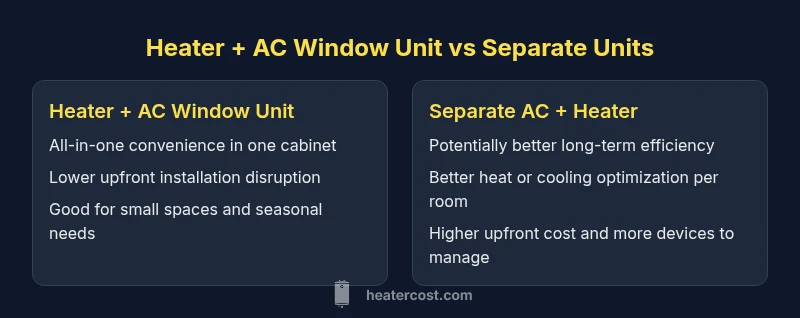
When evaluating a heater and AC window unit, many buyers compare it against two common alternatives: (1) a separate window AC unit paired with a dedicated heater (or a portable space heater), and (2) a mini-split or other ductless system. The combined unit is often more compact and easier to install, which can lower initial costs and disruption. However, two separate devices can sometimes deliver better efficiency, longer service life, and easier targeted heat or cooling in varying rooms. Central HVAC remains a higher-capacity option for whole-home comfort but typically requires major installation work and a larger budget. For many households, the right choice balances the size of the space, climate, and how frequently the unit will run throughout the year.
Key features to compare
Identify the core specifications that influence comfort and operating costs. Focus on:
- Heating and cooling capacity (BTU/h) and how well the unit handles room size;
- Energy efficiency metrics (EER/SEER for cooling, COP for heating);
- Noise levels and vibration under typical loads;
- Window fit, depth, weight, and whether mounting requires permanent adjustments;
- Controls (manual, programmable, or smart features) and connectivity with home assistants;
- Maintenance needs, filter replacement, and availability of replacement parts. A well-chosen model will strike a balance between performance, energy use, and maintenance simplicity while fitting the room geometry and window dimensions.
Energy efficiency and operating costs
Operating a heater and AC window unit affects both cooling and heating costs. Efficiency varies by model, mode (cooling vs heating), and climate. In practice, homeowners often find that switching between modes only when needed minimizes energy use. According to Heater Cost analysis, the overall cost impact depends on local electricity rates, how aggressively the unit runs in shoulder seasons, and how well it fits the space. The organization emphasizes the importance of selecting an appropriately sized unit to avoid short-cycling, which can waste energy and wear components more quickly.
Installation considerations and safety
Window units are designed to sit in a window opening with a secure mounting kit. Proper installation is critical to ensure safe operation, efficient cooling or heating, and to prevent air leaks. Check the window width and depth to ensure a snug fit, and confirm that the electrical circuit can handle the unit’s demand without tripping breakers. Many manufacturers recommend a dedicated circuit for larger units, while smaller models may share a general-purpose outlet. Always follow the installation manual, seal any gaps to minimize leaks, and keep the unit away from water sources to reduce shock risk. When in doubt, consult a licensed installer—especially if structural alterations or electrical work is required.
Maintenance and longevity
Regular maintenance extends the life of a heater and AC window unit. Plan routine filter cleanings or replacements, coil and condenser cleaning to maintain heat exchange efficiency, and periodic checks on seals around the cabinet. Clear air pathways reduce strain on the compressor and fan, helping prevent unusual noise and performance degradation. Inspect the condensate drain and alert a technician if you notice excess moisture or mold growth. Most units include a user-serviceable panel for routine maintenance; keep the user manual handy for model-specific guidance and warranty terms.
Real-world scenarios and decision factors
In practice, the choice hinges on space, climate, and how the room is used. A dual-function window unit often makes sense for rental apartments in mild climates with a seasonal need for cooling and occasional heating. For households with larger living spaces or year-round heating needs, a separate, dedicated heater and a separate window AC may deliver better comfort, energy efficiency, and service life. In seasonal cabins or rooms that only require cooling in warm months, a single dual-function unit can provide convenience and lower upfront investment. Property managers should assess peak occupancy patterns, maintenance capacity, and budget cycles when selecting between a single dual-function unit and two specialized devices.
Buying considerations and a quick checklist
Before purchasing, assess room size, climate, window size, electrical circuit capacity, and total cost of ownership. Compare models that offer proper overload protection, programmable temperature controls, and quality warranties. Validate that the unit’s operating range covers the coldest and hottest days expected in your locale. Consider future needs—will the space be repurposed or expanded? Review energy labels and seek units rated by reputable programs like ENERGY STAR to help minimize operating costs. The decision should balance initial price, ongoing energy consumption, and the potential need for replacement parts over time.
Common myths and mistakes
A frequent misconception is that all window units deliver comparable heating and cooling performance. In reality, some models offer stronger cooling while weaker heating, or vice versa. Another mistake is choosing a unit based solely on upfront price without considering energy efficiency and noise. Finally, customers sometimes ignore installation requirements or window compatibility, which leads to poor performance and accelerated wear. Selecting a model with solid reviews, a realistic BTU rating for the room, and accessible parts is essential for long-term satisfaction.
What to expect after purchase: warranty, service, and support
Most heater and AC window units come with a limited warranty covering parts and labor for a period that varies by brand and model. Keep track of purchase receipts and model numbers because service centers require them for warranty claims. Regular maintenance can keep the unit running smoothly, but you should be prepared to replace components like filters, seals, or fans as needed. If increasingly frequent breakdowns or reduced cooling/heating capability occur, contact customer support for troubleshooting steps and evaluate whether it’s time for an upgrade to a more energy-efficient or higher-capacity solution.
Comparison
| Feature | Heater and AC Window Unit | Dedicated Window AC Unit |
|---|---|---|
| Cooling capacity (BTU/h) | Integrated cooling; designed for moderate spaces | Optimized cooling performance; can be paired with separate heater |
| Heating performance | Integrated heating; best for small to medium rooms in mild climates | No heating; requires separate heater or alternative source |
| Energy efficiency | Moderate efficiency; depends on mode and model | Typically optimized for cooling; heating efficiency separate |
| Noise and vibration | Conventional compact design; noise varies by model | Can be quieter in high-end units but still varies by model |
| Initial cost | Often lower upfront when replacing two devices with one | Two devices may mean higher upfront cost; depends on brand and features |
| Maintenance needs | One unit to maintain; filter changes, coil cleaning | Two units to maintain; more filters and parts to service |
| Best for | Renters, small rooms, seasonal use | Larger spaces or long-term, high-usage cooling needs |
The Good
- Single unit provides both heating and cooling, reducing clutter
- Lower upfront complexity and faster installation in many scenarios
- Space-efficient for compact rooms and apartments
- Flexible option for renters and short-term housing
Negatives
- Energy efficiency may be lower than dedicated high-efficiency systems for large spaces
- Heating performance can be limited in very cold climates
- Some models can be noisier due to compact design
- Long-term durability may lag behind two specialized devices in high-use environments
Combined heater and AC window unit is best for renters and small spaces; dedicated cooling plus separate heating works better for larger rooms or heavy usage.
Choose a dual-function unit for convenience and lower upfront disruption. If you expect frequent use, large spaces, or climate extremes, separate devices or a ductless system may deliver better comfort and efficiency. The Heater Cost team recommends evaluating room size, climate, and maintenance capacity before deciding.
Got Questions?
Can a heater and AC window unit effectively heat a large room?
In moderate climates and smaller spaces, a dual-function unit can provide adequate heating. For very large rooms or extended cold periods, you may need supplementary heat sources or a more powerful system. Always size the unit to the room and consider climate demands.
A dual-function window unit can heat small to medium spaces well, but for large rooms you may want an additional heat source.
Are heater and AC window units energy efficient?
Efficiency varies by model and mode. Look for ENERGY STAR labels and compare cooling efficiency (EER/SEER) with heating performance (COP). Selecting appropriately sized units helps minimize waste and overall operating costs.
Efficiency depends on the model and how you use it; choose an ENERGY STAR-rated unit and size it correctly.
What maintenance is needed for window units?
Regular maintenance includes cleaning or replacing filters, cleaning coils, and checking seals around the cabinet to prevent air leaks. Keep the condensate drain clear and periodically inspect electrical cords and plugs for wear. Follow the user manual for model-specific guidance.
Clean filters, keep coils clear, and check seals and drainage regularly for best performance.
Can I install a heater and AC window unit myself?
Many models are designed for straightforward installation, but if wiring, window structure, or mounting hardware seems complex, hire a licensed technician. Improper installation can reduce efficiency and create safety hazards.
If in doubt about wiring or mounting, hire a professional installer.
How noisy are these units?
Noise varies by model and size. Look for decibel (dB) ratings and anti-vibration features. In bedrooms or living rooms, opt for models with lower operating noise and a robust warranty.
Noise depends on model; check the dB rating and pick a quieter unit for bedrooms.
Are there safety concerns for renters?
Always follow manufacturer safety guidelines, keep space around the unit clear, and unplug during severe weather or when away for extended periods. Ensure electrical outlets match the unit’s requirements and avoid overloading circuits.
Yes—keep clearance, unplug during storms, and ensure proper outlet compatibility.
The Essentials
- Assess room size and climate before buying
- Prioritize energy efficiency for long-term savings
- Check window compatibility and installation needs
- Compare total cost of ownership, including maintenance
- Renters benefit from combined units for flexibility