Heat Pump Installers Near Me: Costs, Quotes, and How to Choose
Find reliable heat pump installers near you, compare costs, and learn how to choose the right contractor with data-driven guidance from Heater Cost.


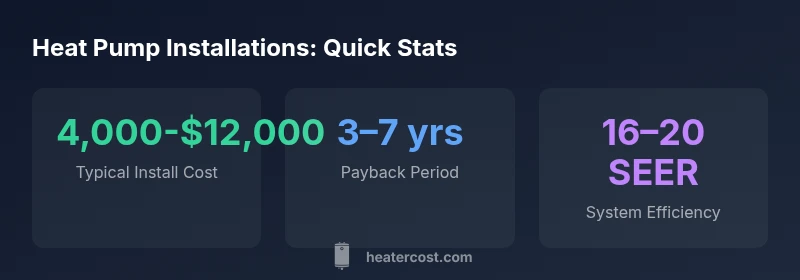
Most homeowners pay between $4,000 and $12,000 for a full heat pump installation, with price drivers including system type, existing ductwork, and local labor. To find heat pump installers near you, compare at least three licensed contractors, verify certifications like NATE, and request itemized quotes. Local rebates can affect final costs.
Why finding heat pump installers near me matters\n\nHaving a local installer near you isn’t just convenient—it affects scheduling, service response times, and long-term performance. A heat pump is a long-term investment, and the difference between a good setup and a great setup often hinges on the installer’s local knowledge and access to parts. In climate zones with extreme winters or humid summers, installers who understand local building codes, utility rebate programs, and seasonal demand can tailor the system to your home for maximum efficiency. According to Heater Cost, the most successful installations combine licensed credentials, manufacturer training, and verifiable references from nearby customers. The Heater Cost team found that homeowners who build a short list of three local quotes typically secure better warranties and clearer project timelines. Start by compiling a list of reputable, licensed HVAC contractors within a 20–30 mile radius, then check their licensing status, service area, response time, and references. This local focus helps ensure you receive timely maintenance and access to rebates from state programs or utility providers plus service after installation.\n\nWhen you search for heat pump installers near me, balance proximity with qualifications to avoid callbacks or subpar work. A nearby team can be more responsive during peak season and easier to coordinate for pre-season testing. Local installers also tend to be more familiar with state and utility incentives that can lower your upfront costs. Remember that the cheapest option isn’t always the best—look for solid references and a credible warranty as part of the deal.
Key qualifications to look for in heat pump installers\n\nQualified heat pump installers should carry current licensing and general liability insurance, and ideally hold manufacturer training or third-party certifications such as NATE. Check their HVAC permit history and ensure they are willing to handle necessary permits on your behalf. A reputable contractor will perform a thorough load calculation, assess ductwork or refrigerant line requirements, and provide a written warranty with terms that cover parts and labor. The Heater Cost team emphasizes that credibility matters more than a low upfront price: licensed, insured teams with documented references deliver better long-term performance and post-installation service. Also ask about seasonal scheduling, service windows, and how they manage refrigerant charging to prevent future efficiency losses. Good installers will walk you through a system selection that matches your climate, insulation level, and occupancy patterns.\n\nLook for installers who offer a clear scope of work, up-front permit handling, and a transparent warranty policy. If a contractor won’t share a written warranty or can’t clearly state what’s covered, that’s a red flag. A strong estimator will visit your home, verify electrical capacity, discuss duct sealing or insulation needs, and outline a commissioning plan. A disciplined approach minimizes delays and ensures your heat pump runs at peak efficiency from day one.
How to compare quotes and what to ask\n\nCollect at least three formal bids and compare like-for-like quotes. Ask each contractor to break out costs for equipment, ductwork or modifications, electrical upgrades, refrigerant lines, permits, labor, and disposal. Request a commissioning checklist that includes refrigerant leak testing, thermostat compatibility, and airflow balance, so you can verify the installer will optimize performance. Questions to include in quotes:\n- What SEER and HSPF ratings do you anticipate for my home?\n- Will you perform a duct/attic inspection and seal any leaks?\n- What manufacturers and models do you recommend, and why?\n- What permits are needed, and who will obtain them?\n- What is the warranty coverage and what does it require for maintenance?\n- Can you provide a recent customer reference within 20 miles of my home?
Cost drivers and budgeting for installation\n\nCosts vary with system type, ductwork state, and site readiness. Factors that raise the budget include the need for duct sealing, zone control, or significant electrical upgrades. Retrofit projects may require insulation improvements to maximize efficiency, while new builds can optimize duct routing from the start. Rebates and financing options can reduce upfront costs, but eligibility depends on your location and utility programs. When you compare quotes, ensure the estimates consider the same baseline—same equipment model, SEER rating, and ductwork condition—to make apples-to-apples comparisons. The heater and air distribution design should align with your climate and occupancy patterns to achieve the greatest long-term savings. A thoughtful upfront plan often means a smoother installation and better performance in the first year.\n
Installation steps and timeline\n\nTypical installation follows a structured sequence: a pre-install site survey, equipment selection, permitting, refrigerant line routing and electrical upgrades if needed, ductwork modifications or sealing, equipment installation, system charging and performance tests, thermostat integration, and system commissioning. Most jobs take 1–3 days for a straightforward install, but more complex retrofits or homes with limited ductwork can extend timelines. A well-coordinated project includes clear milestones and a contingency plan for weather or supply delays. Following a professional commissioning, you should receive documentation of refrigerant charge, airflow balance, and warranty registration. This process ensures you understand operational expectations and maintenance needs from day one.
Maintenance, warranties, and long-term costs\n\nHeat pump maintenance includes seasonal checks, air filter replacement, coil cleaning, and ensuring proper refrigerant charge. Annual checkups prevent efficiency losses and can extend system life. Warranties typically cover parts and sometimes labor for a defined period; read the fine print for what triggers coverage, and whether annual maintenance is required to keep the warranty valid. Budget for potential minor repairs in years 4–7 and consider a service plan that bundles routine maintenance with discounted parts. Regular maintenance helps preserve efficiency, reduce energy use, and sustain comfort across seasons.
Cost and efficiency ranges by heat pump system type
| System Type | Avg Install Cost Range | Typical Payback | Notes |
|---|---|---|---|
| Air-source heat pump | $4,000-$9,000 | 3-6 years | Most common retrofit option; may require ductwork or replacements |
| Ground-source heat pump | $15,000-$40,000 | 5-12 years | Highest upfront cost; very high efficiency; requires loop field |
| Hybrid heat pump | $7,000-$15,000 | 4-7 years | Pairs with existing furnace; mid-range option |
| Mini-split systems | $3,000-$8,000 per zone | 2-5 years | No ductwork needed; scalable for additions |
Got Questions?
How do I find reliable heat pump installers near me?
Start with three licensed, local HVAC contractors. Check references, verify certifications, and confirm they can handle permits and rebates. A site visit and written quote help you compare apples-to-apples.
Look for licensed local pros, read references, and get a written quote to compare fairly.
What certifications should I look for in heat pump installers?
Seek installers with current licensing and manufacturer training or third-party certifications such as NATE. Ask about EPA refrigerant handling knowledge and service warranties.
Ensure they’re certified and trained; it makes a big difference in performance and safety.
What costs influence installation price the most?
System type, ductwork condition, electrical upgrades, and the complexity of refrigerant line routing are the biggest drivers. Location and labor rates also impact final pricing.
The price mainly depends on the system and what needs to be installed or upgraded in your home.
How long does installation typically take?
Most residential installs take 1–3 days, but retrofits with duct or electrical work can require more time. Scheduling and permitting may extend the timeline.
Usually a day or two, but some jobs take longer if ductwork or upgrades are needed.
Are rebates or tax credits available for heat pump installation?
Yes, many utilities and programs offer rebates or tax credits. Eligibility varies by location and system, so check with your installer and local energy office.
There are usually rebates—ask your installer how to maximize them.
Should I replace my furnace with a heat pump or add a heat pump to an existing system?
Both options exist. Replacing can maximize efficiency, while a heat pump added to an existing system may lower costs and improve comfort with staged cooling/heating.
Consider your climate, existing equipment, and budget when deciding.
“Choosing the right installer is as important as selecting the equipment itself—certifications, licensing, and a solid warranty are essential for long-term performance.”
The Essentials
- Get at least 3 quotes from licensed installers
- Verify licensing, insurance, and manufacturer training
- Ask about ductwork, permits, and warranties
- Account for rebates and financing to reduce upfront costs
- Use Heater Cost’s guidance to compare quotes on a like-for-like basis