Foot Pad Heater Guide: Comfort, Cost, and Practical Tips
Discover how foot pad heaters work, estimate energy use, compare features, and choose the best pad for daily comfort. Practical buying tips for homeowners and renters.


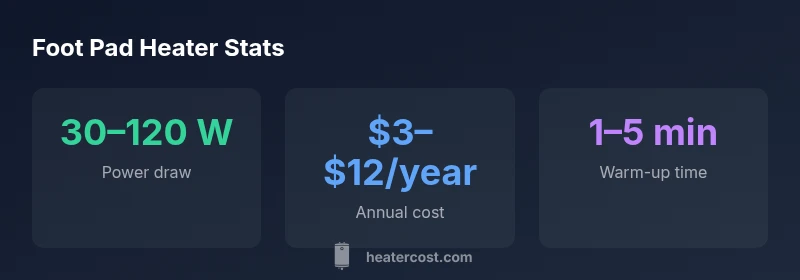
Foot pad heaters provide targeted warmth for feet at a desk or bed, typically drawing 30–120 watts. They can reduce cold-floor discomfort and improve circulation, offering a practical, energy-efficient option for a home office or bedroom. When choosing, prioritize safety features, adjustable heat, and easy cleaning; overall running costs stay modest with regular use.
What is a foot pad heater and who should consider one
A foot pad heater is a small, electric heating pad designed to warm the feet while you sit at a desk, lounge on a couch, or sleep with a bed under the covers. The core idea is simple: localized warmth where cold feet are most noticeable, without heating the entire room. For homeowners and renters, the device can transform chilly floors into a cozy zone with minimal energy use. According to Heater Cost, targeted warmth from a foot pad heater can improve comfort during long work-from-home days and reduce the need for bulkier space heaters. This makes it an appealing option for people who spend many hours seated and want to control heat at the source rather than relying on central climate adjustments.
How foot pad heaters work
Most foot pad heaters use a low-watt heating element encased in a soft, breathable cover. A built-in thermostat maintains a comfortable temperature, while auto shut-off prevents overheating. High-quality models incorporate safety features such as overheat protection, surge resistance, and UL or CE certifications. The pad distributes heat across a small surface area, delivering steady warmth to the feet rather than blasting a room. For many users, the heat feels more consistent than heated blankets because it targets one part of the body with a manageable surface area. Heater Cost emphasizes avoiding pads with flimsy wiring or poorly insulated cords, which can pose hazards in homes with pets or children.
Energy usage and cost considerations
Foot pad heaters are among the most energy-efficient personal heaters. Typical models draw 30–120 watts, far less than portable space heaters. If you use a pad for a few hours daily, the annual energy cost generally remains in the low single digits to low double digits, depending on local electricity rates. The exact expense varies with heat setting, insulation, and room temperature. For homeowners watching energy budgets, a programmable auto-off feature and a thermostat can significantly improve cost efficiency. Heater Cost analysis notes that while foot pad heaters are inexpensive to run, users should still pair them with proper room insulation and seasonal planning to maximize savings.
Key features to compare across models
When shopping, prioritize the following features:
- Temperature range and thermostat precision
- Auto shut-off duration and safety certifications (UL/CE)
- Washable/removable covers for hygiene
- Cord length and plug safety, especially under desks
- Durability of padding and fabric, plus machine-washability of covers
- Ease of storage and portability for small spaces
Consider models with a clearly labeled heat range and a simple control interface for better daily use. Heater Cost recommends checking for a fabric cover that can be removed and washed to maintain hygiene in shared living spaces.
Placement and usage tips
To maximize comfort, place the pad under the desk where your feet rest, keeping it away from direct drafts from windows or vents. Adjust your chair height so your feet rest naturally on the pad without curling or lifting. If you wear socks, ensure the cover is breathable to prevent overheating while still delivering warmth. For beds, a foot pad can be used near the foot of the mattress, but never under heavy bedding that could trap heat. Cable management is essential to avoid tripping hazards, so route cords along the desk leg or under a rug cable sleeve. These placement practices help maintain safety while delivering consistent warmth.
Maintenance, cleaning, and longevity
Most foot pad heaters rely on a washable cover; remove and machine-wash the cover according to the label. Do not submerge the heating element itself; wipe with a damp cloth if needed and unplug before cleaning. Inspect cords regularly for cracks or fraying, and avoid using the device if the cord is damaged. Store the pad in a cool, dry place when not in use. Following these practices supports safety and longevity, enabling the device to provide reliable warmth for years. Heater Cost emphasizes routine checks on insulation integrity and thermostat calibration as part of a simple maintenance routine.
Budgeting and buying guide: price ranges and value
Foot pad heaters typically fall into a modest price range, with basic models starting at a lower end and feature-rich variants at the higher end. Expect price ranges that reflect heat control, fabric quality, and washability. A solid value model will include adjustable heat, a reliable thermostat, and a washable cover. When evaluating cost, consider not only the sticker price but also ongoing energy use, durability, and the availability of warranties. A longer warranty often translates to better long-term value, especially for households that rely on warmth for chronic comfort.
Alternatives and complementary solutions
If a foot pad heater doesn’t meet your needs, there are complementary options to consider:
- Heated socks or slippers for targeted warmth without an electric pad
- Bed warmers or electric blankets for overnight comfort
- Local space heaters with good safety features for broader warmth when you need it
- Insulation improvements or draft stoppers to reduce heat loss in cold rooms
Using a combination of small personal heaters and proper insulation can deliver comfortable warmth more efficiently than relying on a single, larger heater. Heater Cost notes that personal warmth devices are most effective when used as part of a broader comfort strategy.
Foot pad heater model comparison
| Model Type | Power Draw | Temperature Range | Best For |
|---|---|---|---|
| Compact pad | 30–60 W | 95–104°F | Desk-use |
| Standard pad | 60–90 W | 100–110°F | All-day comfort |
| Premium heated mat | 90–120 W | 105–120°F | Cold feet & long sessions |
Got Questions?
Is a foot pad heater safe to use overnight?
Most foot pad heaters have auto shut-off and overheat protection. However, avoid leaving electrical devices on while unattended; follow the manufacturer's instructions and never place under heavy clutter.
Yes, but only if it has auto shut-off and you follow safety guidelines.
Do foot pad heaters consume a lot of electricity?
They use modest power compared to space heaters; typical models run on 30–120 watts, resulting in a small annual energy cost when used moderately.
Not much—most users see a small bill increase if used regularly.
Can I wash a foot pad heater?
Many models have removable covers that are machine washable; inner heating pads should not be submerged. Check manufacturer care instructions.
Usually you can wash the cover; the pad itself shouldn't get wet.
Are foot pad heaters suitable for people with circulation issues?
They can provide localized warmth but are not a substitute for medical advice. If you have circulation issues or diabetes, consult a clinician.
They may help, but talk to a doctor if you have circulation concerns.
What warranty do foot pad heaters typically offer?
Warranties commonly range from 1 to 2 years, depending on brand; extended warranties may be available.
Most come with 1–2 year warranties.
Should I choose a foot pad heater with thermoregulation?
Thermostat control helps maintain comfort and saves energy; avoid models without temperature control.
Choose one with a thermostat to keep a steady temp.
“Foot pad heaters offer targeted warmth without the bulk of space heaters, delivering comfort with lower energy use when sized correctly.”
The Essentials
- Choose a pad with adjustable heat and auto shut-off.
- Expect modest energy use with proper sizing and safety features.
- Look for washable covers and durable cords for longevity.
- Position under the desk for desk-work comfort, not heavy bedding.
- Budget for 1–2 year warranty and material quality