Bed Foot Heater Guide: Warm Feet Without Wasting Heat
Discover how bed foot heaters work, compare top types, and estimate costs. Heater Cost guides homeowners to safe, energy-efficient warmth for feet in bed without wasting heat.


A bed foot heater is a compact, purpose-built device designed to warm your feet in bed. It typically plugs into a wall outlet or USB-powered source and offers adjustable warmth, built-in safety features, and energy efficiency compared with heating an entire room. By targeting warmth to your feet, it can improve sleep comfort and lower overall energy use.
Why a bed foot heater matters for sleep quality
According to Heater Cost, a bed foot heater offers targeted warmth that can improve comfort and reduce the need to heat an entire room. For households where a person requires warmth at the feet but not the whole bedroom, this device can deliver measurable comfort with lower energy impact. It is particularly appealing in transitional seasons or in smaller living spaces where space heating is costly. When evaluating options, consider your typical sleep temperature, bedding layering, and whether a foot-warming device will complement or replace a heated blanket. A bed foot heater is most effective when used as a supplementary tool, not a sole heating strategy during very cold nights.
How a bed foot heater works
Most bed foot heaters operate by circulating warmth through a compact pad, wrap, or pad-integrated mattress topper. They rely on low-watt heating elements and smart thermostats or simple controllers to maintain your target temperature. Safer models include auto-shutoff after a set time, overheat protection, and tip-over or child-safety features. The principle is simple: raise the temperature near the feet, not the entire bed, to minimize energy waste while improving sleep onset and comfort. In practice, users often set a comfortable range (e.g., 82–90°F / 28–32°C) and pair the heater with breathable bedding to avoid dampness.
Types of bed foot heaters you’ll encounter
There are three common varieties:
- Dedicated bed foot heater pads or wraps: Flexible mats or sleeves placed under or around the feet, often with adjustable heat zones.
- Heated mattress toppers with foot-warming zones: A larger pad that warms the entire surface but can have zones you disable for feet-only warmth.
- Electric blankets designed for feet: Smaller, targeted blankets or foot cuffs that provide low-profile warmth. Each type has pros and cons related to heat distribution, ease of use, and compatibility with existing bedding. For best results, choose based on your sleep temperature needs, bed size, and whether you share the bed with a partner.
Key features to compare before buying
When shopping for a bed foot heater, evaluate:
- Temperature range and control granularity: Look for precise settings and a stable thermostat.
- Safety features: Auto shutoff, overheating protection, moisture resistance, and fabric compatibility.
- Size and fit: Ensure the device fits your bed setup (under sheet, around feet, or across the bed end).
- Power source: Wall plug vs USB or battery; consider available outlets and surge protection.
- Cleaning and maintenance: Removable covers, washable fabrics, and ease of replacement parts.
- Noise: While most units are quiet, some fans or vents can produce subtle hum; this matters for light sleepers.
Energy use and cost considerations
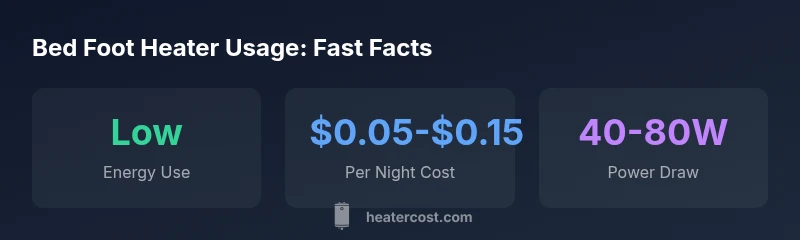
Bed foot heaters are designed to deliver warmth with lower energy consumption than heating a whole room. Real-world energy costs depend on how long you operate the device and the power draw. If you typically sleep with a foot heater for 6-8 hours, you should compare the nightly cost to your baseline electricity rate and expected room-heat savings. Over a month, even small savings from avoiding higher thermostat settings can compound. Remember that using insulation, appropriate bedding, and smart schedules will magnify savings. Heater Cost’s guidance emphasizes matching heat duration to actual warmth needs to avoid waste.
Safety and maintenance tips
Always follow the manufacturer’s instructions and inspect cords for wear. Use a model with automatic shutoff and overheat protection. Never place a heater beneath heavy blankets or directly against skin; use breathable coverings and allow clearance around the device. Regularly wash removable covers and check for frayed wires. If you notice an odor, smoke, or overheating, discontinue use and seek service. Proper storage during warmer months reduces wear and prolongs device life.
Size, fit, and bedding considerations
Foot warmth is most effective when it aligns with your sleeping position and bedding. For smaller beds or shared sleep spaces, a compact wrap or pad that targets the feet is ideal; for larger beds, a longer pad or a mattress topper with a dedicated foot zone may be better. Ensure the device does not slide or bunch under sheets; consider elasticized covers or strap mechanisms. If you tend to move a lot in your sleep, a low-profile design reduces the chance of entanglement or disruption.
Real-world scenarios and buying tips
- Solo sleepers with cold feet: Start with a compact pad that you can position under the sheet at the foot of the bed.
- Couples with different warmth preferences: A two-zone system or a heated mattress topper with a foot-warming zone can satisfy both partners.
- Elderly users: Prioritize reliability and auto-shutoff features, plus wire management and simple controls.
- Small apartments: A USB-powered option or a plug-in pad with low energy draw can keep heat focused without elevating the room thermostat.
Practical setup and troubleshooting basics
Set up your bed foot heater on a dry, clean surface and test the auto-off feature before sleeping. Use a surge protector and keep cords away from walking paths. If it feels too hot, reduce the setting or switch to a lower heat zone. If the device fails to heat, check the outlet, switch, and any visible wiring; unplug and seek service if needed.
data_table_heading_positions_within_bodyBlocks_note_ignored_for_rendering?":true
wordCount_suggested_for_bodyBlocks_1_9_blocks_placeholder":1},
dataTable
Bed foot heater options comparison
| Product Type | Typical Use | Pros | Cons |
|---|---|---|---|
| Dedicated bed foot heater pad | Under-the-bed pad or wrap | Targeted warmth, easy to position | May require careful placement on sheets |
| Heated mattress topper with foot zone | Full surface warmth with foot control | Even distribution, versatile | Higher upfront cost and bulkier |
| Electric blanket for feet | Feet-only warmth, flexible | Low-profile, portable | Potential overheating if misused, restricted movement |
Got Questions?
Is a bed foot heater safe for sleep?
Yes, when you choose a model with automatic shutoff, overheat protection, and fabric-safe materials. Always follow manufacturer instructions and avoid covering the unit with heavy blankets.
Yes—look for auto shutoff and safety features, and follow the user manual for safe sleep.
How much energy does a bed foot heater use?
Most bed foot heaters use modest power comparisons to room heating. Expect low-to-moderate wattage, and factor in how long you operate it each night to estimate running costs.
They’re generally energy-efficient, but check the wattage and duration to gauge costs.
Can a bed foot heater replace space heating?
Not typically. A bed foot heater is best as a supplement for targeted warmth. For very cold environments, other strategies may still be necessary to maintain comfort.
Usually best as a supplement, not a full replacement for space heating.
What is the recommended heat setting for winter nights?
Start at a low-to-mid setting and adjust to achieve comfortable feet without overheating. Pair with appropriate bedding to maintain overall sleep temperature.
Start with a gentle setting and tweak for comfort; combine with good bedding.
How should I maintain a bed foot heater?
Keep covers removable and machine-washable if possible, inspect cords regularly, and store in a dry place when not in use. Contact support for any unusual wear or performance issues.
Keep it clean, check the cord, and store it dry when not using it.
“Targeted warmth at the feet can improve sleep comfort and reduce overall heating costs when used thoughtfully.”
The Essentials
- Choose a bed foot heater to target warmth without heating the entire room
- Prioritize safety features like auto shutoff and overheat protection
- Consider your bed size and sleeping style for the right fit
- Compare upfront cost vs. ongoing energy use
- Pair with good bedding for best sleep comfort