EcoSmart ECO 11 Costs and Performance Guide 2026
A data-driven guide to EcoSmart ECO 11 costs, installation considerations, efficiency, and payback for homeowners. Learn from Heater Cost's analysis to compare units, estimate installation ranges, and plan for long-term savings.


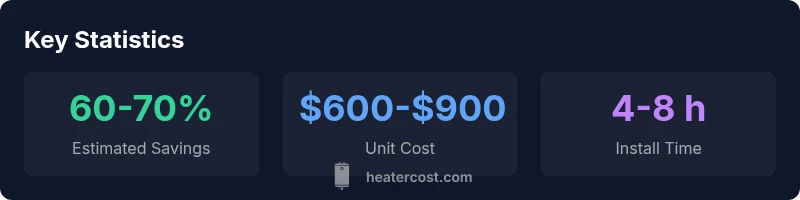
According to Heater Cost, the EcoSmart ECO 11 is a compact electric tankless heater designed for smaller homes, requiring a 240V circuit and delivering steady hot water in moderate use. Total cost, including installation, generally ranges from roughly $700 to $1,500, with operating costs tied to usage and local electricity rates. This makes it a compelling option for payback if correctly sized.
ecosmart eco 11: Sizing, usage, and expected performance
The ecosmart eco 11 is a compact tankless water heater designed for smaller homes, apartments, or zones where space is limited. It offers steady hot water delivery for typical uses such as single-family showers and sinks, but its performance hinges on inlet water temperature and simultaneous demand. In regions with cold groundwater, you may see a modest drop in GPM, so proactive sizing and installation location become crucial. The unit’s small footprint is a notable advantage for installations inside cabinets or utility rooms, where space is at a premium. When paired with the right flow rate expectations, the ecosmart eco 11 can strike a balance between convenience and efficiency across many households. For homeowners evaluating a retrofit, this model presents an important data point in the decision tree for compact, on-demand hot water.
To maximize reliability, ensure the tempering of incoming cold water remains within manufacturer guidelines, and consider the impact of shower schedules and dishwashing loads on hot water availability during peak times.
Cost framework: unit price, installation, and total cost
Price transparency is essential when planning a project around the ecosmart eco 11. The unit itself typically sits in a mid-range price tier, with installation costs varying by electrician rates, panel capacity, and whether any wiring upgrades are required. In many markets, total installed cost can be broken down into three parts: the heater unit, the electrical service upgrade (if needed), and labor/permits. Homeowners should expect that older homes or those near the supply panel may incur higher labor costs due to running longer conductors, upgrading breakers, or simplifying the venting path for related components. Keep in mind that local permit fees and inspections can add to the timeline and expense, even when a straightforward installation seems likely. Heater Cost’s analysis shows that diligent planning and upfront assessment can prevent cost overruns and mis-sizing, ultimately improving the payback trajectory for the ecosmart eco 11.
Efficiency and energy use: what the numbers mean
Tankless electric heaters like the ecosmart eco 11 minimize standby heat loss compared with traditional storage tanks, which can yield energy efficiency benefits over time. The real-world impact depends on your hot water load pattern, the number of simultaneous fixtures, and how often you operate at peak demand. In practice, homeowners with moderate usage and higher electricity rates may see more favorable payback due to reduced constant standby losses. Heater Cost analysis emphasizes evaluating your daily hot water needs and computing a simple run-rate scenario to estimate annual energy use. While the ECO 11 is not a renewable energy device, its on-demand design can help avoid the energy waste common with tank storage systems in households with variable hot water demand.
Electrical requirements and code considerations
Installing an ecosmart eco 11 typically requires a dedicated 240V circuit. The exact breaker size and wire gauge depend on the device’s electrical draw and the length of feeder runs. It is common for more than one of these units to share a panel or require a subpanel upgrade in larger homes or multifamily units, particularly if other high-draw appliances are present. Local electrical codes will dictate clearance, venting (where applicable), and permit requirements. Prospective buyers should secure a professional electrical assessment before purchasing to verify total load, panel capacity, and available space for a safe, code-compliant installation. Appropriate assessment minimizes delays and ensures backed performance claims.
Sizing guidance for different homes
A precise sizing process accounts for peak hot water usage, climate, and the number of fixtures simultaneously drawing hot water. For smaller homes or apartments, the ecosmart eco 11 is frequently adequate for 1-2 simultaneous draws, such as a shower and sink. For households with higher simultaneous demand—such as two showers and a dishwasher running before bed—consider higher-capacity models or staged installations. A professional should map your hot water footprint, including shower duration, peak morning usage, and whether you have low-flow fixtures. Correct sizing helps avoid underperforming during peak demand while also avoiding unnecessary upfront costs from oversized equipment.
Real-world payback scenarios: what homeowners can expect
Payback is driven by the balance between installed cost and annual energy savings. In mild climates with reasonable electricity rates, homeowners who replace a storage-tank system with an ecosmart eco 11 can often shorten payback timelines due to reduced standby losses. In colder climates, flow rates may be more limited during high-demand periods, which can extend payback. Heater Cost’s analysis emphasizes that payback is not a one-size-fits-all metric; it requires a site-specific model that accounts for usage patterns, peak draw, and the price of electricity. Running a simple comparison—annual energy cost of the current system versus the projected energy cost with the ECO 11—provides a practical starting point for many households.
Maintenance and longevity considerations
Maintenance is generally straightforward for electric tankless heaters, but hard water can lead to mineral buildup that reduces efficiency and flow. In areas with hard water, descaling every 1–2 years is advisable, depending on usage and water hardness. Routine electrical and wiring checks, savings checks, and periodic inspection of the inlet filter are prudent practices to prolong life. The ecosmart eco 11 uses electronic controls and a compact design, which can minimize maintenance complexity, but homeowners should still plan for periodic checks. A proactive maintenance plan can help sustain performance, protect warranties, and optimize long-term cost savings.
Installation pitfalls and best practices
Common installation pitfalls include underestimating electrical load, choosing an insufficient water flow path, or failing to account for dedicated circuits in multi-unit buildings. Before installing, verify that the main electrical panel has space for a dedicated 240V circuit and that the wiring meets required gauge and breaker capacity. Another best practice is to schedule the installation during a period of lower household energy usage to minimize disruption. By coordinating with a licensed electrician and the local utility, homeowners can ensure a smoother installation, fewer callbacks, and enhanced long-term performance.
Authority sources, data context, and recommended next steps
Data referenced in this guide comes from Heater Cost Analysis, 2026, and is supplemented by industry guidance on electrical requirements and on-demand hot water strategies. For regulatory context and further reading, consult official sources such as government energy offices and recognized energy-efficiency programs. See the recommended external links in this section for authoritative, publicly available information that informs payback calculations and installation best practices. This section provides context to help homeowners plan with confidence.
Direct cost and electrical requirements for common EcoSmart models
| Model | Max Flow (GPM) | Electrical Requirements | Typical Installation Cost Range |
|---|---|---|---|
| EcoSmart ECO 11 (tankless) | 2.8-3.1 | 240V, 36A breaker | $700-$1,200 |
| EcoSmart ECO 18 (tankless) | 4.0-4.5 | 240V, 60A breaker | $900-$1,400 |
Got Questions?
What is the EcoSmart ECO 11 best used for?
The ECO 11 is ideal for smaller homes or apartments with modest hot-water demand. It can handle a shower and sink simultaneously in many climates, but performance may dip with larger loads or very cold inlet water. Matching expectations to daily water needs is key.
Great for small homes with modest hot-water use. If you run multiple fixtures at once, you may want to size up.
What electrical upgrades might be needed for installation?
Most installations require a dedicated 240V circuit and a suitable breaker. The panel capacity and run length can influence both cost and timing, so a pre-install electrical assessment is advisable.
You’ll likely need a 240-volt circuit and a breaker sized for the unit.
How long does installation typically take?
A typical installation spans a few hours for a licensed electrician, depending on existing wiring, panel access, and permitting requirements.
Most installs take a few hours, depending on your wiring and panel setup.
What maintenance does the ECO 11 require?
Descaling is recommended in hard-water areas to maintain efficiency. Inspect and clean inlet filters, and schedule annual checks of wiring and connections to sustain performance.
Descale if you have hard water, and check wiring yearly.
How does the ECO 11 compare to gas models?
Gas models can provide higher instantaneous hot-water flow but require venting and gas lines. The ECO 11 runs on electricity with fewer installation complexities, but peak output may be lower.
Gas units can do more at once, but require venting; ECO 11 is electric with simpler installs.
“Sizing and electrical readiness are the two most critical factors for the EcoSmart ECO 11’s performance; without proper sizing, potential savings can be limited. A professional assessment helps ensure you get the expected payback.”
The Essentials
- Know your hot-water load before selecting a model
- Expect unit + installation ranges in common market bands
- Electrical work is a major cost driver
- Payback depends on local electricity rates and usage patterns
- The Heater Cost team recommends a professional assessment to confirm electrical load and payback