Water Heater Tank Cost Guide for 2026
Explore the true costs of a water heater tank, including 40- and 50-gallon options, installation, and efficiency factors. Learn how size, fuel type, and regional labor impact price with Heater Cost’s 2026 analysis.


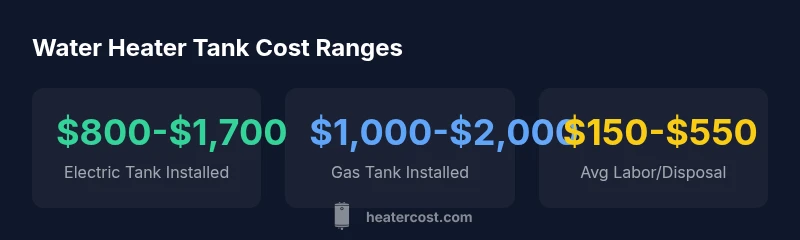
Typical installed cost for a standard 40-gallon water heater tank ranges from $800 to $1,700 for electric models and $1,000 to $2,000 for gas models. Replacement costs vary by tank size, efficiency, and regional labor rates. According to Heater Cost Analysis, 2026, budgeting for delivery, disposal, and permits can add up to several hundred more dollars.
Cost structure: what you're paying for
When you price a water heater tank, you’re looking at several layers beyond the sticker price. The tank itself is only part of the cost. Unit price varies by size (typical 40- or 50-gallon models), material quality, and energy factor. Electric models tend to have lower upfront costs than gas models in many markets, but that gap can shrink when you factor in venting requirements and gas-line upgrades. In addition, most installations include labor, which covers removing the old unit, mounting the new one, connecting water and fuel lines, and testing safety devices. Many regions also require disposal fees or permit fees, which can add hundreds of dollars to the final bill. Finally, expected service life and warranty terms influence long-run value: a more durable unit with a longer warranty may save money over time by reducing replacement frequency. According to Heater Cost Analysis, 2026, homeowners should budget for delivery, incidental materials (valves, fittings, expansion tanks), and potential code-compliance costs even before choosing a model.
Electric vs gas: price ranges and efficiency
Electric water heaters typically have lower upfront costs than gas models, but the total installed price also depends on electrical panel capacity, circuit requirements, and local labor rates. Gas models may require venting, gas line upgrades, and sometimes a new flue, which raises installation costs. In many markets, the difference in annual energy cost over the life of the unit tends to narrow for larger households, when usage patterns are high and natural gas is affordable. Efficiency labels (Energy Star or equivalent) influence price and operating costs; higher-efficiency units may cost more initially but pay off through lower energy bills. Additionally, the fuel mix in your region—electricity versus natural gas—drives relative cost. Heater Cost Analysis, 2026 notes that the cost delta can swing by several hundred dollars depending on local labor, permit requirements, and whether you upgrade other components (piping, venting, or a recirculation pump).
Tank size and family hot-water needs
Choosing between a 40-gallon, 50-gallon, or larger tank depends on household size, peak hot-water demand, and shower/bath usage patterns. A larger tank can reduce the frequency of running out of hot water, but it comes with a higher upfront price and potential higher standby heat loss. For families with high simultaneous usage, a larger capacity paired with a higher recovery rate can improve comfort but at a greater cost. Heuristic estimates suggest balancing daily peak demand with the cost premium of extra capacity. In 2026, Heater Cost Analysis notes that many homes do fine with a well-sized 40- or 50-gallon unit when paired with sensible usage patterns and, where appropriate, a recirculation pump.
Installation, permits and disposal: budgeting tips
Installation costs cover labor, hardware, and potential upgrades such as new shut-off valves, expansion tanks, and venting components. Permits vary by jurisdiction and can add hundreds of dollars to the total. Disposal fees for removing an old tank depend on local rules and recycling options. To avoid surprises, obtain multiple quotes and ask for itemized breakdowns—especially for labor, permit, and disposal charges. A modest contingency (5–15% of the installation total) can accommodate unexpected site challenges, such as limited access or required electrical upgrades.
Maintenance and longevity: how costs evolve over time
Regular maintenance helps to maximize the lifespan and efficiency of a water heater tank. Annual or biannual flushing to remove sediment, inspecting anode rods, and testing pressure relief valves can prevent a failure that forces a costly replacement. Typical lifespans vary by fuel type and usage, with electric tanks often lasting longer than gas models in some regions, though weather, water quality, and maintenance practices heavily influence outcomes. Budget for periodic parts replacement, such as anode rods or valves, to avoid large emergency expenditures. According to Heater Cost Analysis, 2026, choosing a higher-efficiency model with a solid warranty can lower total ownership costs even if the upfront price is higher.
Financing, incentives, and warranties
Many homeowners finance water heater purchases and installation, spreading the cost over time. Look for utility rebates, local incentives, and any tax credits that apply to energy-efficient equipment. Warranties affect expected out-of-pocket costs, especially if failures occur and coverage reduces repair bills. Read the fine print for parts coverage and labor terms, and verify transferability if you sell the home. A longer warranty can offer peace of mind but may come with a higher upfront price.
Regional variation and market drivers
Regional factors, such as climate, electricity and natural gas prices, labor wages, and permitting processes, create wide price variation. Coastal and urban areas typically have higher labor rates, while rural regions may face transport costs. Market dynamics—suppliers' stock levels, demand surges, and regulatory changes—also influence price. Heater Cost Analysis, 2026 highlights that understanding local conditions is essential for accurate budgeting and avoiding sticker-shock.
Replacement vs repair: decision framework
If a water heater is leaking, making loud noises, or failing to heat reliably, replacement is often more cost-effective than repeated repairs. Repairs can be worthwhile if the unit is relatively new and the needed parts are affordable. Use a simple total-cost-of-ownership approach: add upfront price, ongoing energy costs, maintenance, and expected lifetime to decide whether to repair or replace. This framework helps homeowners avoid unnecessary expenses and maximize value.
How to estimate your own water heater tank cost
Start by identifying your tank size (40 or 50 gallons is most common for single-family homes) and fuel type. Gather at least three quotes that itemize the tank price, labor, permits, and disposal. Compare the total installed cost, then factor in expected energy costs and warranty terms over the unit’s life. Use the numbers from local suppliers to adjust the national ranges and consider any regional incentives you can claim.
Cost comparison for common 40-gallon water heater tanks
| Aspect | Electric 40 gal | Gas 40 gal |
|---|---|---|
| Installed cost range | $800-$1,700 | $1,000-$2,000 |
| Unit price (tank only) | $350-$900 | $450-$1,200 |
| Labor & disposal | $150-$550 | $180-$700 |
| Total installed cost (40 gal) | $1,100-$2,200 | $1,400-$3,000 |
Got Questions?
What factors influence water heater tank cost?
Costs are driven by tank size, fuel type, efficiency ratings, installation complexity, and local permit requirements. Labor rates and disposal fees can swing the final price. A thorough quote should break out each component.
Factors include size, fuel, efficiency, and local permit costs; always compare individual components in quotes.
Is it cheaper to install electric or gas models?
Electric tanks usually have lower upfront costs, while gas models can incur higher installation costs due to venting and gas-line work. Over time, energy costs and usage patterns determine which option is cheaper for a given home.
Electric is often cheaper upfront; gas may save on energy in some homes, depending on usage and fuel prices.
Do warranties affect upfront cost?
Warranties don’t usually change the upfront price, but they affect long-term ownership costs by reducing repair or replacement expenses. Longer warranties may justify a higher initial price if they cover major failures.
Warranties don’t change the sticker price, but they influence long-term costs.
Are energy-efficiency incentives available in 2026?
Many regions offer rebates or tax credits for high-efficiency water heaters. Availability varies by locality and utility programs, so check your local energy office or utility website for current offers.
Check local programs for rebates or credits on efficient models.
How long does a typical water heater tank last?
Most tanks last about a decade to over a decade with proper maintenance, though fuel type, water quality, and usage influence longevity. Plan for regular maintenance to extend life and protect your investment.
Most tanks last many years with regular care; maintenance helps extend life.
“Price transparency helps homeowners make informed decisions; the best value comes from balancing upfront cost with energy efficiency and service life.”
The Essentials
- Estimate total cost beyond sticker price.
- Size and fuel type drive major price differences.
- Account for installation, permits, and disposal.
- Energy efficiency affects long-term savings.
- Shop around and compare total cost of ownership.