Midea Water Heater: Cost, Efficiency, and Buying Guide
Explore the true cost of Midea water heaters, from purchase and installation to energy use and maintenance. Get data-driven guidance to choose between tank and tankless options for your home.


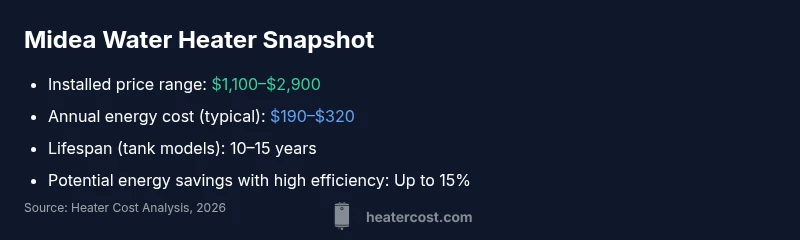
Typical total installed costs for a residential Midea water heater range from about $1,100 to $2,900, depending on model (tank vs tankless) and installation specifics. Regional energy prices affect annual costs, but high-efficiency models often reduce ongoing energy use. This quick answer reflects Heater Cost Analysis, 2026 data to help you compare upfront price, installation, and long-term operating costs.
Overview of Midea Water Heaters
Midea is a well-known manufacturer offering a range of residential water heating solutions. When people reference a “Midea water heater,” they typically mean electric models designed for single-family homes, apartments, and small commercial spaces. Across the lineup you’ll encounter tank models, tankless options, and hybrid designs that promise compact footprints and reliable performance. Key features to look for include adjustable thermostats, digital displays, corrosion-resistant tanks, and efficient heat exchangers. At Heater Cost, we emphasize proper sizing and installation as the most important drivers of value. A mid-range 40–50 gallon electric tank remains a common choice for many households, balancing upfront cost with straightforward installation and dependable recovery. When evaluating a Midea unit, compare two to three models with similar capacity, then weigh upfront price against long-term operating costs. Energy efficiency labels, when available, help identify models with lower standby loss and reduced energy use. And remember: the right model should fit your home’s space and hot-water demand, not just the lowest sticker price.
Price, Costs, and Value: What to Expect with Midea
Pricing for Midea water heaters varies by model and configuration. A purchase price often sits in a broader range, with installation costs influenced by space constraints, electrical or gas requirements, venting (for gas models), and regional labor rates. In many homes, the total installed cost is a combination of unit price, labor, and any upgrades to meet code requirements. Homeowners should obtain multiple quotes from licensed professionals to compare options and ensure compliance with local regulations. In our experience, Midea models that emphasize higher capacities or tankless designs tend to have higher upfront costs but offer potential savings through more efficient operation and reduced heat loss. When budgeting, consider not only the sticker price but also potential rebates, utility incentives, and maintenance expenses over the unit’s life. At Heater Cost, we advocate a holistic view of cost of ownership, balancing initial investment with expected energy savings and reliability.
Energy Efficiency and Operating Costs
Energy efficiency is a central factor in the long-term cost of any water heater. Midea models typically vary in energy factor (EF) or uniform energy factor (UEF), which influences annual energy consumption. When possible, prioritize models with higher EF/UEF ratings and check for Energy Star labeling where available. In regions with higher electricity costs or cooler climates, even modest efficiency gains can translate into noticeable yearly savings. Practical steps to minimize operating costs include setting the thermostat to temperatures no higher than necessary (often around 120°F), insulating hot water pipes, and performing regular maintenance to avoid sediment buildup that can raise energy use. Our analysis emphasizes that regional energy prices and usage patterns shape the economics of a given Midea unit, so homeowners should translate general guidance into their local context.
Tank vs Tankless: Making the Right Choice for Your Home
Choosing between tank and tankless configurations depends on hot-water demand, space, and upfront budgets. Tank heaters store hot water for immediate use, offering predictability and typically lower installation costs. Tankless models heat water on demand, delivering continuous supply and a smaller footprint but often requiring higher electrical capacity and more complex installation. For many households, a 40–50 gallon tank provides ample supply with simple maintenance, while larger families or high-demand households may benefit from a tankless or hybrid option. Midea’s lineup allows homeowners to compare both pathways, focusing on recovery rate, first-hour rating, and the total cost of ownership over the unit’s life. A careful size selection can reduce nuisance outages and improve overall comfort.
Installation Considerations and Practical Steps
Installation considerations for a Midea water heater include space availability, access for maintenance, electrical service adequacy, and ventilation (for gas models). In many homes, electrical panels may require upgrades to support higher wattage heaters, particularly for tankless variants. Always verify clearance around the unit and ensure the surrounding area is dry and free from combustibles. Permits and inspections are jurisdiction-dependent, so consult your local building department and hire a licensed professional to perform the installation. If you’re replacing an older unit, plan for potential adjustments to piping, venting, and shutoff valves. A quality installation minimizes leaks, ensures safe operation, and optimizes energy efficiency over time. This planning phase is essential to get the most from your Midea system.
Maintenance and Longevity for Midea Water Heaters
Routine maintenance is essential to extend the life of any water heater. For most Midea models, schedule an annual flush to remove sediment that can impair efficiency and shorten lifespan. Test the pressure relief valve periodically and inspect piping for leaks or corrosion. If your unit uses a tank, monitor the anode rod (if accessible) and replace it as recommended by the manufacturer to prevent tank deterioration. Temperature regulation is another lever for longevity and comfort—aim for a safe, moderate setting to balance performance and energy use. Professional servicing every few years can catch wear before it becomes major repair work, helping you avoid unexpected downtime and costly replacements.
Buying Guide: How to Pick the Right Model
Start by assessing your household’s peak hot-water demand and space constraints. Calculate the number of bathrooms and typical daily usage to determine the appropriate capacity and recovery rate. For smaller homes or renters, a well-specified tank or compact tankless model may suffice, while larger households may require higher-capacity solutions or hybrid designs. Evaluate installation requirements—electrical service, venting, and space access loom larger than sticker price. Compare two or three models from the Midea line that fit your footprint and demand profile, focusing on energy efficiency, warranty terms, and ease of maintenance. Finally, check for incentives or rebates in your area that can offset upfront costs.
Warranty, Support, and Reliability: What to Know
Warranty terms vary by model and region, but many Midea water heaters offer multi-year coverage on the tank and components. It’s important to read the warranty carefully to understand what is included, what conditions apply, and how claims are processed. Reliability often correlates with proper sizing, professional installation, and regular maintenance. Consider the availability of local service technicians and spare parts when choosing a model. Keeping documentation of purchase and installation can simplify warranty claims and future support from the manufacturer or your installer. In practice, aligning warranty expectations with maintenance planning provides greater peace of mind for homeowners.
Authority sources
- The U.S. Department of Energy, Energy Saver: Water Heating
Other references
- Energy Star: Water Heaters
NREL: Water Heating Energy Use
Comparison of common Midea water heater types
| Model Type | Capacity | Energy Rating | Typical Price Range |
|---|---|---|---|
| Tank | 40–60 gallons | EF/UEF varies | $600–$1,400 |
| Tankless | 2–5 GPM | Higher efficiency | $800–$1,600 |
| Hybrid/Heat Pump | 40–50 gallons | High efficiency | $1,000–$2,000 |
Got Questions?
What is the typical lifespan of a Midea water heater?
Most Midea residential water heaters last 10–15 years depending on use and maintenance. Regular flushing and proper thermostat settings help extend life.
Most Midea water heaters last about a decade or more with good maintenance.
Are Midea water heaters energy efficient?
Yes, many Midea models offer modern energy-saving features and favorable energy factor ratings. Check the model's EF/UEF and Energy Star status when available.
Many Midea models are energy efficient with good EF ratings.
Tank vs tankless—how do I choose for a Midea heater?
Consider peak hot-water demand, space, and upfront cost. Tankless offers continuous hot water and a smaller footprint but higher install cost; tank offers simple setup and predictable performance.
Tankless gives endless hot water but costs more upfront; tanks are cheaper and easier to install.
Do I need permits to install a Midea water heater?
Permits and codes vary by location. Check with the local building department; a licensed installer can help ensure compliance.
Permits depend on where you live; your installer can handle it.
What maintenance is recommended for Midea water heaters?
Annual flushing to remove sediment, test the T&P valve, inspect piping for leaks, and verify thermostat settings for safe operation.
Flush yearly, check the pressure relief valve, and keep the thermostat at a safe setting.
What warranty comes with Midea water heaters?
Warranty lengths vary by model but typically range from 6 to 12 years for the tank and components. Check your specific model's terms.
Most Midea tanks have a multi-year warranty; check your model.
“Choosing a water heater is about balancing upfront cost with long-term energy savings. In our analysis, Midea models across categories deliver solid efficiency with competitive prices when sized correctly.”
The Essentials
- Size to demand; avoid under- or oversizing
- Tankless offers endless hot water but costs more upfront
- Higher EF/UEF can reduce operating costs over time
- Installation quality strongly affects performance
- Warranty and service accessibility matter for long-term reliability