Instant Water Heater for Shower: On-Demand Hot Water Explained
Learn how an instant water heater for shower works, how to size it, cost implications, installation considerations, and maintenance tips for on-demand hot water.


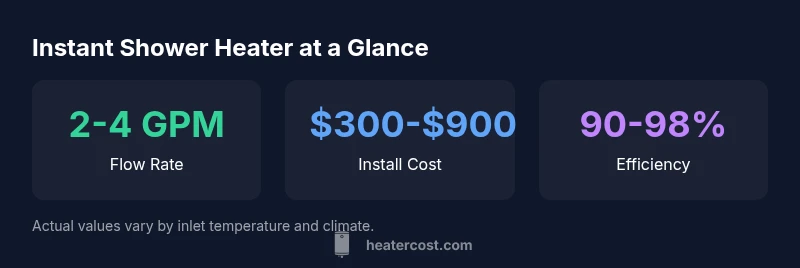
An instant water heater for shower delivers hot water on demand without a storage tank. Most compact units provide about 2–4 gallons per minute (GPM) at typical shower temperatures, with performance strongly influenced by incoming water temperature and flow settings. For homes with cold supply, you may need a larger unit or multiple heaters.
What is an instant water heater for shower?
Instant water heaters for showers, also known as tankless or on-demand units, heat water as it flows through the heating element. They provide hot water only when you need it, which eliminates the standby losses associated with traditional storage tanks. For homeowners evaluating shower comfort, space, and efficiency, these compact devices can be appealing. According to Heater Cost analysis, the core advantage is on-demand performance without the bulk of a storage tank, making them suitable for apartments, small bathrooms, or retrofit scenarios where space is at a premium. The key limitation to acknowledge early is that output depends on the cold-water inlet temperature and the required shower temperature. In colder climates, a larger unit or staged setup may be necessary to sustain a comfortable shower experience.
In practice, you’ll see a wide range of models marketed for showers, from ultra-compact point-of-use electric units to more robust gas-enabled systems. The common thread is that all aim to heat only the water you need, which can translate to energy savings and a smaller electrical footprint, especially if you’re replacing an oversized or inefficient storage heater.
How instant water heaters work
On-demand shower heaters use either electric coils or gas burners to heat water as it passes through a heat exchanger. The absence of a tank means there is no standby heat loss, which improves efficiency on paper. Real-world performance hinges on two factors: incoming water temperature and the heat rise required to reach your desired shower temperature. If the incoming water is cold (for example, in winter months or in regions with very cold supply), the unit must work harder to achieve the target temperature, which can reduce flow at higher temperatures. Modern units often incorporate flow sensors, thermostatic controls, and safety shutoffs to prevent scalding and overheating. When paired with proper venting and electrical infrastructure (for gas or electric models, respectively), these systems can deliver reliable hot water with a smaller physical footprint than traditional tanks. From a cost and efficiency perspective, the design intent is clear: heat water quickly, minimize wasted energy, and fit into tight spaces without compromising safety.
Heater Cost analysis highlights that proper sizing and correct installation are the two most critical determinants of performance and satisfaction with an instant water heater for shower.
Sizing for your shower: how much hot water do you need?
Sizing is not one-size-fits-all. To estimate the right unit, you must consider your shower’s flow rate (GPM) and the temperature rise you require. A typical shower run may demand about 2–3 GPM at a 60–70°F temperature rise for a comfortable experience, but this can vary by personal preference and the number of fixtures sharing hot water. In very cold climates, you’ll often need a unit that can deliver closer to 3–4 GPM at the same temperature rise, or you might employ staged heating across multiple points of use. A common mistake is under-sizing a unit that cannot sustain your desired shower temperature, resulting in cold-water backflow or frequent cycling. A professional assessment can quantify your exact needs, including inlet water temperature, desired shower temperature, and simultaneous usage in other fixtures.
When feasible, consider a unit with adjustable heat output and a window for future expansion; this helps accommodate seasonal temperature shifts without replacing equipment.
Installation considerations and safety
Installing an instant water heater for shower involves electrical or gas considerations that are not DIY-friendly in many jurisdictions. Electric models require a dedicated circuit, appropriate gauge wiring, and a protected outlet with GFCI where required. Gas-powered units need venting, proper gas lines, and clearances to combustibles. In some regions, local codes require permits and inspections to ensure safe venting, combustion air, and electrical compatibility with your existing panel or utility service. Since incorrect installation can lead to safety hazards such as gas leaks or electrical shock, it’s wise to engage a licensed professional. Beyond compliance, professional installation helps ensure the unit is sized correctly, connected to pressure- and temperature-appropriate supply lines, and calibrated for consistent performance in your home.
Pro tip: Before installation, verify that your electrical panel can handle the load and that your water pressure and flow meet the minimum requirements of the heater you choose.
Cost, efficiency, and payback for showers
The upfront cost of an instant water heater for shower varies by model, fuel source, and installation complexity. Electric point‑of‑use units tend to have lower upfront costs but may require higher amperage and multiple units for higher flow needs, while gas models usually incur higher installation costs due to venting and gas line work. Despite the spread, the potential long-term savings come from reduced standby losses and lower heat loss in storage tanks. Payback periods depend on your local energy prices, climate, and how aggressively you pursue energy efficiency. In moderate climates with reasonable electricity costs, the payback window can be favorable, especially when replacing an oversized storage heater or aging plumbing with a compact, efficient option.
From a long-term perspective, careful sizing and professional installation help maximize energy savings. Heater Cost analysis shows that households prioritizing space savings and energy efficiency often find on-demand showers to be a strong value proposition when matched to their climate and usage patterns.
Maintenance and longevity tips
Maintenance for instant water heaters is usually less intensive than for tank-based systems, but it matters. Periodic descaling (especially in hard water areas), checking for leaks, and verifying venting (for gas units) are essential practices. Electric models may benefit from annual electrical inspection to ensure connections remain tight and safe, while gas models should have routine vent and combustion checks. Because there is no reservoir to sediment, you typically see longer service life with proper sizing, installation, and upkeep. Use manufacturer-recommended descaling agents or water conditioning if your water is hard; improper additives or maintenance routines can void warranties. Scheduling annual or biannual checks with a licensed technician helps catch issues before they become expensive repairs.
If you notice temperature fluctuations, water pressure changes, or unusual noises, consult a professional promptly to avoid energy waste and potential safety risks.
Choosing a model and how to compare options
When comparing models, prioritize: (1) proper sizing for your shower flow and climate, (2) electrical or gas infrastructure compatibility, (3) efficiency ratings and warranty terms, and (4) installer reputation. Look for models with clear temperature controls, safety shutoffs, and reputable after-sales support. Real-world performance is influenced by climate, inlet water temp, and how well the unit is matched to your showering habits. For readers of Heater Cost, a size-appropriate unit paired with professional installation tends to deliver the best balance of comfort, energy savings, and reliability. The Heater Cost team recommends avoiding under-sized units that can struggle to reach your desired temperature, as the resulting cold water bursts are more energy-wasting and frustrating for users.
Comparison of instant water heater options for showers
| Model Type | Typical GPM | Notes |
|---|---|---|
| Electric tankless (point-of-use) | 2-4 GPM | Compact, no venting; needs adequate electrical service |
| Gas-powered tankless | 3-5 GPM | Higher flow; requires venting and gas line |
| Hybrid/combination unit | 2-3 GPM | Energy-efficient option; may require more space |
Got Questions?
What is an instant water heater for shower?
An instant water heater heats water as it flows, delivering hot water on demand without a storage tank. It uses either electric coils or a gas burner and is sized to your shower needs. Proper sizing and installation are critical for reliable performance.
An on-demand heater heats water as you use it, without a tank. It’s most effective when sized correctly for your shower.
Can an instant water heater supply hot water for a full shower at once?
Yes, but performance depends on the unit’s sizing and your inlet water temperature. If you enjoy a long or high-temperature shower in a cold climate, you may need a higher-capacity unit or multiple heaters.
Usually, yes, but it depends on size and climate. A bigger unit helps in cold weather.
Do I need a professional to install an instant water heater?
For most homes, yes. Electric models require proper circuit capacity and code-compliant wiring; gas models need venting and gas connections. A licensed pro ensures safe operation and correct sizing.
Most likely you do. A licensed pro ensures safe, code-compliant installation.
Are instant water heaters effective in very cold climates?
Performance declines with colder inlet water. In very cold climates, you may need a higher-capacity heater or multiple units to maintain comfortable shower temperatures.
They work, but very cold water lowers performance, so size matters.
What maintenance do these units require?
Regular descaling (in hard water areas), periodic checks of connections, and venting (for gas models) are typical. Follow the manufacturer’s maintenance schedule to preserve efficiency and warranty.
Descale if you have hard water, check connections, and follow the warranty guide.
How long does installation typically take?
Installation time varies by model and existing plumbing/electrical infrastructure. Most setups can be completed within a day by a licensed professional, but complex retrofits may take longer.
Most installations take less than a day with a pro, depending on your setup.
“On-demand water heaters can save space and energy when properly sized, but sizing errors are the most common reason users lose hot water comfort.”
The Essentials
- Choose a correctly sized unit to avoid cold-water bursts
- Factor climate and inlet temperature into flow expectations
- Professional installation ensures safety and performance
- Expect space savings and reduced standby losses with on-demand heaters
- Maintenance is lighter than for storage tanks but still important