American Standard Water Heaters: Costs, Types, and Care in 2026
Discover costs, lifespans, and upkeep for American Standard water heaters. Compare storage tanks vs tankless, installation considerations, and energy tips for smart budgeting in 2026.


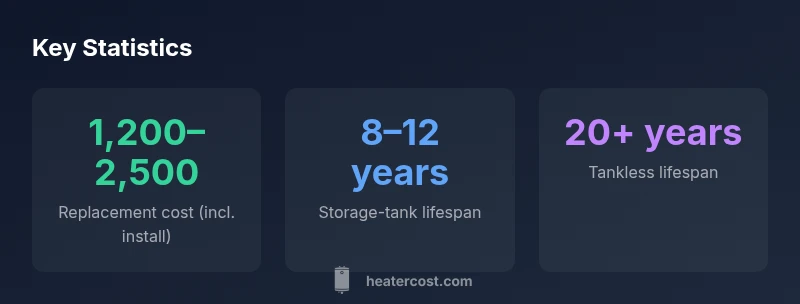
On average, replacing an American Standard water heater costs between $1,200 and $2,500, including installation, with electric units typically on the lower end and gas units on the higher end. Replacement lifespans usually range from 8 to 12 years for storage tanks; tankless options can last 20 years or more with proper maintenance.
Overview of American Standard Water Heaters
A water heater is a core appliance for any home, providing reliable comfort for daily routines. When evaluating an american standard water heater, homeowners should weigh upfront costs against long-term energy use and reliability. According to Heater Cost Analysis, 2026, people often compare models by size, fuel type, and warranty window to determine total ownership expense. American Standard has long marketed durable storage-tank and tankless options, aimed at balancing performance with value. In many homes, the decision hinges on hot-water demand patterns: a family of four using showers, laundry, and dishwashing will push for larger tanks or continuous-flow tankless systems, while smaller households can often meet needs with a standard 40-50 gallon unit. Beyond capacity, today’s models emphasize energy efficiency features, corrosion resistance, and ease of maintenance. The Heater Cost team emphasizes that choosing the right heater is not only about purchase price but about how the unit integrates with your home’s electrical or gas setup, space, and budget.
Key Features and Technology
American Standard water heaters blend durable materials with modern features. Most models use lined steel tanks with protective glass-lined coatings to resist corrosion and extend life. Efficiency is driven by energy-factor ratings, insulated jackets, and burner or element controls that reduce standby losses. Warranty terms are a critical factor and typically cover parts for several years, with longer coverage often correlating with higher upfront costs. When evaluating, homeowners should compare features like delivery temperature controls, demand-based activation, and the ability to switch between energy sources in a backup scenario. The goal is to minimize cold-water sandwiches and ensure consistent supply during peak usage. The Heater Cost team emphasizes that these features influence monthly energy bills as much as the purchase price, so a well-chosen model can save money over its lifetime.
Sizing, Types, and Home Fit
Sizing matters: most households rely on 40-50 gallon storage tanks, while larger families or homes with high simultaneous hot-water use may require 60-80 gallons or a tankless solution with higher flow rates. Tankless models can provide endless hot water but require proper sizing and may need larger gas lines or electrical upgrades. When considering a particular American Standard model, map your peak-hour demand by counting showers, running appliances, and laundry cycles. Then compare the first-hour rating (FHR) for storage tanks or temperature rise requirements for tankless units. Always consult a licensed installer to confirm feasibility within your existing fuel type and venting setup.
Cost Considerations and Budgeting
Upfront costs vary widely by size, fuel, and installation complexity. A reasonable range for total project cost, including installation, is roughly $1,200-$2,500 for many electric storage-tank replacements, while gas and high-capacity units can push toward the upper end or beyond. Beyond sticker price, homeowners should factor into total cost: permits, venting upgrades, new gas lines, and potential electrical panel work. Energy costs over the life of the unit depend on usage and climate, and choosing a model with a higher energy-factor can reduce long-term bills. Homeowners should request a written estimate that itemizes parts, labor, and permit fees and compare at least three quotes. The Heater Cost team suggests focusing on long-term value rather than the lowest upfront price.
Installation, Permits, and Selection Process
Installation logistics influence schedule and total cost. Local codes may require permits for new installations or replacements, and some jurisdictions mandate licensed professionals for warranty validity. Typical installation takes 3-8 hours, though complex venting or gas-line work can extend this. A capacitor or pressure-relief valve might be added for safety. During the selection process, consider your home's electrical capacity (for electric models) or gas supply and venting (for gas models). It's wise to choose a model with accessible service ports and robust warranty terms. The installer should confirm clearances from walls and floors and verify that the water heater location meets clearance standards for service and drainage.
Energy Efficiency and Operating Costs
Energy efficiency is often expressed as an energy factor (EF) or estimated annual energy consumption. Higher-efficiency models reduce standby losses and heat-ups, cutting monthly bills in many climates. In addition to efficiency, you should consider standby protection features, such as anode-rod monitoring and leak detection where available. Pairing with a recirculation pump or an efficient distribution system can optimize performance in larger homes. Important considerations include the fuel type and local energy prices, as these dramatically influence operating costs over time. The Heater Cost analysis indicates that upgrading to a higher-efficiency unit can halve energy use in some scenarios, but benefits depend on usage patterns and climate.
Maintenance, Longevity, and Warranties
Maintenance is essential to extend life. Simple steps like flushing the tank annually, inspecting the anode rod, replacing sacrificial liners when needed, and checking pressure relief valves can prevent sediment buildup and leaks. In a typical warranty, components such as the tank and parts are covered for several years, though coverage varies by model and installer. Signs a unit needs service include fluctuating water temperature, reduced hot water supply, or unusual noises. Keeping a service record and scheduling annual checkups helps ensure reliability. A well-maintained American Standard water heater will generally provide reliable performance for its expected lifespan.
Choosing Between Tank and Tankless for Your Home
Tank vs tankless requires balancing upfront cost, space, and hot-water demand. Tank heaters offer lower initial cost and simple maintenance; tankless units deliver endless hot water and often better efficiency but require more complex installation and potentially higher repair costs. For homes with frequent high-demand use, a tankless system with proper sizing can improve comfort, while smaller households may benefit from a well-sized storage tank. Consider your climate (heat losses), space constraints, and whether you anticipate future changes in hot-water consumption. The ideal choice aligns with your daily routines and energy priorities, and a local professional can run a side-by-side cost and performance comparison for an American Standard line.
Practical Checklist Before Buying
Use this practical checklist to streamline your decision: 1) Assess peak hot-water demand by listing showers and major appliances; 2) Compare storage tank versus tankless options with regard to space; 3) Verify compatibility with your existing electrical/gas setup; 4) Review warranties and service networks; 5) Obtain multiple quotes that detail equipment, labor, venting, and permits; 6) Check for local energy-efficiency incentives or rebates. A final tip is to review user reviews and service history for the exact American Standard model you’re considering, as real-world reliability varies by unit and installer.
Model types, lifespans, and costs (illustrative ranges)
| Model Type | Avg Lifespan | Typical Cost Range | Energy Type |
|---|---|---|---|
| Storage Tank (Gas) | 8-12 years | 1,200-2,500 | Gas |
| Storage Tank (Electric) | 9-12 years | 1,100-2,400 | Electric |
| Tankless (Gas) | 20+ years | 2,500-5,000 | Gas |
| Tankless (Electric) | 20+ years | 2,400-4,800 | Electric |
Got Questions?
What is the typical cost to replace an American Standard water heater?
Replacement costs typically range from $1,200 to $2,500 including installation, depending on unit size and labor. Electric models usually cost less upfront than gas models, but energy costs vary by fuel type and local rates.
Replacement costs typically range from $1,200 to $2,500, depending on size and labor. Electric models are often cheaper to install.
Are tankless models worth the extra upfront cost?
Tankless options have higher upfront costs but can offer long-term energy savings and unlimited hot water for some homes. They require professional installation and proper sizing to avoid cold-water sandwiches.
Tankless can save energy and give endless hot water, but you’ll pay more upfront and need proper sizing.
How long do American Standard water heaters last?
Storage-tank units typically last 8-12 years; tankless models can exceed 20 years with regular maintenance.
Most tanks last about 8-12 years; tankless can last 20 years or more.
Can I install a water heater myself?
Installing a water heater requires plumbing and electrical or gas work. Local codes may require permits and a licensed professional for safety and warranty.
Installing a water heater usually requires a licensed professional due to plumbing and electrical or gas work.
What maintenance extends a water heater’s life?
Annual flushing, checking the anode rod, and inspecting connections helps prevent sediment buildup and leaks, extending equipment life.
Flush annually, check the anode rod, and inspect connections to extend life.
“The right American Standard water heater balances demand, space, and energy costs to minimize total ownership.”
The Essentials
- Assess hot-water needs before buying.
- Choose tank vs tankless based on usage and space.
- Expect installed cost to range widely.
- Maintenance extends life and efficiency.
- Check energy efficiency ratings to save bills.