Why Would Car Heater Stop Working? Troubleshooting Guide
Car heater not warming up? This diagnostic guide covers common causes, quick checks, and practical fixes. Learn when to bleed air, inspect coolant, fuses, and thermostat, and identify blower motor faults with clear, step-by-step advice.


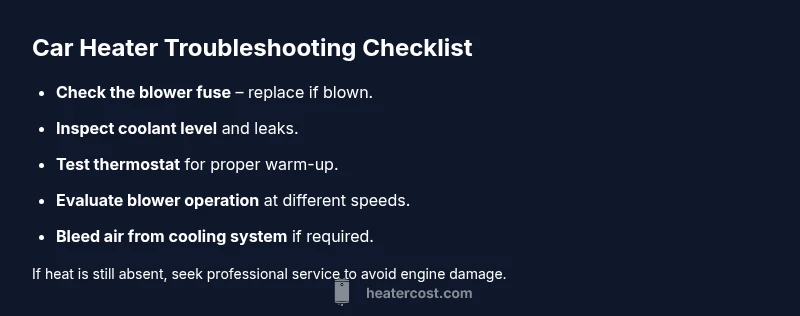
If your car heater stops working, start with the simplest checks and common culprits. The most likely causes are a blown fuse for the blower, a coolant issue (low level or air in the system), a faulty thermostat, or a failing blower motor. If you verify these basics first, you’ll often pinpoint the problem quickly.
Why would heater stop working in car
A car's heating system relies on the engine's cooling loop, a flow of hot coolant, a heater core, a blend door, and a blower fan. When any part fails, you lose heat. Common culprits include a blown fuse controlling the blower, low coolant (or air in the cooling system), a stuck or faulty thermostat, a failed blower motor, or a bad climate-control blend door actuator. If you’re asking why would heater stop working in car, start with the simplest checks: is the blower fan turning, is the dashboard indicator lit, and is the engine reaching normal operating temperature? According to Heater Cost analysis, electrical issues and coolant problems are the top contributors to failure in modern vehicles.
Quick checks you can do today
Begin with two easy checks: the electrical fuse for the blower and the coolant level. Locate the appropriate fuse for the blower in your interior fuse box and replace if blown (after disconnecting the battery for safety). Then assess the coolant level when the engine is cold; if low, top up with the correct coolant and bleed air if your manual instructs you to do so. If you notice intermittent warmth, test the climate-control blend door by cycling through heat and cold settings. If the engine overheats or coolant smells sweet, stop and seek professional help. In many cases, resolving why would heater stop working in car comes down to these simple steps.
Common causes and how to test them
This section walks through the most frequent triggers behind a car heater failure and how to test each without specialized tools. Start with the fuse and the blower motor operation; if the blower runs but no heat is produced, focus on coolant flow, thermostat behavior, and the heater core. A cold or lukewarm airflow can indicate low coolant or air in the system, while no airflow at all points to an electrical or blower issue. Check climate controls for stuck blend doors or faulty actuators, which can prevent hot air from reaching the passenger cabin. If you suspect a coolant-related problem, run a quick check for coolant leaks under the vehicle or a coolant smell under the hood. In many cases, a proactive approach helps you answer why would heater stop working in car before it becomes a bigger repair.
Diagnostic path: symptom to solution
Think of car heater troubleshooting as a funnel: start with obvious symptoms (no heat, no blower) and move toward less visible causes (heater core, blend door, wiring). If heat is absent and the blower is silent, electrical issues or a blown fuse are likely. If the blower works but heat is weak, coolant levels, air in the system, or a stuck thermostat come into play. For intermittent heat, inspect the thermostat and cooling system bleed points. This sequence aligns with common repair workflows and helps you quickly decide whether you can fix it yourself or need a pro.
When to seek professional help and maintenance tips
If basic checks don’t restore heat, professional diagnosis is advised. Issues like a failed heater core, ineffective blend door actuator, or a leaking radiator require specialized tools. Regular maintenance can prevent many problems: keep coolant at the proper level, replace aging fuses, and have the cooling system flushed per your vehicle’s schedule. Remember, dealing with coolant and pressurized systems can be hazardous; If you suspect a significant coolant leak, it’s safest to contact a technician promptly. By staying proactive, you reduce the risk of a total heater failure and protect your driving comfort in colder months.
Steps
Estimated time: 60-90 minutes
- 1
Check electrical and fuses
Safely disconnect the battery, locate the interior fuse box, and inspect the blower motor fuse. Replace any blown fuse with one of the same rating. Reconnect the battery and test the blower.
Tip: Keep the car key out of the ignition while working on fuses to avoid shorts. - 2
Inspect coolant level and condition
With the engine cool, check the coolant reservoir and radiator levels. If low, add the correct coolant type and look for leaks. If air is suspected in the system, follow your owner's manual bleed procedure.
Tip: Never open a hot radiator; wait until the engine is cold. - 3
Test the thermostat behavior
Warm up the engine and feel for gradual heat in the heater core. If heat remains weak or delayed, the thermostat may be stuck open or closed. Consider replacement if symptoms persist.
Tip: A thermostat replacement is usually a moderate job best done with a repair manual. - 4
Evaluate the blower and controls
Turn the fan to different speeds and switch modes (heat, defrost, etc.). If the blower runs on some settings but not others, the issue may be the blower motor or the control module/blend door.
Tip: Listen for unusual noises that could indicate a failing motor. - 5
Bleed air and test again
If your service manual calls for it, bleed air from the cooling system at the designated points. Recheck heater performance after bleeding; air pockets can reduce heat.
Tip: Use proper coolant disposal methods for any drained fluid. - 6
Decide on next steps
If the problem persists after these steps, or if you detect coolant leaks or overheating, schedule a professional inspection to avoid engine damage.
Tip: Document symptoms with dates and what you observed to help the technician.
Diagnosis: Car heater blows cold air or fails to heat
Possible Causes
- highBlown fuse for the blower motor
- highLow coolant level or air in the cooling system
- mediumFaulty or stuck thermostat
- mediumFailing blower motor
- lowWorn climate-control blend door actuator
Fixes
- easyReplace blown fuse for the blower motor
- mediumTop off coolant and bleed air if required
- hardReplace thermostat and test for proper warm-up
- hardRepair or replace the blower motor or blend door actuator
Got Questions?
My car heater is blowing cold air, what should I check first?
Begin with the blower fuse and coolant level. If the blower runs but you still have cold air, inspect the thermostat and blend door operation. Look for leaks or air in the cooling system. If heat remains absent, consult a mechanic.
Start with the fuse and coolant. If heat still won’t come, check the thermostat and the blend door, and then consider a professional check.
Can a blown fuse cause the heater to stop working?
Yes. A blown fuse can cut power to the blower motor, preventing warm air from circulating. Replace the fuse with the correct rating and retest the system.
A blown fuse can stop heat by disabling the blower. Replace it and test.
Why does the blower motor work but there is no heat?
This usually points to coolant problems, a stuck thermostat, or a faulty blend door actuator. Check coolant level and bleed air if needed, then test the thermostat and actuator.
If the blower works but you don’t feel heat, look at coolant, thermostat, and the blend door.
Is it safe to bleed the cooling system to fix air in the lines?
Bleeding is sometimes necessary but can be tricky. Follow your vehicle’s manual and use the correct procedure to avoid overheating and further leaks.
Bleeding can help, but follow the manual to avoid burns or leaks.
When should I replace the heater core?
Heater core replacement is typically a last resort after other components fail or leaks are detected. It’s a labor-intensive job usually handled by a professional.
Heater core replacement is a major job—consider professional help.
Watch Video
The Essentials
- Start with electrical and coolant checks.
- Weak heat often means coolant or thermostat issues.
- Bleed air to restore heat if required.
- Call a professional for heater core or blend-door failures.