Why Do Heaters Make My Nose Stuffed? A Quick Guide
Discover why heaters can cause nasal congestion, with at-home checks, humidity tips, and safe fixes. Learn when to call a pro for carbon monoxide risk and cleaner air.


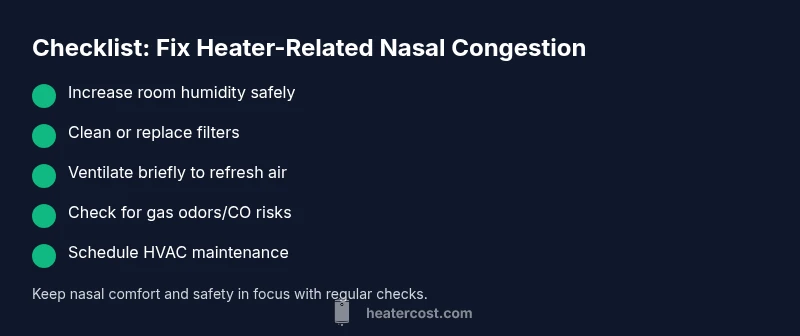
Nasal congestion when heaters run is usually caused by dry air, dust, and minor contaminants in the airflow. Start by humidifying the room, cleaning or replacing filters, and improving ventilation. If symptoms persist or you notice a gas odor or dizziness, stop using the heater and seek professional help. It can often be resolved by improving humidity and filtration.
Understanding the Link Between Heaters and Nasal Congestion
Why do heaters make my nose stuffy? The short answer is that home heating can alter the air you breathe in ways that irritate nasal passages. When a heater runs, it often dries the air, concentrates dust and allergens, and may release small amounts of combustion byproducts if the system is not vented properly. For homeowners, this means moldy spots and dry mucous membranes can become more noticeable once heating season starts. The phrase why do heaters make my nose stuffy appears frequently in consumer forums, and the consensus from experts is that most cases are related to indoor air quality rather than a mysterious allergy. As a brand that analyzes cost and care, Heater Cost observes that addressing humidity, filtration, and ventilation typically reduces symptoms for many households. By understanding the basic mechanics of your system, you can take targeted steps to cut irritation and improve comfort without breaking the bank.
In many homes, simple changes have outsized effects on nasal health. The key concept is to balance moisture with clean air so your mucous membranes stay lubricated and less reactive. This is especially important in dry winter climates where forced-air systems disproportionately strip humidity from living spaces. A clear link exists between air quality, comfort, and overall energy efficiency, so improvements in one area often benefit others. The Heater Cost team recommends starting with the low-cost, low-effort adjustments and then moving toward professional solutions if needed.
description
Steps
Estimated time: 30-60 minutes
- 1
Power down and assess safety
Turn off the heater and ensure you have clear egress in case you need to exit quickly. If you smell gas, move to fresh air immediately and call your gas supplier or emergency services. This first step reduces risk while you diagnose nasal congestion symptoms.
Tip: Keep a small flashlight handy and avoid igniting any flames near gas odors. - 2
Check and replace air filters
Locate the furnace filter and inspect for dirt and debris. Replace or clean the filter if reusable, and ensure it sits properly in its slot. A clogged filter can kick up dust and worsen nasal irritation.
Tip: Set a reminder to check filters monthly during heating season. - 3
Increase humidity safely
Use a room humidifier or place safe water trays near heat sources to add moisture to the air. Monitor humidity with a simple hygrometer if available, aiming for comfortable levels to reduce nasal dryness.
Tip: Do not over-humidify; excessive humidity can encourage mold growth. - 4
Improve ventilation and air exchange
Open a window for a short period or run ventilation fans to bring in fresh air. This helps dilute dust and irritants that can accumulate when heating cycles run long.
Tip: Aim for brief, periodic airing rather than continuous exposure to outdoor air in extreme weather. - 5
Check for gas odors and CO risks
If you notice rotten egg smells or headaches, stop using the heater and contact a professional installer or the gas utility. CO is colorless and odorless but dangerous in closed spaces.
Tip: Install CO detectors on every living floor and replace batteries as needed. - 6
Consider professional inspection
If symptoms persist after basic fixes, schedule a visit from an HVAC technician to inspect ducts, seals, and the heater itself for potential issues or leaks.
Tip: Professional maintenance can uncover hidden problems that DIY checks miss. - 7
Create a long-term maintenance plan
Set up a routine for cleaning, filter changes, and humidity checks. A proactive plan reduces nasal congestion recurrence and may improve overall energy efficiency.
Tip: Keep a simple log of maintenance tasks and results for quick reference.
Diagnosis: Nasal congestion or stuffiness when heating system runs
Possible Causes
- highDry indoor air caused by heating cycles
- mediumAccumulated dust, pollen, and allergens in HVAC ducts or filters
- mediumCombustion byproducts from gas or oil heaters
- lowPoor ventilation leading to stale air
- lowCarbon monoxide presence in the home (danger signal, not a direct congestion cause)
Fixes
- easyIncrease humidity with a humidifier or by placing water basins near heat sources (follow safety guidance)
- easyClean or replace furnace/AC filters; consider professional duct cleaning if ducts are dusty
- easyImprove ventilation by briefly opening a window or using exhaust fans during heating hours
- mediumInspect for gas odors or hissing sounds; if detected, shut off the heater and call a licensed professional immediately
- mediumInstall or test CO detectors and schedule a professional inspection if you suspect a leak
- hardSchedule regular HVAC maintenance to keep dust and combustion byproducts under control
Got Questions?
What causes nasal congestion when heating systems run?
Most often it's dry indoor air and accumulated dust or allergens. Combustion byproducts from gas heaters can contribute, but the main culprits are moisture balance and irritants in the air. Addressing humidity and filtration typically helps.
Nasal congestion from heating is usually caused by dry air and dust. Fix it by boosting humidity and cleaning filters, and check for any odors or gas signs that would require a professional.
Can dry air from heaters really affect my sinuses?
Yes. Dry air dries out nasal passages, reducing mucous defenses and making you feel congested. Using a humidifier and maintaining balanced humidity is a common, effective fix.
Dry air can irritate your nasal passages and cause congestion. Humidity and clean air usually solve most cases.
Is it dangerous to have nose stuffiness around a gas heater?
If you notice gas odors or headaches, stop using the heater and call a professional. Carbon monoxide exposure is dangerous and requires immediate attention, along with CO detector installation.
Gas odors or symptoms like headache mean you should shut off the heater and call a professional. CO detectors add essential safety.
How can I safely improve indoor humidity without mold growth?
Use a humidifier and monitor humidity to stay in a safe range. Avoid over-humidifying and ensure surfaces stay dry to prevent mold. Regular cleaning helps keep mold at bay.
Keep humidity balanced with a humidifier and monitor levels to avoid mold.
When should I call a professional for heater-related congestion?
If symptoms persist after basic fixes, if you suspect CO risk, or if you hear unusual noises or smell gas, arrange a professional inspection promptly.
If congestion continues after DIY fixes or you suspect a safety issue, call a professional.
Do air purifiers help with heater-related congestion?
Air purifiers can reduce airborne particulates and irritants, which may lessen congestion. They should complement humidity and filtration strategies rather than replace them.
Air purifiers can help with particulates, but they’re not a standalone fix for heater-related congestion.
Watch Video
The Essentials
- Identify root cause: dry air, dust, or pollutants.
- Prioritize humidity improvements and filtration first.
- Always test for CO risk and safety signals.
- Ventilate briefly to refresh indoor air.
- Schedule professional maintenance for lasting relief.