Propane Heater Repair: A Practical Guide for Homeowners
A comprehensive, safety-focused guide to diagnosing and repairing propane heaters. Learn steps, tools, maintenance tips, and when to call a pro. Practical for homeowners, renters, and property managers.


Propane heater repair is a practical, safety-focused process that helps restore warmth while controlling costs. This guide walks homeowners through safe diagnostics, essential tools, and step-by-step checks for common propane heater issues like ignition failure, pilot-light trouble, and gas leaks. By following best practices, you can identify whether a repair is feasible, when to replace components, and when to call a licensed technician.
Understanding propane heater repair
Propane heater repair encompasses diagnosing, repairing, and maintaining gas-powered heating units that rely on propane as a fuel source. This guide outlines practical, safety-first approaches suitable for typical residential and small-commercial setups. It covers common symptoms, standard troubleshooting paths, and when professional intervention is necessary. Remember, working with propane involves fire, gas, and carbon monoxide risks, so a careful, methodical approach is essential. According to Heater Cost, staying informed about your unit’s model, age, and maintenance history improves outcomes and reduces unexpected downtime.
When repairs are pursued, homeowners should aim to preserve system integrity while avoiding risky improvisations. This means using the right tools, following manufacturer guidelines, and knowing the limits of DIY repairs. The goal is not only to fix the current fault but also to reduce future outages through proper maintenance and part replacements when needed.
Safety first: essential precautions
Safety is the top priority when dealing with propane heaters. Always work in a well-ventilated area and never operate a valve or burner if you smell gas. Before any inspection, turn off the heater and disconnect electrical power if the unit has a powered ignition. Use a portable gas detector or soapy water to test for leaks after any adjustment. If you notice hissing sounds, strong gas odors, or flame rollbacks, evacuate and contact emergency services. Wearing eye protection and gloves helps shield you from sharp edges and hot surfaces. The tricky part of propane systems is that small leaks or improper venting can lead to dangerous buildup, so proceed with caution and document every step for future reference.
Key takeaway: never rush or bypass safety checks; incorrect handling can cause fire or CO exposure.
Diagnosing common problems and quick checks
Propane heater issues fall into several common patterns. Ignition failures can stem from a dirty pilot or faulty ignition components. Thermostat or limit switch malfunctions may prevent firing or cause short cycling. Gas supply problems can arise from empty tanks, clogged lines, or a failing regulator. Pay attention to symptoms like uneven heat, unusual odors, weak flames, or frequent shutdowns. Start with non-invasive checks: verify the propane level, inspect external connections for corrosion, and ensure the exhaust vent is clear. If the unit is equipped with a pilot light, confirm it stays lit and that the thermocouple is properly positioned.
Document each symptom with a checklist and test results before proceeding to more invasive steps. When in doubt, err on the side of caution and seek professional evaluation to avoid dangerous missteps.
Cleaning, maintenance, and airflow considerations
Regular cleaning and airflow management can prevent many failures. Remove debris around the burner and ensure the intake vent is free of dust. Clean the burner ports with a soft brush and never use metal tools that could damage the jets. Check the ignition system for wear and replace a corroded thermocouple or dirty electrodes. Keep a consistent maintenance schedule, including annual professional inspections. Adequate combustion requires proper venting; verify that the vent pipe is not restricted and that exterior exhaust termination is free of obstructions.
Addressing airflow issues improves efficiency and prolongs component life. Poor combustion due to restricted air supply can produce soot and carbon monoxide, making routine checks critical for safety.
When to call a pro and how to choose one
Some propane heater problems are best handled by a licensed technician, especially those involving gas lines, regulators, or CO risks. If you smell gas, hear hissing, or detect persistent error codes after basic checks, call a qualified technician immediately. When selecting a pro, verify licensing and insurance, request a written estimate with scope and parts, and ask about warranty terms. Seek technicians experienced with propane systems and the specific heater model you own. A good contractor will provide a transparent diagnosis, outline repair options, and explain maintenance steps to prevent recurrence.
Parts replacement and sourcing guidance
DIY parts replacement can be feasible for simple items like thermocouples, spark electrodes, or minor burner cleaning. However, ensure you purchase OEM-recommended parts compatible with your heater model. Keep the model and serial number handy when ordering parts, and compare prices across reputable suppliers. If a major component such as the regulator or heat exchanger shows wear, assess the cost of replacement against buying a new unit. In all cases, use proper torque specifications and pneumatic or gas-rated tools to avoid leaks and damage.
Tools & Materials
- Safety gear (gloves, safety goggles)(Protect eyes and hands from heat, sharp edges, and chemical exposure)
- Screwdrivers (Phillips and flathead)(For opening access panels and mounting screws)
- Multimeter or voltage tester(Use for electrical checks on igniter and sensors)
- Propane leak detector soap solution or spray(Bubble test to reveal small leaks around connections)
- Soapy water spray bottle(Alternative to specialized leak spray for quick checks)
- Gas leak detector or sensor (optional)(Adds precision in identifying CO/gas risks)
- Replacement parts (as needed)(Thermocouple, pilot assembly, or regulator if faulty)
- Soft brush and cloth(Gently clean burner ports and surfaces)
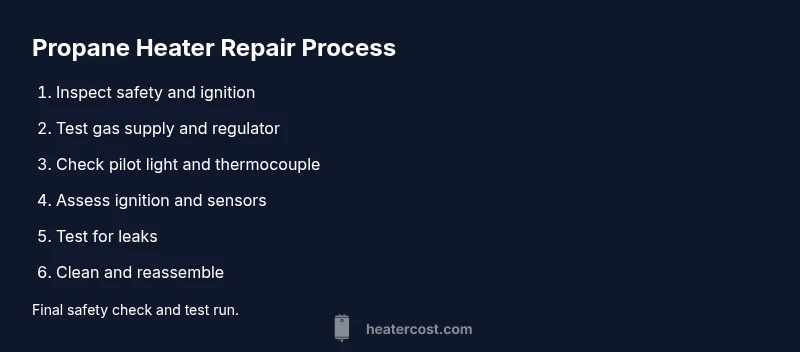
Steps
Estimated time: 45-90 minutes
- 1
Identify symptoms and secure the area
Turn off the heater and disconnect power if applicable. Note all symptoms and verify there is no gas smell. Document when the issue occurs and any preceding events.
Tip: Take photos of connections before touching anything for reference. - 2
Check propane supply and regulator
Ensure the propane tank is adequately filled and that the line is not kinked. Inspect the regulator for signs of wear and test pressure if you have the proper gauge.
Tip: Replace a weak regulator rather than adjusting it—pressure problems can be dangerous. - 3
Inspect pilot light and thermocouple
If the pilot stays lit inconsistently, clean the pilot or replace the thermocouple if corroded. Realign or replace a bent thermocouple so it properly senses flame.
Tip: Only clean the pilot with a soft brush or cloth; avoid forcing jets. - 4
Evaluate ignition system and sensors
Check ignition electrodes for carbon buildup or misalignment. Ensure wiring is intact and securely connected; replace damaged cables if needed.
Tip: A sparking gap should be within manufacturer specifications; consult the manual. - 5
Test for gas leaks after adjustments
Apply soap solution to joints and connections; watch for bubbles that indicate leaks. Never rely on smell alone to detect leaks.
Tip: If bubbles appear, shut off gas immediately and re-check or call a pro. - 6
Clean burner surfaces and reassemble
Gently clean burner ports, air intake, and surfaces with a soft brush. Reassemble panels and ensure all fasteners are snug but not overtightened.
Tip: Avoid using metal tools that can scratch the burner or cause damage. - 7
Power up and perform a controlled test
Restore power and ignite the unit in a controlled area. Observe flame behavior and listen for abnormal operation while monitoring for gas smells.
Tip: If you see soot, yellow flames, or frequent shutdowns, stop and seek professional help.
Got Questions?
Is propane heater repair safe for DIY?
DIY repairs can be safe for simple tasks like cleaning and part replacement when you have the right tools and follow the manufacturer’s instructions. For gas lines, regulators, ignition problems, or persistent CO risks, hire a licensed technician.
DIY work is fine for basic cleaning and replacement of simple parts, but for gas lines and ignition problems, hire a licensed technician.
How can I tell if I need a replacement regulator?
If you experience inconsistent flame, weak heat, or the system cycles abnormally, the regulator may be failing. A professional should verify expected outlet pressure and proper gas flow before replacement.
If the flame is inconsistent or heat is weak, the regulator may be failing and should be checked by a pro.
Can I test propane leaks myself?
Yes. Use a soap solution on all joints and connections while the system is off. If bubbles appear while the system is on, shut off the gas and call a pro. Do not rely on smell alone.
You can test leaks with soap bubbles, but if you detect a leak, shut off gas and call a pro.
What maintenance reduces future propane heater problems?
Regular burner cleaning, vent inspection, and annual professional checkups reduce soot buildup and improve efficiency. Replace worn thermocouples and electrodes as recommended by the manufacturer.
Regular cleaning and an annual checkup help prevent problems and keep the heater efficient.
How long do propane heater repairs take?
Repair duration varies with the issue and parts availability. A minor cleaning or part replacement may take less time than diagnosing a complex ignition or gas supply problem.
It depends on the issue; minor fixes are quicker, complex diagnostics take longer.
Should I replace or repair a failing heater?
Consider the heater’s age, efficiency, and repair cost. If major components are deteriorating or efficiency has fallen significantly, replacement may provide longer-term value.
If the heater is old or costly to fix, replacement might be the smarter choice.
Watch Video
The Essentials
- Safety first: shut off gas and power before inspecting.
- Test for leaks with soap solution, not just smell.
- Keep records to guide future repairs and maintenance.
- Know when to replace a regulator or major component.