Is It Okay to Sleep With a Space Heater On? Safety Guide for Homeowners
Learn whether it's safe to sleep with a space heater, the risks involved, and practical steps to reduce fire and burn hazards. Includes safety features, setup tips, and safer alternatives for overnight warmth.


Is it ok to sleep with a space heater on? Generally not. If you must use one, choose an electric heater with auto shutoff and tip-over protection, keep it on a nonflammable surface, and maintain distance from bedding and curtains. Never use an extension cord, unplug before sleeping, and consider safer nocturnal options like a thermostat-controlled heater or an electric blanket.
is it ok to sleep with a space heater on
is it ok to sleep with a space heater on is a common concern for homeowners trying to balance warmth and safety. The short answer is that leaving a space heater running while you sleep is generally discouraged due to fire, burn, and space hazards. This guide provides practical, grounded advice to help you make safer nighttime choices. We’ll cover why these devices pose risk in bedrooms, what safety features to look for, and concrete steps you can take to reduce danger while staying warm. Throughout, we reference cautious guidelines from trusted authorities and the latest homeowner-centric insights from Heater Cost to help you decide what’s best for your family in 2026.
Understanding the bedroom risk landscape: fire, burns, and ventilation
Bedrooms can become high-risk zones for space heaters because people are sleeping and less aware of nearby flames or overheated surfaces. The core hazards include ignition of combustibles (like bedding or curtains), tip-over fires if the unit is bumped, and overheating of vents or cords. Even with modern safety features, the chance of a stove-like burn or an electrical fault exists if a heater is used improperly. For electric units, carbon monoxide is not a concern, but fuel-burning heaters can emit CO if venting fails. Remember: is it ok to sleep with a space heater on varies by device type, room size, and how closely you follow safety guidelines. Heater Cost analysis, 2026, emphasizes that risk is greatly reduced when you use well-maintained equipment with robust safety design and strict usage rules.
How electric space heaters differ from fuel-burning models in safety terms
Electric space heaters are generally simpler to use and do not produce combustion byproducts like carbon monoxide. They still pose fire hazards if placed near flammable items or damaged by cords. Fuel-burning heaters (kerosene, propane, or natural gas) add CO and require proper ventilation and regular maintenance, making overnight use riskier. The safest approach for overnight warmth is to avoid running any heater while you sleep and instead rely on layered clothing, layered bedding, or a thermostat-controlled heating strategy for the rest of the night. Heater Cost’s guidance in 2026 highlights that electric options with automatic shutoffs outperform older or unregulated units for nighttime use.
Features that reduce risk: what to look for when shopping for a safer heater
When shopping, prioritize safety features such as auto shutoff, tip-over protection, overheat protection, and a cool-to-touch exterior. Look for a unit with a built-in thermostat and a clear distance requirement from combustibles in the manual. UL or ETL listings indicate adherence to recognized safety standards. Avoid heaters without a stable base or with exposed cords that can be tugged during sleep. Always check for a recent safety recall history and ensure the unit has a fresh, working exhaust or venting path if applicable. These features collectively lower the probability of a hazardous night.
Step-by-step safety checklist before you sleep (before using a heater overnight)
- Verify the room is clear of papers, clothing, and bedding within the heater’s radius. - Inspect the power cord for damage and ensure the outlet is not overloaded. - Place the heater on a nonflammable surface and away from walls or curtains. - Turn on the heater only after you are fully awake and have confirmed the space is well-ventilated if needed. - Set the thermostat to a conservative level and enable auto shutoff if available. - Unplug the heater if you are leaving the room for an extended period or going to bed. - Install functioning smoke and carbon monoxide detectors in the bedroom and test them monthly. - Keep a fire extinguisher accessible in case of emergencies. Tip: never rely on a single device; implement multiple safeguards.
Room setup tips: layout, airflow, and storage considerations
A safe sleeping environment with a heater involves more than the device itself. Ensure there’s ample clearance around the heater and avoid placing it near bed frames, pillows, or stacked laundry. Maintain good airflow to prevent overheating and reduce the buildup of moisture that can affect materials. If you share a small room, consider closing doors to contain heat in a controlled zone and using a programmable thermostat-driven system elsewhere in the home. This reduces the need for overnight fuel or electric heating in the bedroom.
Energy costs and efficiency: what to expect at night
Overnight heating can significantly affect energy bills when used repeatedly. Compare the energy use of a space heater against upgrading the room’s insulation, adjusting the thermostat, or using a smart heater that turns off automatically after a set duration. Small, insulated changes like draft-proofing windows and sealing gaps can maintain warmth more efficiently than continuous heater usage. Heater Cost’s 2026 assessments indicate that cost-effective warmth often comes from a layered approach to temperature management rather than constant heating.
Safer alternatives for overnight warmth: what works best
If sleeping with a space heater feels risky, consider safer nighttime options. An electric blanket or mattress pad can provide targeted warmth without heating the entire room. A programmable thermostat tied to central heating can keep the room at a comfortable baseline while allowing automatic reductions during late-night hours. Passive strategies—like wearing warmer sleepwear and using extra blankets—often deliver comfort with fewer hazards. In some homes, alternate heating systems (like ceiling radiant heaters or heat pumps) offer safer overnight warmth when properly installed.
Maintenance, inspection, and when to retire a space heater
Regular maintenance extends the life of any space heater and reduces night-time risks. Clean the grill, dust off vents, and check for frayed cords or scorch marks. Replace batteries in detectors and test alarms monthly. If a heater shows signs of wear, emits unusual smells, or overheats during tests, retire it and replace it with a newer, safer model. When a unit is older than a certain threshold or lacks important safety features, consider upgrading rather than relying on it for overnight warmth.
Debunking myths: common misconceptions about sleeping with space heaters
Myth 1: All space heaters are safe if they are cold to touch. Reality: heat can accumulate and ignite nearby materials even when surfaces feel cool. Myth 2: A higher heat setting is always safer for quick warmth. Reality: overheating dramatically increases burn risk and can shorten equipment life. Myth 3: It’s fine to sleep with the heater on if you’re just resting. Reality: nodding off presents similar hazards to sleeping. Myth 4: If it’s a big room, a heater is safe. Reality: room geometry and airflow affect heat distribution and risk. By challenging these myths, you’ll make more informed choices about safety.
Real-world scenarios: decisions homeowners face at night
In a typical winter night, a single space heater might seem like a practical fix for a cold bedroom. However, homeowners often debate whether to sleep with it on to save energy or to enable safer early-morning warmth. In many situations, upgrading insulation or using a programmable thermostat reduces the need for overnight room heating. In instances where you still depend on a heater, adhere strictly to safety guidelines, maintain detectors, and have a clear exit route in case of emergency.
Authority sources: guided safety references you can trust
For authoritative safety guidance, consult the following sources that align with best practices for space heater use and home safety:
- https://www.cpsc.gov/safety-education/safety-guides/home-space-heaters
- https://www.nfpa.org/Public-Education/By-topic/Safety-in-the-Home/Space-heaters
- https://www.energy.gov/energyefficiency/space-heaters
Tools & Materials
- Electric space heater (UL-listed, with auto shutoff and tip-over protection)(Place on a flat, non-slip surface away from bedding and drapes)
- Smoke detector(Install in the bedroom and test monthly)
- Carbon monoxide detector(Important if using fuel-burning heaters; not required for electric units)
- Fire extinguisher (ABC-rated)(Keep within easy reach of the heater)
- Non-flammable mat or tray under heater(Optional but helpful on carpeted floors)
Steps
Estimated time: 15-25 minutes
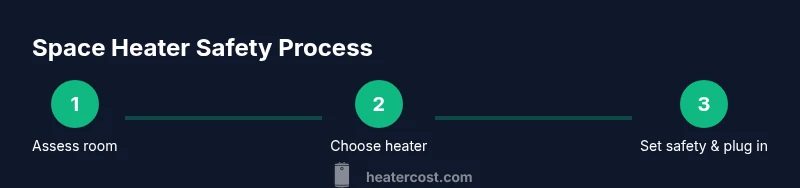
- 1
Assess room safety
Before turning on any heater, inspect the room for flammable items and ensure a clear exit path. Check that curtains, papers, and clothing are not within the heater’s reach and confirm that the space is well-ventilated if using a heater that requires it. This initial check reduces risk before you proceed.
Tip: Take a quick walk-around and visually verify a safe clearance zone around the heater. - 2
Choose the right heater
Select an electric heater that is UL-listed and includes auto shutoff, tip-over protection, and overheat protection. Avoid older, unverified units. A modern safety-rated model lowers nightly risk and improves reliability.
Tip: Prefer models with a programmable timer and thermostat control. - 3
Place heater properly
Set the heater on a stable, nonflammable surface away from walls, bedding, and other combustibles. Do not place it on a carpet or near clutter that could trap heat.
Tip: Keep at least one clear, open side around the device for airflow. - 4
Plug and power considerations
Plug the heater directly into a wall outlet rather than using extension cords or power strips. Ensure the outlet can handle the load and that cords aren’t damaged or pinched.
Tip: If the outlet feels warm, switch to a different circuit and avoid overloading rooms. - 5
Set safe operating parameters
Use the thermostat to maintain a modest, comfortable temperature and enable auto shutoff if available. Avoid cranking heat to extreme levels, which increases risk of overheating and fires.
Tip: Set a conservative temperature and let the device cycle off automatically. - 6
Create a safe sleep routine
Turn off the heater before you fall asleep, or use a timer that powers it down at a safe hour. Consider layering bedding and clothing to maintain warmth without continuous heating.
Tip: Have a fallback plan (layered blankets or a thermostat-based central heat) for overnight warmth. - 7
Enhance room safety
Install and test smoke detectors in sleeping areas; consider a CO detector if using a fuel heater. Keep a fire extinguisher accessible and away from the heater.
Tip: Test detectors monthly and replace batteries regularly. - 8
Post-use checks and retirement criteria
Inspect the heater regularly for damage, scorch marks, or frayed cords. If any wear is found or if the unit is older, retire it and replace with a newer model.
Tip: Do not attempt to repair damaged safety components yourself.
Got Questions?
Is it safe to sleep with a space heater on if I’m in a small bedroom?
Small rooms can heat up quickly and limit air circulation, increasing fire and burn risks. It’s generally safer to turn the heater off before sleep or use safer alternatives, and always follow the manufacturer’s guidelines.
In small bedrooms, it’s safer to turn the heater off before bed or use safer warming options.
Can electric space heaters cause fires?
Yes, any space heater can ignite nearby materials if misused. Use units with safety features and never leave them unattended. Regular maintenance reduces the risk.
Yes, fires can happen if misused; choose safety-rated heaters and unplug when not in use.
Are there space heaters designed for overnight use?
Some heaters are designed with features that support overnight use (auto shutoff, thermostat control), but you should still follow all safety guidelines and ideally avoid sleeping with heat on in a bedroom.
Some models are built for overnight use, but always follow safety rules and consider alternatives.
What should I do if I smell burning or see smoke coming from a space heater?
Turn off and unplug the heater immediately, evacuate if you smell smoke, and contact emergency services if the situation worsens. Do not use the device again until inspected.
If you smell burning, unplug immediately and call for help if it persists.
Can I use an extension cord with a space heater?
It’s best not to use extension cords; plug directly into a wall outlet. Extension cords can overheat and fail, especially with high-draw heaters.
Avoid extension cords; plug directly into a wall outlet to reduce fire risk.
What are safer nighttime warmth options besides space heaters?
Layer your clothing and bedding, use a thermostat-controlled system, consider an electric blanket or mattress pad, and improve room insulation to maintain warmth with less risk.
Consider warmer sleepwear or a programmable thermostat for safer overnight warmth.
Watch Video
The Essentials
- Use safety-rated heaters with auto shutoff.
- Maintain clearances and never rely on extension cords.
- Unplug before sleeping or leaving the room.
- Install and test smoke/CO detectors in bedrooms.
- Consider safer blankets or thermostat-driven heating as alternatives.