Can You Sleep With a Heating Pad? A Comprehensive Safety Guide
Learn whether it’s safe to sleep with a heating pad, how to use it safely overnight, and practical tips to protect your skin and wallet. Heater Cost provides expert guidance on safety features, usage limits, and safer alternatives.


Sleeping with a heating pad overnight is not generally recommended due to burn and skin injury risks. If you choose to do it, use the lowest safe setting, keep a fabric cover between skin and heater, enable automatic shut-off, and monitor skin. For many people, safer alternatives and shorter heat sessions are advised. According to Heater Cost, prioritizing safety features and mindful usage is essential.
Is Sleeping With a Heating Pad Safe?
Can you sleep with a heating pad? The short answer is that overnight use carries notable risk, especially if the pad lacks safety features or you have reduced skin sensation. Heat can soothe muscle tension and stiffness, but prolonged exposure while sleeping means you may not notice warning signs like redness, excessive warmth, or discomfort. The safest approach is to treat overnight heating as an exception rather than a routine. If you decide to sleep with heat, pair it with a fabric cover, set it on a low setting, and ensure the pad has an automatic shut-off. If you have neuropathy, diabetes, circulation issues, or are pregnant, consult a clinician before relying on heat therapy during sleep. Heavier emphasis on prevention and monitoring is the core recommendation from the Heater Cost team.
Tools & Materials
- Heating pad with auto shut-off and adjustable thermostat(Prefer models with low heat setting and 1–3 hour auto-off. Ensure UL/ETL safety certification.)
- Fabric cover or cotton sheet(Prevents direct skin contact and reduces burn risk.)
- Timer or smart plug(Helps enforce a safe off period if the pad lacks built-in shutdown.)
- Non-slip mattress protector or towel(Keeps the pad in place and protects bedding.)
- Smoke detector in the bedroom(Optional safety layer for entire sleeping area.)
- Skin barrier product or moisturizer(Optional; can reduce friction and skin dryness when used with heat.)
Steps
Estimated time: 15-20 minutes setup; overnight use allowed
- 1
Inspect the heating pad and safety features
Before use, examine the pad for signs of wear, frayed cords, or damaged plugs. Verify there is an adjustable thermostat and an automatic shut-off feature. Check the cover for tears and ensure the warning labels are legible. A damaged device should not be used, and you should replace it.
Tip: If you find any damage, discontinue use and replace the unit rather than attempting repairs. - 2
Clean and prepare the setup
Wipe down the pad if needed and ensure the cover is clean. Place a fabric cover or towel between the pad and the skin. Set up the non-slip mat under the pad to prevent sliding during sleep.
Tip: Clean covers regularly to reduce skin irritation and sweat buildup. - 3
Position the pad on the bed surface
Position the pad under the sheet or a light blanket, not directly on bare skin. Align it with the area you want to treat and avoid bony prominences that could heat unevenly. Keep the cord secured away from pillow zones to prevent tangling.
Tip: A flat, even surface reduces hot spots and improves comfort. - 4
Connect power safely
Plug the pad into a grounded outlet or a surge-protected strip. Ensure the cord is away from damp areas and not pinched by furniture. If you use a smart plug, program a safe operating window.
Tip: Never run heat devices behind a bed or under heavy blankets where airflow is blocked. - 5
Set the temperature and test
Set the thermostat to the lowest effective heat. Gently test the surface temperature with the back of your hand after a few minutes of warming to confirm it’s tolerable. If you notice redness or warmth beyond comfortable heat, decrease the setting.
Tip: Always start low and build up gradually if needed. - 6
Create a sleep-friendly environment
Dress in breathable layers and use a light blanket to manage overall warmth. Keep the room at a comfortable temperature and avoid additional heat sources that could compound the pad’s heat.
Tip: A cooler room helps you feel warmth without overdoing it. - 7
Enable auto-off and monitor
Ensure automatic shut-off is activated, and keep an eye on the heating pad during the first few uses. If you’re attentively monitoring, you can adjust as necessary, but do not rely on sleep to regulate heat.
Tip: Set a conservative off-time to avoid prolonged exposure. - 8
Get ready for bed safely
Wear loose, breathable sleepwear or keep clothing light to prevent skin irritation. Do not place jewelry near the pad to avoid heat conduction issues.
Tip: Loose clothing reduces friction and heat concentration on metal accents. - 9
Go to sleep with safeguards
If the pad turns off automatically, verify it has. Do not leave the device on high heat overnight. Keep the pad in a position where it won’t shift or come into direct contact with sensitive areas.
Tip: If you wake up feeling unusually warm, remove the pad and check the area. - 10
Mid-night check (optional)
If you wake briefly, you can pause and re-check the pad’s temperature. Do not repeatedly adjust while asleep—set once and rely on the auto-off.
Tip: Frequent adjustments can disrupt sleep and increase the risk of mistakes. - 11
Morning check and care
In the morning, inspect the treated area for redness or warmth. If you notice any irritation, discontinue use and allow the skin to recover before reintroducing heat.
Tip: Gentle skin checks prevent unnoticed injuries. - 12
Evaluate the experience and plan future use
Reflect on comfort, sleep quality, and any skin changes. Decide whether overnight heat is worth continuing or if shorter sessions or alternatives are a better long-term option.
Tip: Keep a simple usage log to guide future decisions.
Got Questions?
Is it generally safe to sleep with a heating pad?
Safety depends on the device and how you use it. Choose pads with auto shut-off and a fabric cover, and avoid direct skin contact. If you have sensory issues or medical conditions, consult a clinician.
It depends on safety features and your health, but consult a clinician if you have sensory or medical concerns.
What temperature should I use for overnight heat?
Use the lowest comfortable warmth that does not redden the skin. Never use high heat overnight, and test the temperature before sleeping.
Keep it on the lowest comfortable heat and test it first.
How long should I keep a heating pad on while sleeping?
Limit exposure to the minimum necessary and rely on auto-off. Overnight use should be treated as an exception and paused if you notice skin changes.
Turn it off after a couple of hours if possible and check your skin in the morning.
What are the main risks of sleeping with a heating pad?
Risks include burns, heat rash, and electrical hazards if the pad is damaged or used improperly. People with reduced sensation may not notice overheating.
Burns and electrical hazards are the big concerns; watch the device closely.
Are there better alternatives to sleeping with heat?
Consider shorter sessions, a warm bath, or a heated blanket with automatic shut-off. Heat therapy can be effective without overnight use.
If overnight use isn’t essential, alternatives can work well and be safer.
Should children or pregnant people sleep with a heating pad?
Consult a clinician before using heat therapy during sleep for children or pregnant individuals. Extra caution and supervision are advised.
Ask a doctor before using heat therapy at night if you are pregnant or caring for a child.
Watch Video
The Essentials
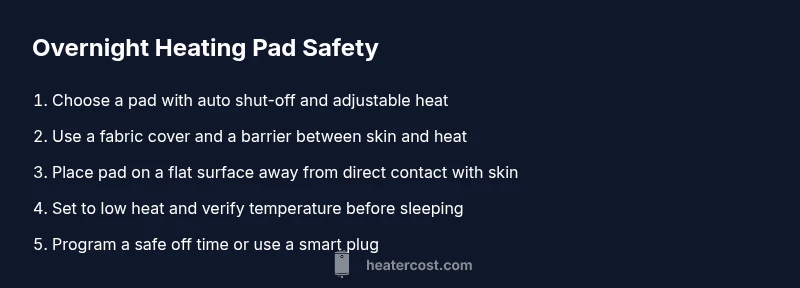
- Use the lowest effective heat with automatic shut-off
- Always use a cover to protect skin
- Position the pad on a flat surface and avoid direct contact with skin
- Inspect the pad for damage before each use
- If in doubt, prefer shorter sessions or safer alternatives