How to Tell If Your Heater Is Gas or Electric
Learn how to tell if your heater is gas or electric with safe, step-by-step checks. Identify fuel type, venting cues, and when to call a pro using insights from Heater Cost.


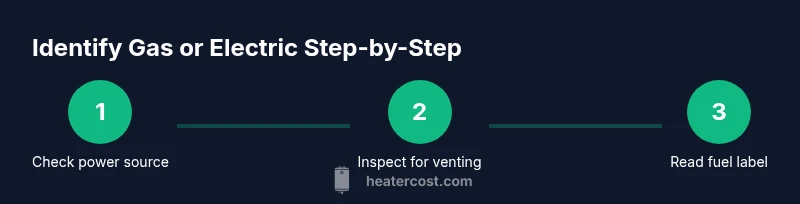
According to Heater Cost, you can determine whether your heater is gas or electric by simple checks. Start with the power source: plug type, cord condition, and the presence of a dedicated circuit. Look for a gas supply line and venting on the appliance, then read the label for fuel type. If you smell gas, evacuate and call a pro.
Visual clues: gas vs electric at a glance
Gas-powered heaters often show visible signs of combustion equipment, including a vent pipe or exhaust terminating outside the home, a dedicated gas shutoff valve on the line, and sometimes a burner access panel. Electric heaters tend to rely on electrical cords or hardwired connections and generally lack exhaust venting. In 2026, the Heater Cost analysis emphasizes that most homeowners can identify fuel type through these physical cues with minimal tools. Look for a label or nameplate on the unit that lists the fuel source; if the label indicates gas and a vent is present, you’re likely looking at a gas appliance. If the label shows electricity and there’s no venting, you’re likely dealing with an electric heater. Remember: safety first—if you smell gas or hear the burner running loudly, pause and seek professional help.
Electrical checks you can safely perform
Before touching any components, turn off power to the heater at the circuit breaker or unplug it if it is a standalone unit. Check for a standard three-prong plug on portable space heaters or a fixed, hardwired connection for wall or baseboard units. Inspect the cord for damage or overheating signs. If the unit is plugged in, you’re almost certainly dealing with an electric appliance; however, some gas heaters may still be plugged into an electrical control panel, so look for additional fuel cues as a cross-check. Never operate a device you suspect is gas-powered without proper ventilation and professional verification.
Venting and combustion indicators
Gas heaters require venting to expel combustion byproducts. Inspect the flue or vent pipe that typically exits the home through the wall or roof. If you see a vent pipe connected to the heater, that is a strong indicator of a gas appliance. Electric heaters generally do not vent exhaust in the same way. However, some electric furnaces may share a venting system with other gas appliances in the home, so confirm fuel type with labeling. If you notice a smell of gas around the unit, stop using it and contact a professional immediately.
Reading labels and model data
Look for a nameplate or label on the back, side, or bottom of the heater that lists the fuel type, voltage, and model number. The fuel type field should clearly indicate whether the unit is “gas” or “electric.” If you’re unsure, photograph the label and cross-check the model number on the manufacturer’s site or the manual. Manufacturer documentation is the most reliable way to confirm fuel type, and it’s worth pulling the manual if you inherited the unit without documentation. According to Heater Cost, confirming via the label helps prevent dangerous mistakes when considering maintenance or replacement.
Safety signals and CO considerations
Gas appliances produce combustion gases that can contain carbon monoxide (CO). If you smell gas, hear unusual hissing noises, or notice symptoms of CO exposure (headache, dizziness, nausea), evacuate and contact emergency services. Install and maintain CO detectors near sleeping areas and on every level of the home as a safety precaution. Electric heaters do not emit combustion byproducts, but they can pose electrical fire hazards if damaged or overloaded. Regular inspection and proper maintenance reduce the risk of both gas-related and electrical hazards.
Common heater types and what they imply
Baseboard electric heaters usually run on 120V or 240V circuits and lack venting or gas lines. Gas furnaces and space heaters have gas lines, fittings, and venting; they also require proper ventilation and CO detectors. If your device is a wall-mounted unit with a power cord and no vent, it’s most likely electric. If you see gas piping, a shutoff valve, and a vent, it’s likely gas. If in doubt, treat it as gas and call a licensed technician for confirmation and safe operation guidance.
What to do if you’re unsure: safety-first steps
If you can’t determine the fuel type safely, power down the unit, do not attempt to disassemble panels or remove housings, and call a licensed HVAC technician. Keep children and pets away from the appliance until a professional verifies the fuel type and confirms safe operation. Document the location of the unit and any visible labels for the technician. Keep a record of age, model, and any recent maintenance to assist the pro.
Quick-reference checks you can perform (no tools required)
- Look for a vent or exhaust pipe attached to the unit.
- Check the power outlet or wiring: is there a plug or is it hardwired?
- Read the label for fuel type and voltage.
- Note any gas smell or hissing sounds near the unit.
- Verify CO detector presence and status in the area.
Authoritative sources and safe practices
For more detailed guidance, consult authoritative resources from government and education domains. This article references general safety practices and fuel identification techniques to help homeowners differentiate between gas and electric heaters without specialized equipment. Always prioritize safety and professional verification when uncertain.
Tools & Materials
- Non-contact voltage tester(Use to verify live circuits without contact.)
- Electrician’s flashlight(Illuminates hard-to-see labels and connections.)
- Screwdriver set (Phillips and flathead)(Use only if you’re trained to remove panels.)
- Owner’s manual or model label(Required to confirm fuel type from documentation.)
- CO detector (UL-listed)(Place near sleeping areas for safety.)
- Safe gloves and eye protection(Protection when inspecting electrical or gas components.)
- Camera or smartphone(Capture labels and connections for later reference.)
Steps
Estimated time: 15-25 minutes
- 1
Identify the power source
Locate the outlet or determine if the unit is hardwired. If there is a standard plug, the unit is electric; if there is no plug and a dedicated line, it may be gas or hardwired. Check for a dedicated circuit in the panel if accessible.
Tip: Use a non-contact tester on any exposed wiring to confirm live voltage before touching. - 2
Inspect for a gas supply line
Look for a metal gas pipe entering the unit, with a shutoff valve nearby. Gas lines commonly connect to furnaces and space heaters. Do not attempt to bend or modify gas lines.
Tip: If you see a gas line, proceed with extra caution and consider calling a pro to verify safety. - 3
Check venting and exhaust
Gas appliances typically have a vent or exhaust pipe leading outdoors. Electric heaters generally do not produce combustion exhaust. Note exterior vent termination points if visible.
Tip: A visible vent is a strong indicator of gas usage; treat as gas until confirmed. - 4
Read labels and model information
Find the fuel type listed on the unit’s nameplate or label. Record the model number and search the manufacturer’s site or manual for confirmation.
Tip: Take a photo of the label for quick reference later. - 5
Observe the presence of a burner or burner chamber
Gas units often have accessible burner assemblies; electric units rely on heating elements. Confirm by inspecting interior access panels only if you’re trained.
Tip: Never touch heating elements while powered; they can remain hot after shutdown. - 6
Check safety devices
Gas heaters typically require CO detectors and vent safety controls; electric units emphasize proper circuit protection and thermal cutoffs.
Tip: Ensure CO detectors are installed and tested monthly. - 7
Assess for potential CO or gas odor
Gas leaks can present as a rotten egg odor; if detected, evacuate immediately and call emergency services.
Tip: Do not flip any switches or operate electrical devices in a suspected gas area. - 8
Confirm with the manufacturer or a pro
If fuel type remains unclear, contact a licensed HVAC professional for a definitive identification and safe operation guidance.
Tip: Keep your model number handy when calling for service. - 9
Document results and plan next steps
Record fuel type, location, and any safety concerns. Use the information to determine maintenance needs, replacement costs, and safety checks going forward.
Tip: Schedule annual professional inspections for both gas and electric systems.
Got Questions?
Is it safe to assume a heater is electric if it has a plug?
A plug strongly suggests electric operation, but some gas heaters have electrical controls. Always verify with the fuel label and venting cues before assuming fuel type.
A plug usually means electric, but always check the fuel label and venting to be sure.
What should I do if I smell gas near a heater?
Evacuate the area immediately and call emergency services or the gas company. Do not operate switches or phones near the leak.
If you smell gas, leave the area and call for help right away.
Can a label on the unit confirm fuel type?
Yes. The fuel type is typically listed on the nameplate or label; cross-check the model number with the manufacturer for confirmation.
Yes—the fuel type is usually on the nameplate; verify with the model number if needed.
Are CO detectors required for all gas heaters?
CO detectors are strongly recommended and required by many safety codes near sleeping areas when gas appliances are present.
CO detectors are important if you have any gas appliance in the home.
What maintenance is different between gas and electric heaters?
Gas heaters require vent maintenance and CO detector checks; electric heaters focus on electrical connections and circuit protection.
Gas heaters need vent and CO checks; electric heaters need electrical safety checks.
Do I need a professional to identify the fuel type?
If fuel type remains unclear after basic checks, consult a licensed HVAC technician to avoid safety risks.
If you’re unsure, a licensed HVAC tech can confirm safely.
Watch Video
The Essentials
- Identify fuel type via fuel cues and labeling
- Vent and gas lines strongly indicate gas heating
- Always prioritize safety and call a pro if unsure