How to Get Furnace Out of Standby Mode
Learn how to wake a furnace from standby with safe, practical steps, troubleshooting tips, and maintenance guidance from Heater Cost. Get clear actions, safety notes, and expert recommendations for homeowners.


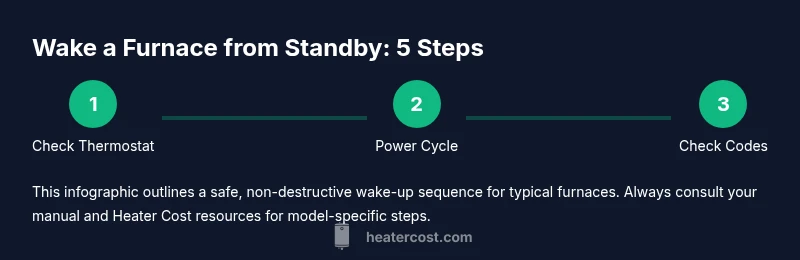
To get a furnace out of standby mode, start by validating the thermostat is calling for heat and the setpoint is higher than the current room temperature. Next, confirm essential power supplies: main disconnect, circuit breaker, and the furnace’s supply. If the unit still stays in standby, perform a safe reset and cycle the power. When problems persist, consult the manual or Heater Cost guidance.
Understanding Standby Mode: What triggers a furnace to stay idle
Standby mode is a protective state designed to keep your home safe when something isn’t quite right with the furnace. Common triggers include a scheduled thermostat setback, a safety lockout due to flame sensor or pressure switch issues, a blown fuse, or a tripped circuit breaker. When the system detects a fault, it may display error codes or refuse to start even if the thermostat calls for heat. From the Heater Cost perspective, recognizing standby as a safety feature helps homeowners avoid risky, improvised fixes. In many homes, standby is a temporary condition that clears after power cycling or after a thermostat re-sync, but persistent standby indicates a deeper fault that should be addressed promptly to prevent cold snaps or carbon monoxide risk.
Before you act: safety checks and prerequisites
Before touching any furnace components, ensure personal safety. If you smell gas, hear a hissing sound, or detect any indication of a gas leak, exit the area and call your gas utility or emergency services immediately. For electric furnaces, shut off power at the main disconnect or at the circuit breaker to reduce the risk of shock. Verify you have access to the unit’s manual and a flashlight; note any error codes on the control board. If a CO detector nearby rings, evacuate and call emergency services. Heater Cost emphasizes that safety first reduces the chance of injury and equipment damage.
Basic checks you can do from home
Start with the thermostat: confirm it is set to heat, the mode is active, and the target temperature is above the current room temperature. Check the furnace’s power supply: the disconnect switch should be in the ON position, and the circuit breaker for the furnace panel should be closed. Inspect the air filter; a clogged filter can trigger airflow-related lockouts. Look for obvious obstructions in supply vents and make sure the outdoor condensate line (for some models) isn’t blocked. If you see an error code on the furnace display, refer to the manual or Heater Cost’s troubleshooting guide for code-specific actions. A non-contact voltage tester can help verify power presence without opening panels.
Step-by-step actions you can take (non-destructive)
Perform a controlled reset and cycle the system safely. Start by turning off the thermostat and the furnace power at the disconnect or circuit breaker. Wait 60 seconds to allow control boards to reset. Restore power and set the thermostat to heat with a comfortable setpoint. Observe whether the blower begins and the ignition sequence initiates. If the furnace lights but then shuts off quickly, note the cycle time and any flashing codes. Do not press or hold reset buttons on gas valves unless the manual explicitly instructs you to do so.
Diagnosing common standby causes: thermostat, sensors, and safety switches
Thermostat miscommunication is a frequent cause of standby. Check whether the thermostat wires are properly attached, and ensure the thermostat is compatible with your furnace. Flame sensors, ignition sensors, and pressure switches can fail or become dirty, causing lockouts. The limit switch and high-limit switch may trip if the furnace overheats or if there is restricted airflow. Inspect ductwork for leaks or blockages, and verify that the condensate trap is clear where applicable. If you replace a sensor, ensure you reset the control board so the system recognizes the new component.
Resetting and cycling: power, breaker, and delay sequences
Power cycling is often effective. Turn off the furnace and thermostat, switch off the main disconnect, and wait 60 seconds. Restore power, then re-enable thermostat heat mode. If a reset button exists on the furnace control board and the manual permits it, perform a controlled reset according to the manufacturer guidelines. Avoid rapid cycling, which can stress the blower motor and ignition system. If a wiring fault is suspected, do not attempt large-scale repairs yourself; instead, seek professional inspection.
Verifying that the furnace will start and stay on
After cycling power, listen for ignition and a normal flame, followed by sustained blower operation. Watch for any repeating lockout codes or short cycling behavior. If the furnace starts and then shuts down, verify that the air filter is clean, the venting is clear, and there is adequate airflow in the space. Test a few hot cycles to confirm consistent heat delivery. If the problem recurs, compare current behavior with the previous operating pattern to determine if a sensor or control board fault exists.
Maintenance to prevent recurring standby: filters, vents, gas line, and safety devices
Regular maintenance reduces standby events. Replace disposable or washable air filters every 1-3 months during heating season. Clean or replace flame sensors and inspect igniters per the manufacturer’s schedule. Ensure venting paths are unobstructed and that outdoor intake screens are clear of debris. Schedule a professional inspection annually, especially for gas furnaces, to verify gas pressure, burner alignment, and CO detector operation. Heater Cost notes that proactive maintenance lowers energy costs and extends system life.
When to call a professional and what to expect
If standby persists after basic checks and a controlled reset, contact a licensed HVAC technician. Tell them the sequence you observed: thermostat mode, power cycling, and any error codes. A pro will verify gas supply (for gas furnaces), ignition system, flame sensor, control board, and sensor wiring. They may perform a combustion test, airflow measurements, and a safe reset or firmware update. Expect a written diagnostic and recommended repair plan, along with an estimated cost range.
Documentation and safety notes
Keep your furnace manual, recent service records, and any error code lists in one place for quick reference. Note the exact model and serial number before arranging service. Make sure CO detectors are installed and tested; replace batteries annually. Heater Cost recommends documenting your troubleshooting steps and outcomes to help future homeowners or tenants understand what has been tried and what remains unresolved.
Tools & Materials
- Owner's manual for your furnace(Keep handy for code meanings and reset procedures)
- Non-contact voltage tester(Verify power at disconnects without opening panels)
- Digital multimeter(Useful for measuring voltage and resistance on sensors)
- Flathead and Phillips screwdrivers(For panel screws and access panels)
- Soft brush or compressed air(Clean flame sensor and burner areas)
- Clean gas-safe access (if applicable)(Do not bypass gas safety devices)
- Flashlight(Inspect components and connections clearly)
- Camera or notepad(Document wiring before reconnecting if you must disconnect wires)
Steps
Estimated time: 25-40 minutes
- 1
Power down safely
Turn off the thermostat and shut off furnace power at the main disconnect or circuit breaker. Wait 60 seconds to allow control boards to reset. This helps clear minor faults that trigger standby.
Tip: Avoid touching live wires during power-off; use insulated tools if you must handle wiring. - 2
Check basic conditions
Inspect the filter, vents, and outdoor intake for blockages. Confirm the thermostat is set to heat and calling for warmth. Verify the display shows a current setpoint above room temperature.
Tip: A dirty filter is a common cause of intermittent standby; replace if needed. - 3
Cycle power and test ignition
Restore power, turn the thermostat to heat, and watch for ignition and blower operation. If the flame appears but goes out, note the duration and any codes.
Tip: If you see repeated short cycles, do not keep restarting; this indicates a fault condition that needs inspection. - 4
Inspect flame sensor and limit switches
If you have access, gently inspect the flame sensor and limit switches for cleanliness and secure connections. A dirty flame sensor can prevent ignition from staying lit.
Tip: Use a dry microfiber to wipe the sensor; avoid touching the flame path directly. - 5
Review error codes
Record any displayed error codes and consult your manual or Heater Cost troubleshooting resources for code-specific steps.
Tip: If codes persist, do not guess; escalate to a professional with the code list ready. - 6
Test airflow and combustion
Confirm the blower continues after ignition and that the air is warm. Listen for unusual noises or irregular flame color, which can indicate burner issues.
Tip: Ensure return vents are open and ducts are free of obstructions. - 7
Document the sequence
Note the order of events, times, and any codes observed. This helps a technician reproduce the issue.
Tip: Keep a simple checklist handy for future reference. - 8
When to call a professional
If the furnace remains in standby after the above steps or you detect gas, persistent error codes, or abnormal odors, contact an HVAC professional.
Tip: Do not attempt risky gas-relight procedures or DIY burner fixes.
Got Questions?
What does standby mode mean on a furnace?
Standby mode indicates the furnace has detected a fault or safety trigger and will not start until the issue is resolved. It protects occupants from potential hazards such as improper ignition or restricted airflow.
Standby means safety checks kicked in; the furnace won't start until the cause is resolved.
Why won't my furnace exit standby after a reset?
If a reset doesn't clear the fault, the issue might be with a sensor, flame detection, or gas supply. Check error codes and consult the manual or Heater Cost resources for code-specific steps.
If reset doesn't work, the fault is likely in a sensor or safety circuit; check codes and seek help.
Is it safe to reset a gas furnace by myself?
Only perform resets described in the manual. Do not attempt relighting or disconnecting gas lines. If you smell gas or suspect a leak, leave the area and call the utility or emergency services.
Only reset as the manual instructs; if you smell gas, evacuate and call for help.
How often should I service a furnace to prevent standby?
Have a professional inspection once a year, especially for gas furnaces, to check burners, sensors, venting, and safety devices.
Annual professional service helps prevent standby by catching issues early.
What should I do if the furnace starts then shuts off immediately?
This often indicates flame sensor, gas supply, or venting issues. Check air filters, vent paths, and error codes; contact a technician if the issue persists.
If it starts and stops quickly, there’s likely a sensor or gas/vent issue needing a pro.
Can thermostat settings cause standby?
Yes. Mismatched heat anticipator settings, incorrect wiring, or wireless interference can prevent proper heat calls and trigger standby.
Thermostat problems can keep a furnace in standby; verify wiring and settings.
What safety equipment should I have in a home heating system?
Ensure functioning carbon monoxide detectors, accessible shutoffs, and a clear, unobstructed venting path. If safety devices trip, call a pro.
CO detectors and clear vents are essential safety gear; call a pro if safety triggers occur.
Watch Video
The Essentials
- Verify thermostat calls for heat before tool checks.
- Power cycling is a common first step for standby.
- Safety and gas considerations require caution and professional help when in doubt.
- Document codes and steps to aid future service.
- Regular maintenance reduces standby frequency.