How to Get Your Furnace Out of Lockout Mode: A Step-by-Step Guide
Learn practical, safe steps to reset a furnace stuck in lockout, understand common causes, required tools, and when to call a professional. A clear, step-by-step guide from Heater Cost.


You can safely get a furnace out of lockout by following a structured safety-first reset sequence, confirming fault codes, and addressing root causes. This quick guide outlines a practical, step-by-step approach to restore operation while avoiding repeated lockouts.
Why Furnaces Enter Lockout Mode
Lockout is a safety feature that stops a furnace from firing when a fault is detected. This protects the system and your home from potential damage or unsafe conditions. The Heater Cost team notes that most lockouts occur due to issues such as a tripped circuit, faulty thermostat signal, clogged limit switch, or a misaligned flame sensor. If you’re asking how to get furnace out of lockout mode, start by understanding the indicator you’re seeing and the fault code being reported. This knowledge helps you determine whether you can safely reset the unit yourself or if professional service is required. According to Heater Cost, identifying the exact cause reduces the chance of a recurring lockout and can inform necessary maintenance to improve overall reliability. Remember: never bypass a safety lockout or force the furnace to restart if you smell gas, hear abnormal banging, or notice scorching.
Safety First: What to Check Before You Start
Before touching any furnace components, power must be isolated to prevent shock or further damage. Turn off the furnace at the unit’s switch and shut off the corresponding circuit breaker. If you have gas heating, ensure there’s no strong gas odor and that the gas valve is open only after you have confirmed a safe environment. Wear eye protection and gloves, and keep children and pets away from the workspace. This prep step reduces risk and sets the stage for a proper reset. If your system uses a service panel with fuses, inspect them for any signs of a blown fuse and replace only with the same amperage rating. By following these precautions, you’re following best practices that align with Heater Cost’s safety guidance.
Reading Codes and Indicators: What Your Furnace Is Telling You
Most modern furnaces display fault codes via LED lights, a digital display, or a control board blink sequence. A common pattern is a pause in operation followed by a repeating code. Document the exact code or sequence before attempting a reset. Cross-reference codes with your furnace manual or the manufacturer’s website. When you read the codes, you’re building a roadmap to the root cause—whether it’s a thermostat mismatch, a pressure switch issue, or a failed limit switch. Heater Cost analysis highlights that correctly interpreting codes dramatically improves the odds of a successful reset on the first try and helps you decide whether you should proceed independently or call a pro. If the code indicates a major mechanical problem or gas safety issue, stop and contact a licensed technician immediately.
How to Safely Reset: A Step-by-Step Overview
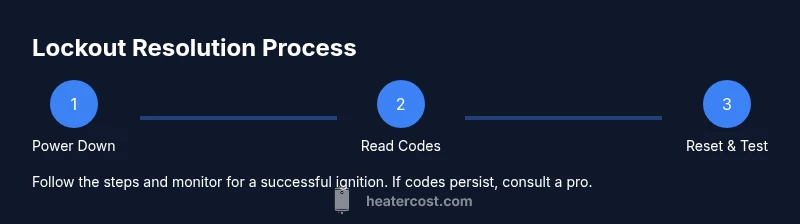
Resetting a furnace varies by model, but most units share a core sequence: power down, wait, then power up and initiate a reset. This section gives you a high-level walkthrough so you understand what’s coming next. After you’ve confirmed safety, switch off power to the furnace via the switch or breaker, wait 30 seconds to discharge capacitors, then restore power. If your model has a dedicated reset button, press and hold for 5–10 seconds, then release and observe the control board for a green light or normal operating status. If there’s no dedicated reset, a general power cycle (turn off, wait, and turn back on) often clears non-critical faults. Remember to monitor for the same fault code; if it returns, you should pursue professional help. The Heater Cost Team emphasizes that repeated resets without diagnosing the root cause can mask underlying problems and may lead to repeated lockouts.
Common Causes That Trigger Lockout and How to Address Them
Several issues commonly trigger lockouts: a dirty flame sensor, faulty pressure switch, restricted venting, or a failing control board. A dirty flame sensor can misread flame presence, causing an automatic shutoff. Clean or replace the sensor following the manufacturer’s instructions. A sticky or dirty pressure switch can misread air pressure and trigger a fault; test the switch and clear obstructions if present. Blocked vents or a clogged condensate line can also cause safety shutoffs. Thermostat wiring issues or a weak battery can miscommunicate with the furnace control. If you identify a specific fault, address that root cause before attempting another reset. The Heater Cost Team recommends logging fault codes and maintenance actions to track improvements and reduce the risk of recurrence.
When to Call a Pro and What to Expect
Not every lockout is safe to resolve on your own. If you smell gas, hear unusual sounds, or cannot identify or fix the fault code, stop and call a licensed technician. A professional can test gas valves, inspect the ignition system, verify venting, and confirm safe combustion. They will usually perform a controlled reset during a service call and may replace defective sensors or boards. In many cases, homeowners save time and reduce risk by addressing simple issues (dirty flame sensor, clogged vent) and leaving complex electrical or gas-related problems to a pro. The Heater Cost Team emphasizes that timely professional intervention can prevent further damage and ensure safe, efficient furnace operation.
Maintenance Practices to Prevent Future Lockouts
Preventive maintenance is your best defense against lockouts. Schedule an annual furnace inspection, replace air filters regularly, and keep the flame sensor clean. Confirm that the thermostat is calibrated and communicating correctly with the furnace. Inspect vents and condensate drains for obstructions, and ensure proper venting clearance around the unit. By implementing a proactive maintenance plan, you’ll reduce the likelihood of faults that trigger lockouts and improve energy efficiency. Heater Cost’s guidance is to pair a maintenance routine with a simple fault-code log so you can recognize patterns and act early.
Tools & Materials
- Furnace owner’s manual(Keep a copy on site for model-specific reset steps and fault codes)
- Digital multimeter or voltage tester(Used to verify power and grounding before touching components)
- Non-contact voltage tester(Quickly checks live circuits without contact)
- Flathead and Phillips screwdrivers(Small sizes (e.g., #1 and #2) fit typical furnace panels)
- Safety goggles and work gloves(Protect eyes from debris and hot surfaces)
- Soft brush or cloth for flame sensor(Use gently to avoid damaging the sensor)
- Gas leak detector solution or soapy water(Only for gas furnaces; use if you suspect a leak and smell gas)
- Flashlight or headlamp(Helps you see inside the burner area and control panel)
Steps
Estimated time: 30-90 minutes
- 1
Power down and isolate
Turn off the furnace power at the switch and switch off the circuit breaker that serves the unit. This step discharges capacitors and reduces the risk of shock during inspection.
Tip: If you work on a gas furnace, ensure the area is well-ventilated before touching anything. - 2
Identify fault codes
Look at the control board LED or digital display for error codes or blinking patterns. Write down the exact code(s) before proceeding.
Tip: Refer to the owner’s manual or manufacturer site to interpret the code accurately. - 3
Inspect ignition and flame sensor
If you suspect a dirty flame sensor or ignition issue, gently clean the sensor with a soft brush or cloth. Check the ignition electrodes for obvious damage or misalignment.
Tip: Do not apply abrasive cleaners; moisture can damage electrical components. - 4
Check the air and venting
Inspect air filters, supply vents, and the vent terminal for blockages. A restricted vent can cause pressure issues that trigger lockout.
Tip: Replace dirty filters and clear debris from the vent path before resuming operation. - 5
Test safety switches
Test the door switch, pressure switch, and limit switch using a multimeter per your manual. A faulty switch is a common lockout culprit.
Tip: If you’re unsure how to test, skip to step 7 and consult a pro. - 6
Reset procedure
With power restored, press and hold the reset button (if present) for 5–10 seconds, or perform a controlled power cycle (off -> on) as described in the manual.
Tip: If the fault code reappears immediately, stop and re-check the sensor and switch conditions. - 7
Run a test cycle
Allow the furnace to attempt ignition and run through a full cycle. Observe for abnormal sounds, odors, or failure to ignite.
Tip: Keep clear access to the furnace and monitor for at least one complete ignition cycle. - 8
Document results and plan next steps
Record the outcome of the reset, any fault codes, and actions taken. If the lockout recurs within a short period, schedule professional service.
Tip: Create a small maintenance log to track recurring issues and guide future service calls.
Got Questions?
What causes a furnace to go into lockout?
Lockouts are triggered by safety protections when abnormal conditions are detected, such as ignition problems, airflow blockages, or faulty sensors. Checking fault codes helps identify the issue.
Furnace lockouts happen when the safety systems detect a problem. Read the fault code to guide your next steps, and address the root cause before retrying.
Can I reset a furnace without professional help?
Many simple lockouts can be resolved by a power cycle, cleaning sensors, and verifying vents. If a fault code repeats or gas issues are suspected, stop and call a professional.
In many cases you can reset safely, but if the code repeats or you smell gas, get a pro.
What should I do if the lockout code comes back after reset?
If the fault code reappears, document the code and perform a targeted inspection of the indicated subsystem (ignition, sensor, venting). If the problem persists, professional service is advised.
If the code returns after reset, stop and reassess or call a technician.
Is it safe to test gas valves myself?
Testing gas valves is hazardous and should only be performed by licensed technicians. If you suspect a gas issue, evacuate and contact emergency services.
Gas work is risky—leave valve testing to a pro.
How can I prevent future lockouts?
Schedule annual maintenance, replace air filters regularly, and keep an eye on ignition and sensor cleanliness. A simple maintenance log helps spot patterns early.
Regular maintenance reduces the chance of future lockouts.
Watch Video
The Essentials
- Identify fault codes before attempting reset
- Follow a safety-first power-down sequence
- Address root causes, not just the symptom
- Know when to call a licensed technician