Small Diesel Heaters: Costs, Efficiency & Setup Guide
Explore costs, efficiency, and setup tips for small diesel heaters. This guide covers price ranges, maintenance, safety, and installation for compact spaces.


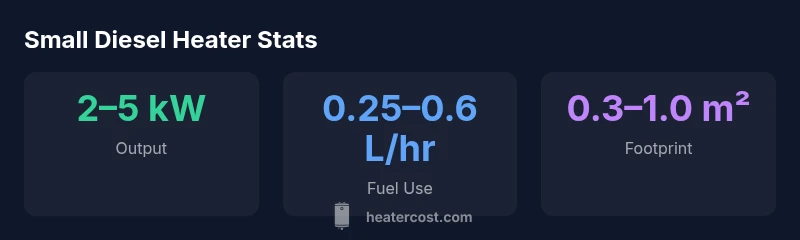
Small diesel heaters are compact, fuel-fired units designed to warm tight spaces such as cabins, RVs, and workshops. They typically deliver 2–5 kW of heat and run on standard diesel with vented exhaust. For homeowners weighing options, these heaters balance upfront cost, efficiency, and space needs, but require proper ventilation and safety measures during operation.
What is a small diesel heater
Small diesel heaters are compact, fuel-fired heating devices designed to warm spaces where traditional home heating isn’t practical. They are popular in cabins, RVs, and small workshops because of their relatively high heat output relative to size and their ability to operate independently of electrical power in some configurations. In general, a diesel heater small describes units delivering roughly 2–5 kW of heat and weighing on the order of 5–15 kg. These heaters burn diesel and must vent combustion byproducts outside the structure. As a rule of thumb, you’ll balance upfront cost, operational efficiency, and space constraints. The Heater Cost team notes that installation quality strongly influences reliability and safety, and that ventilation is non-negotiable for indoor use.
Core components and how they work
Most small diesel heaters rely on a simple, robust architecture. A compact burner heats a heat exchanger or air channel; a fuel pump delivers diesel; a glow plug or spark ignition starts combustion; a small centrifugal fan distributes warm air into the room. A thermostat or environmental controller modulates run cycles and fan speed, while safety switches monitor exhaust temperature and airflow. In practice, a well-designed unit integrates a compact control board, corrosion-resistant housing, and a sealed intake/exhaust path to minimize maintenance. The exact configuration varies by model, but the core principle remains the same: controlled combustion heats air, which is then directed into the living space.
Safety and ventilation essentials
Diesel heaters produce combustion byproducts that must be vented outdoors. Proper installation requires a dedicated exhaust outlet, clearances from flammable materials, and adequate ventilation to prevent carbon monoxide buildup. Always follow local codes, use a certified exhaust kit, and install in a well-ventilated area with a carbon monoxide detector nearby. Regularly inspect vent lines for blockages and corrosion, and ensure the intake is free of debris. The Heater Cost analysis emphasizes that ongoing safety checks are essential for long-term reliability and occupant safety.
Sizing: estimating heat needs for small spaces
Sizing a diesel heater small depends on space size, insulation, climate, and occupancy patterns. Insulated cabins and well-sealed spaces require less heat, while drafty or uninsulated rooms demand higher output. A practical approach is to target roughly 2–5 kW for compact spaces under 20–25 square meters in temperate climates, with higher outputs for colder regions. Always compare multiple models and check manufacturer charts for output at typical operating elevations. The goal is steady comfort without excessive cycling, which reduces efficiency and wear.
Fuel costs and efficiency considerations
Fuel costs for small diesel heaters vary with local diesel prices, usage patterns, and climate. Typical fuel consumption for small units ranges from about 0.25 to 0.6 liters per hour under moderate load. Efficiency is influenced by combustion quality, thermostat settings, and proper ducting. In climates with high heating demand, a unit that minimizes standby power and optimizes burn cycles will save more over time. Homeowners should track run hours and compare seasonal fuel costs against alternative heating methods to determine the most economical choice over the long term.
Installation basics: mounting, venting, and wiring
Installations should prioritize a solid mounting surface, appropriate clearances, and a clean exhaust run to the outdoors. Mounting options include wall brackets or cabinet enclosures, with attention paid to vibration isolation and accessibility for maintenance. Venting must be directed away from doors, windows, and intake vents to avoid re-ingestion of exhaust. Electrical connections should follow local electrical codes; wiring must be appropriately rated for the control electronics and any auxiliary fans. Because poor installation is a leading cause of safety issues, many users opt for professional installation or at least an inspection after setup.
Maintenance and lifespan expectations
Regular maintenance extends the life of a diesel heater small. Plan for annual or semi-annual servicing, including cleaning the air filter, inspecting the burner, and checking electrical connections. Look for signs of soot buildup, unusual noises, or inconsistent heat output, which may indicate a need for calibration or component replacement. Keeping fuel lines clean and ensuring the exhaust remains clear from obstructions are simple steps that yield tangible reliability improvements. With proper care, these heaters can operate for many seasons in demanding environments, though the exact lifespan varies with usage and maintenance history.
Common myths and misconceptions
Some readers worry that diesel heaters are unsafe for indoors or require extensive ventilation beyond what other heaters need. In reality, when installed with proper exhaust and ventilation, small diesel heaters can operate safely in well-ventilated spaces. Others assume diesel is always more expensive than electric heating; while fuel prices fluctuate, diesel can be economical for intermittent, high-heat needs in remote areas. Misconceptions about noise or odor are often mitigated by design features and proper installation. The key is to follow manufacturer guidelines and local codes.
Alternatives for very small spaces
If a diesel heater small isn’t the best fit, consider alternatives such as electric space heaters for short-term warming, propane or butane heaters with appropriate venting, or passive heating improvements (insulation, seal leaks, and heat recoveries). Each option has trade-offs in terms of upfront cost, running expenses, and safety requirements. For cabins and off-grid spaces, a diesel heater may remain a practical compromise, especially when electrical infrastructure is limited. The final choice should reflect space, climate, fuel accessibility, and maintenance capacity.
Practical buying checklist and setup plan
Before purchasing, inventory space dimensions, insulation quality, and typical occupancy patterns. Compare output ratings, efficiency, fuel delivery methods, and warranty terms. Verify that the unit has an approved exhaust kit and that installation will meet local codes. Plan a simple setup timeline that includes mounting location, vent routing, electrical connections, and a basic maintenance schedule. After installation, document run hours and monitor heat output to confirm the unit meets comfort goals without excessive cycling. This approach helps ensure reliable warmth in compact spaces while preventing safety oversights.
Comparison of key features for small diesel heaters
| Feature | Small Diesel Heater | Notes |
|---|---|---|
| Typical power output | 2–5 kW | Common range for compact units |
| Fuel type | Diesel | Diesel is the primary energy source |
| Ventilation | Exhaust outdoors | Requires a dedicated vent to outdoors |
| Installation footprint | 0.3–1.0 m² | Depends on model and mounting choice |
| Maintenance needs | Annual checks | Regular cleaning and inspection improve life |
Got Questions?
What size diesel heater should I choose for a small cabin?
For a small cabin, start with a unit in the 2–5 kW range, considering insulation and climate. Use manufacturer charts to match output to space volume, and prefer models with adjustable burn cycles for energy efficiency.
Choose a 2–5 kW heater for most small cabins; verify space volume and insulation to fine-tune the heat output.
Are diesel heaters safe for indoor use?
Indoor use is safe when the heater is installed with a dedicated outdoor vent and proper clearance from combustibles. Install CO detectors and follow local codes. Regular maintenance reduces risk of exhaust blockages.
Yes, if vented properly and maintained; always use CO detectors and follow local safety codes.
What are typical operating costs for a small diesel heater?
Operating costs depend on fuel prices and run time. Expect variation with climate and usage, and track monthly fuel consumption to estimate costs for your space.
Costs vary with fuel price and usage; track hours to estimate monthly fuel needs.
Can I install a diesel heater myself?
DIY installation is possible in some jurisdictions, but most places require professional installation to ensure exhaust and electrical safety. Check local codes and obtain necessary permits if required.
It’s best to consult a professional to ensure safe venting and electrical work.
What maintenance does a small diesel heater require?
Annual checks of the burner, air filters, and exhaust integrity are typical. Clean components, inspect for wear, and replace worn parts as needed to maintain efficiency.
Regular cleaning and annual checks keep efficiency high and extend life.
“Diesel heater small models deliver reliable warmth in compact spaces, but safe operation hinges on proper sizing, venting, and maintenance.”
The Essentials
- Understand space needs before choosing power output
- Ventilation is non-negotiable for indoor use
- Regular maintenance extends heater lifespan
- Compare installation options to minimize space impact