Can a Heater Cause Cough? Troubleshooting Guide
Explore how heaters can trigger coughs, common causes, safety steps, and practical fixes homeowners can implement now. Learn cost-aware actions from Heater Cost.


Yes. A heater can cause coughing due to carbon monoxide risks from combustion, indoor air pollutants, and moisture or temperature shifts that irritate the throat. If coughing starts when the heater runs, you should leave the area, ventilate the space, test for CO, inspect vents and filters, and arrange a professional safety inspection if symptoms persist.
Can a Heater Cause Cough? What you need to know
Coughing associated with heating devices isn't rare. A heater can trigger cough through carbon monoxide exposure, airborne irritants, and humidity shifts that dry or irritate your throat. The question homeowners ask is: when should coughing be considered a safety red flag? The quick answer: yes, heaters can cause cough under several conditions. According to Heater Cost, a thorough check of ventilation, detectors, and maintenance is essential to separate simple irritants from true safety threats. This guide focuses on practical steps to identify risks, protect your family, and avoid unnecessary replacement costs.
Common Causes Behind Heater-Related Coughs
When your home heater is running and coughing begins, several common culprits come to mind: 1) Carbon monoxide produced by combustion in gas or oil furnaces if venting is blocked or faulty; 2) Dust, mold, pet dander, or cleaning chemicals circulating through the HVAC system; 3) Dry air from high heat settings or low humidity; 4) Odors from burning insulation or wiring faults (rare but serious). Each factor has different implications for safety and cost. CO exposure is especially dangerous because it can be odorless and colorless; a detector is essential. For renters or homeowners, understanding these drivers helps prioritize fixes—ventilation improvements, filter changes, or professional servicing. According to Heater Cost analysis, consistent maintenance minimizes health risks and costly repairs.
How to Recognize CO and Irritant-Related Coughs
Not all coughs related to heating are the same. CO exposure often comes with headaches, dizziness, and nausea in addition to coughing; these symptoms warrant immediate action and CO testing. Irritant-related coughs tend to persist in days of high humidity or dusty environments. If coughing starts only when the heater is on, try simple checks such as ensuring clear vents and fresh air intake, replacing dirty filters, and verifying that combustion appliances are venting correctly. Remember: this is not a time for guesswork. A well-maintained system with working detectors reduces risk dramatically. Based on Heater Cost analysis, homeowners who regularly service equipment see fewer health-related concerns and fewer costly repairs.
Safe Home Evaluation: First Steps Before Calling Pros
If coughing persists, start with a quick safety sweep: ensure CO detectors are functioning, replace dirty filters, and open windows to improve ventilation. Check that space heating vents are not blocked by furniture and that the intake venting isn't restricted by dust or laundry. If you smell gas or hear hissing sounds, leave immediately and call emergency services. A quick safety check now can prevent serious health issues later. The Heater Cost team recommends keeping a log of symptoms and any changes in your heating routine to discuss with a pro later.
Diagnostic Flow at a Glance
Symptom: Persistent coughing when heater runs. Causes: • CO buildup from fuel-burning heater (high likelihood). • Inadequate ventilation leading to irritants (medium). • Dust, mold, or cleaning chemicals circulating (low). Fixes: • Open windows and improve air circulation (easy). • Test CO levels with a detector and replace batteries (easy). • Schedule a licensed technician to inspect venting and combustion area (medium).
Weekend Fixes You Can Try Right Now
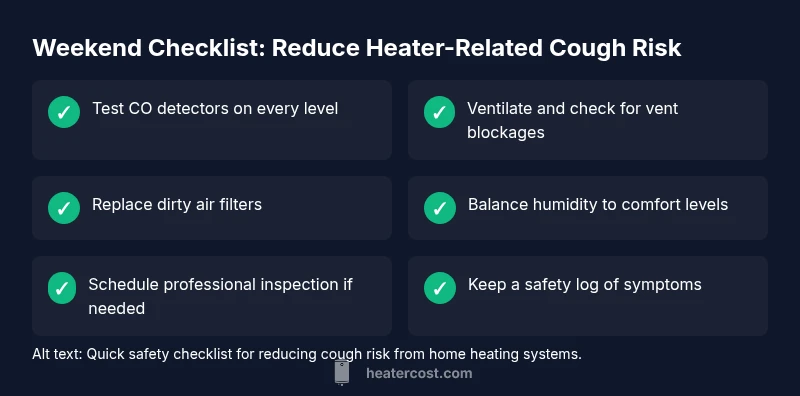
- Turn off the heater and ventilate the area; 2) Check and replace dirty air filters; 3) Ensure outside air is circulating and vents aren’t blocked; 4) Test CO detectors and ensure alarms work; 5) Inspect for obvious gas smells or soot; 6) If symptoms persist, schedule a professional inspection. These steps reduce risk and buy time while you plan longer-term fixes.
When to Call a Professional
If coughing continues after basic checks, or you notice gas smells, dead batteries in CO detectors, or frequent CO alarms, stop using the heater and contact a licensed HVAC technician or your gas utility. Professional service can verify vent integrity, combustion efficiency, and duct health. Document symptoms and timelines to help the technician diagnose quickly. Regular professional inspections are a smart investment in long-term safety.
Improving Indoor Air Quality to Reduce Cough Risk
Beyond CO safety, improving indoor air quality matters. Use high-quality filters, monitor humidity (aim for balanced humidity), and consider air purifiers with HEPA filters on days when indoor air feels stuffy. Keep cleaning products vented and stored away from living spaces. Regular maintenance of all heating appliances minimizes the introduction of irritants into your breathing air.
Real-World Scenarios and Budget-Smart Fixes
Homeowners often face a mix of safety concerns and budget limits. Start with the low-cost, high-impact steps: replace dirty filters, ventilate regularly, and install/verify CO detectors. If CO is detected or symptoms persist, invest in a professional inspection to avoid costly health risks or equipment failures. For readers of Heater Cost, these steps align with cost-conscious maintenance and safe operation of heating systems.
Steps
Estimated time: 60-90 minutes
- 1
Ensure safety first
If you smell gas or hear hissing, leave the area and call emergency services. Do not operate the heater again until it’s inspected. Check CO detectors for functioning and audible alarms.
Tip: Keep a dedicated exit route clear; plan where to meet family members outside. - 2
Ventilate and inspect vents
Open doors/windows to circulate fresh air and reduce concentrations of any irritants. Make sure HVAC vents are not blocked by furniture and that outside vents aren’t obstructed.
Tip: Do this for at least 10-15 minutes if symptoms occur. - 3
Check and replace filters
Dirty filters restrict airflow and trap dust and allergens. Replace or wash reusable filters according to the manufacturer’s guidance.
Tip: Use a high-quality filter with an appropriate MERV rating for your system. - 4
Test CO detectors
Check that detectors are powered and have fresh batteries. If no indicator light or alarm sounds, replace or reposition detectors.
Tip: Test detectors monthly and replace units every 5-7 years as recommended. - 5
Inspect venting and combustion area
Look for blocked or corroded vents, soot, or signs of improper combustion. Do not attempt repairs yourself if you’re unsure.
Tip: Document any unusual smells or soot and show it to the technician. - 6
Seek professional help
If symptoms persist after basic checks, schedule a professional HVAC inspection to verify vent integrity and combustion efficiency.
Tip: Ask for a written report and maintenance recommendations.
Diagnosis: Persistent coughing when the heater runs
Possible Causes
- highCO buildup from fuel-burning heater
- mediumInadequate ventilation leading to irritants
- lowDust, mold spores, or cleaning chemicals circulating
Fixes
- easyOpen windows and improve air circulation
- easyTest CO levels with a detector and replace batteries
- mediumSchedule a licensed technician to inspect venting and combustion area
Got Questions?
Can a gas heater cause coughing?
Yes. Gas heaters can produce carbon monoxide and combustion byproducts that irritate the airways and trigger coughing. CO detectors and regular maintenance are essential.
Gas heaters can cause coughing due to carbon monoxide and combustion byproducts. Use CO detectors and schedule regular maintenance.
Is coughing from a heater a sign of carbon monoxide poisoning?
Coughing can be a symptom of CO exposure, but CO poisoning usually comes with headaches, dizziness, or nausea. If CO is suspected, evacuate and seek medical or emergency help and check detectors.
Coughing can be a symptom of CO exposure, but other symptoms often accompany it. Evacuate and call for help if you suspect CO.
What should I do if my CO detector goes off?
If a CO detector alarms, leave the home immediately and call emergency services. Do not re-enter until authorities declare it safe. Ventilate if told to do so by professionals.
If the CO alarm goes off, leave now and call emergency services. Do not stay inside until it's cleared.
Are electric heaters safer than gas heaters for coughing?
Electric heaters do not emit carbon monoxide, but they can circulate dust and irritants. Gas heaters require venting and regular safety checks to prevent CO buildup.
Electric heaters don’t produce CO, but they can spread dust. Gas heaters need venting and regular checks.
How often should I service my furnace?
Most experts recommend annual service, with monthly filter checks. Always follow your manufacturer’s guidelines for your specific unit.
Most furnaces should be serviced yearly, with monthly filter checks.
What can I do now to reduce coughing without replacing my heater?
Ventilate the space, replace or clean filters, monitor humidity, and check detectors. If coughing continues, consult a professional.
Ventilate, check filters, balance humidity, and see a professional if coughing persists.
Watch Video
The Essentials
- Identify whether cough stems from CO or irritants.
- Test CO detectors and improve ventilation.
- Schedule professional inspection when coughing persists.
- Maintain regular heater maintenance to reduce risk.
- Balance humidity to minimize throat irritation.