Can Heaters Be Used Overnight? A Practical Safety Guide
Learn when it’s safe to run space heaters overnight, the safety features to look for, and practical steps to minimize fire and CO risks with practical, homeowner-friendly guidance.


Can heater be used overnight? Yes, under strict safety rules. If you choose a space heater, use models with an automatic shutoff, keep it at least three feet from curtains and furniture, and never leave it unattended while you sleep. For gas or propane heaters, ensure proper ventilation, install carbon monoxide detectors, and schedule regular maintenance.
Why overnight heating requires caution
Using a heater overnight can keep a home warm when temperatures drop, but it also increases fire and carbon monoxide risks. According to Heater Cost, understanding overnight use helps homeowners balance comfort with safety and energy use. The core idea is to maintain a safe zone around the heater, ensure proper ventilation for fuel-burning units, and have working detectors ready. Electric space heaters are generally safer for overnight use when they have automatic shutoff, tip-over switches, and thermally protected elements. Always check that the unit is in good condition, placed on a nonflammable surface, and plugged into a dedicated outlet. Keep pets and children away, and remove any clothing or bedding that might obstruct air flow.
Electric vs gas heaters for overnight use
Electric heaters offer convenience and safety for overnight use, particularly models with built-in timers and auto shutoff. Gas or propane heaters can provide warmth, but they require good ventilation and working carbon monoxide detectors due to CO risks. The Heater Cost team notes that electric models with clear safety features are generally safer for overnight operation, provided you follow clearance guidelines and use a dedicated outlet.
Safety features that enable safe overnight use
Essential safety features increase the likelihood of a safe overnight experience. Look for auto shutoff that activates if the heater tips or overheats, a thermostat to prevent overheating, a sturdy non-slip base, and a cord management system. For gas or propane heaters, ventilation is critical, and you should install and test carbon monoxide detectors. The Heater Cost analysis emphasizes that these features dramatically reduce the risk of fire or CO exposure when used overnight.
Practical overnight-use checklist
- Choose a heater with automatic shutoff and a tip-over switch.
- Place the unit on a nonflammable, level surface and keep a clear radius of at least three feet around it.
- Plug the heater directly into a dedicated wall outlet; avoid extension cords or power strips for high-wattage units.
- Set the thermostat to a comfortable night temperature and enable any built-in timer to auto-shutoff.
- If using a gas heater, ensure adequate ventilation and install a working carbon monoxide detector in the room.
- Before going to bed, perform a quick safety check: no loose cords, no odours, detectors functioning.
- In the morning, turn off the heater and inspect the area for signs of heat damage or unusual smells.
Energy efficiency and cost considerations
Overnight heating can be energy-intensive, but smarter practices help reduce costs. Use a heater with an efficient energy profile and a programmable timer, ensure your living space is well insulated, and seal drafts around doors and windows. The Heater Cost team emphasizes pairing a heater with proper insulation and a programmable thermostat to maintain comfort without overheating. While electric heaters are easier to manage overnight, properly vented gas heaters demand more vigilance but can still be used safely if detectors are active and ventilation is adequate.
Common misconceptions about overnight heater use
Common myths include thinking bigger heaters heat rooms faster or that leaving heat running all night is automatically safer. In reality, oversizing can waste energy and increase risks. Another misconception is that all heaters release enough CO to trigger detectors; CO detectors only alert you after exposure begins and do not replace proper ventilation. Finally, many assume that safety features alone guarantee safety; operator diligence, correct placement, and routine maintenance are essential.
Heater Cost's practical recommendations
The Heater Cost Team recommends prioritizing safety features, maintaining detectors, and following manufacturer guidelines for overnight use. Use electric heaters with auto shutoff and tip-over protection, ensure gas heaters are vented and equipped with CO detectors, and inspect the space around the heater daily. With thoughtful setup and routine checks, overnight heating can be both comfortable and safe.
Tools & Materials
- Space heater with automatic shutoff(Prefer models with tip-over switch and overheat protection)
- Carbon monoxide detector(Essential for gas/propane heaters)
- Smoke detector(Test monthly and replace as needed)
- Dedicated wall outlet(Plug directly; avoid extension cords for high-wattage units)
- Fire-resistant mat or sturdy nonflammable base(Place heater on a stable surface)
- Thermometer or room thermostat(Monitor and maintain comfortable overnight temperature)
- Ventilation option (window slightly open)(Use when operating gas/propane units)
- Basic safety guide (owner’s manual)(Keep handy for model-specific precautions)
- Small fan (optional)(Helps distribute heat evenly in large rooms)
Steps
Estimated time: 30-60 minutes
- 1
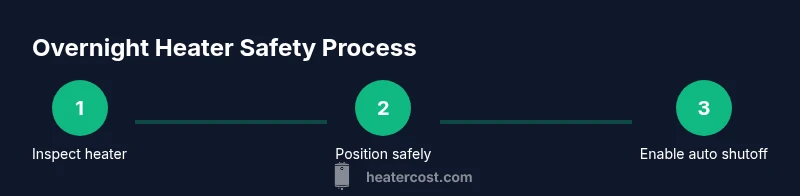
Inspect heater and surroundings
Check the unit for damaged cords, scorch marks, or unusual odors. Ensure the power switch works and there are no obstructions near the intake or exhaust.
Tip: Unplug and inspect before each overnight use. - 2
Place heater on a nonflammable, level surface
Position the heater away from curtains, bedding, and furniture. Use a fire-resistant mat if the surface isn’t naturally nonflammable.
Tip: Keep a clear radius of at least three feet around the heater. - 3
Plug into a dedicated outlet
Avoid using extension cords or daisy-chaining multiple devices. Check that the outlet isn’t warm during operation.
Tip: If the outlet heats up, stop use and switch to a lower-wattage model. - 4
Set thermostat and enable timer
Set to a comfortable overnight temperature and activate any built-in timer or auto-shutoff. Do not override safety features.
Tip: Program to shut off after a safe period that aligns with your sleep schedule. - 5
Check detectors and ventilation
If using a gas heater, ensure ventilation and CO detectors are functioning. Keep windows or vents slightly open if advised by the manual.
Tip: Test CO detectors monthly and replace batteries as needed. - 6
Review before bed and in the morning
Do a quick safety check: no smells of gas, no heat on the curtains, detectors active. In the morning, turn off and unplug if not needed for daytime use.
Tip: If you notice gas smell, evacuate immediately and call emergency services.
Got Questions?
Is it safe to leave a space heater on overnight?
It can be safe with proper safety features, clear space, and monitoring. Always use models with auto shutoff and avoid unattended operation for extended periods.
Yes, but only if you use a heater with safety features, keep space clear, and don’t leave it unattended overnight.
What features should I look for in an overnight heater?
Look for auto shutoff, tip-over protection, a thermostat, overheat protection, and a stable base. For gas heaters, ensure ventilation and CO detectors are present.
Choose a heater with auto shutoff, tip-over protection, a thermostat, and proper ventilation for gas models.
Can I use a gas heater indoors overnight?
Gas heaters indoors require good ventilation and working CO detectors. Follow manufacturer guidelines and never sleep in a room with an unvented gas heater running.
Gas heaters indoors must be vented and monitored with CO detectors while in use.
What should I do if I smell gas or hear unusual noises?
If you smell gas or hear unusual noises, turn off the heater, leave the area, and call emergency services immediately.
If you smell gas, evacuate and call emergency services right away.
How can I improve overnight energy efficiency?
Seal drafts, insulate, and use a programmable thermostat with a comfortable overnight setting to minimize energy waste.
Insulate, seal drafts, and use a programmable thermostat to save energy overnight.
How do I know my CO detector is working?
Test CO detectors monthly and replace batteries as needed. Follow device instructions for testing frequency and maintenance.
Test your CO detector every month and replace batteries as needed.
Watch Video
The Essentials
- Prioritize safety features (auto shutoff, tip-over switch).
- Gas heaters require proper ventilation and detectors.
- Maintain clear space and stable placement around the heater.
- Use timers to balance comfort with energy use.