AC and Heater Repair Near Me: Costs, Tips, and Hiring Guide
Discover how to budget and hire local AC and heater repair services. This Heater Cost guide covers typical costs, how to compare quotes, common fixes, maintenance, and finding reputable technicians near you.


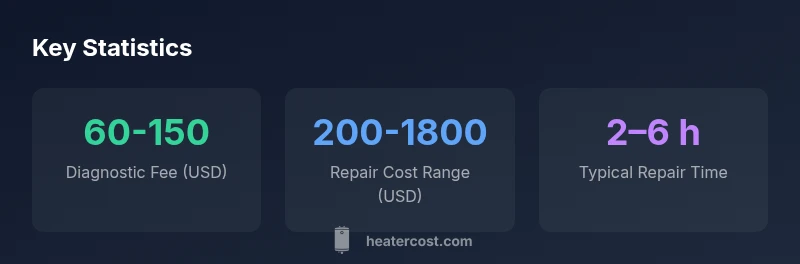
Typical diagnostic fees for AC and heating repair near me range from about $60 to $150, with total repair costs often between $200 and $1,800 depending on the parts, labor, and whether components like capacitors, compressors, or heat exchangers require replacement. Always ask for a written estimate and itemized quotes before any service to avoid surprises.
Why Local AC and Heater Repair Near Me Matters
When you search for AC and heater repair near me, you’re not just looking for a quick fix; you want a reliable, transparent service that restores comfort without unexpected costs. According to Heater Cost, local HVAC professionals bring crucial benefits: proximity, accountability, and familiarity with regional prices and climate needs. A reputable technician will diagnose issues with both cooling and heating systems, explain findings in plain language, and provide a clear path to repair or replacement. This knowledge helps homeowners, renters, and property managers avoid common pitfalls and choose service that balances speed, quality, and value. Licensing, insurance, and manufacturer guidelines are essential for safe, effective repairs. By understanding these factors, you can reduce the risk of repeated failures and costly callbacks. The guidance here reflects Heater Cost Analysis, 2026, and is designed to empower you during busy seasons, outages, and emergencies.
Cost Factors that Shape Your Repair Bills
Repair costs for AC and heating systems are driven by several interrelated factors. Diagnostic fees establish a baseline, but what you pay for parts and labor can swing widely. Regional labor rates, travel charges, and after-hours calls add variability. The cost of specific components matters a lot: a failed capacitor is cheaper to replace than a dead compressor or a burned heat exchanger. Refrigerant charges, environmental fees, and the need for specialty tools can push totals higher. Age and accessibility of your unit also affect price—older equipment may require more labor for disassembly or retrofits. Seasonal demand, such as peak summer or winter, can magnify wait times and pricing. As you evaluate options, request written, itemized quotes that separate diagnostic fees, parts, labor, and any required permits. Heater Cost's analysis indicates that pricing is highly regional, so use ranges as a guide rather than exact numbers for your area, and seek quotes from multiple local providers.
How to Obtain Accurate Estimates and Compare Quotes
Obtaining accurate estimates starts with controlled comparisons. Ask each contractor for an itemized written quote that breaks down diagnostics, parts, labor, travel, and disposal. Ensure the quote lists OEM parts or compatible equivalents and specifies warranty terms on both parts and labor. Don’t rely on a single number—get at least three quotes to benchmark costs and timelines. When evaluating, compare more than price: look at the technician’s licensing and insurance, whether they perform a pre-work inspection, and the clarity of the proposed fix. Request a projected timeline and a post-repair follow-up plan. If energy efficiency upgrades are possible, ask about rebates or tax incentives and whether upgrading rather than repairing makes financial sense over the unit’s remaining life. Heater Cost emphasizes written estimates and transparent reasoning in every quote, so you can make an informed decision with confidence.
Common AC and Heating Failures and Rough Timelines
Common issues span mechanical failures, electrical faults, and refrigerant problems. For air conditioners, capacitors, contactors, and blown fuses are frequent culprits, while for furnaces and heat pumps, ignition problems, blower motor failures, and thermostat malfunctions are common. Refrigerant leaks are a serious concern that require licensed technicians due to safety and environmental regulations. timelines vary by problem severity and component availability; some repairs can be completed in a few hours, while more extensive failures may require a day or two or more if parts must be ordered. A professional should provide a realistic window after an initial inspection and should outline any temporary cooling or heating options during the wait.
Maintenance Practices to Extend System Life
Proactive maintenance reduces the likelihood of unexpected breakdowns and keeps efficiency high. Schedule seasonal tune-ups for both AC and heating systems, typically in spring and fall. Replace or clean air filters monthly or as recommended, and ensure ducts are sealed and free of obstructions. Clean outdoor units to remove debris, keep coils clear, and verify the electrical connections. A well-maintained system runs more efficiently, uses less energy, and experiences fewer costly emergencies. Homeowners should track filter changes, coil cleanings, and thermostat calibration dates, and maintain a simple service log. While some tasks can be DIY, many maintenance activities should be performed by a licensed HVAC professional to ensure safety and compliance with local codes. Heater Cost’s guidance highlights the value of routine maintenance as a hedge against expensive repairs.
When to Repair vs Replace
Deciding between repair and replacement depends on age, efficiency, and expected future costs. If the unit is older than 10–15 years and requires frequent fixes, or if repair costs approach or exceed a significant fraction of the price of a new unit, replacement often makes financial sense. Upgrading to a more energy-efficient system can yield long-term savings on utility bills and may be eligible for rebates or tax incentives. When repairing, insist on estimating potential follow-up issues that might recur with the same model or component. In all cases, request a cost-benefit analysis from your technician and compare it against the projected energy savings of a modern unit. The Heater Cost team recommends a careful balance of immediate cost, reliability, and long-term operating costs.
Finding Reputable Technicians Near You
Locating trustworthy AC and heater repair near me starts with a mix of online research, recommended referrals, and verification checks. Look for licensed, insured technicians with good local reviews and transparent pricing. Verify their NATE certification or equivalent credentials, and ask about warranties on parts and labor. Request written estimates and compare not just prices but the quality of components and the scope of work. A reputable contractor should perform a pre-work inspection, explain the proposed solution in plain language, and provide a clear maintenance plan after service. Use local keywords and city-specific phrases when searching to ensure the technician serves your area. The right local pro can deliver fast, reliable service, long-term efficiency, and peace of mind for your home.
mainTopicQuery: hvac repair
Comparison of common AC and heating repair services
| Service Type | Typical Diagnostic Fee | Typical Repair Cost Range | Average Time to Complete |
|---|---|---|---|
| AC diagnostic | 60-150 USD | 200-1800 USD | 2-6 hours |
| Heating system diagnostic | 60-150 USD | 200-1500 USD | 2-6 hours |
| Emergency service (after-hours) | 100-300 USD | 400-2500 USD | Same-day to 24h |
Got Questions?
What should I ask a technician before scheduling AC or heater repair?
Ask about licensing, insurance, warranty coverage, itemized estimates, parts brands, and expected timeline. Request a written quote.
Ask about licensing, warranties, and a written estimate.
How long does a typical AC or heating repair take?
Most repairs take a few hours, but complex issues or parts replacement can require a day or more. The technician should provide a timeline in the written estimate.
Most repairs take a few hours; complex fixes may take longer.
Should I repair or replace my old unit?
Consider the unit's age, repair cost relative to replacement cost, energy efficiency, and potential rebates. A trusted pro can run a cost-benefit analysis.
Consider age, costs, and efficiency; run a cost-benefit with a pro.
What signs indicate a refrigerant leak or a faulty component?
Frequent cycling, ice on coils, hissing sounds, reduced cooling, and unusual frost. Only a licensed tech should handle refrigerant.
Look for ice, odd noises, or reduced cooling; refrigerant handling requires a pro.
How can I compare local HVAC quotes effectively?
Get at least three quotes, ensure each is itemized, check parts brands, warranties, and energy-efficiency options. Compare after-tax costs.
Get multiple, itemized quotes and compare warranties.
Are emergency repairs more expensive?
After-hours calls cost more due to travel and labor. Ask for a clear emergency-rate policy in writing.
Emergency calls cost more; ask for policy.
“Reliable repairs come from transparent pricing and clear explanations of what failed and why. Energy-efficient options should be part of the conversation.”
The Essentials
- Get written, itemized estimates before any service.
- Expect diagnostic fees to vary by region and provider.
- Ask about energy-efficient upgrade options during repairs.
- Weigh short-term costs against long-term reliability and maintenance.