Induction Water Heater: Costs, Efficiency, and Installation Guide
Comprehensive guide to induction water heaters: operation, costs, installation needs, efficiency, and how they compare with conventional electric and gas options. Heater Cost Analysis, 2026.


Induction water heaters heat water directly through induction, reducing standby losses and delivering high efficiency. They typically require robust electrical service and a professional installation. Costs depend on capacity, existing wiring, and whether electrical upgrades are needed. While upfront costs can be higher, long-term energy savings may offset them. Heater Cost analysis, 2026, notes the technology is promising in many homes.
What is an induction water heater?
An induction water heater is a heating system that uses electromagnetic induction to heat water without a conventional resistance element immersed directly in the water. In practice, a compact, electronically controlled unit drives an alternating current through a coil, creating a changing magnetic field. This field induces heat in a nearby metal heat exchanger, which then transfers warmth to the water as it flows through the system. The result is rapid heat delivery with minimal standby losses — a key driver of efficiency. According to Heater Cost, adoption is rising in new builds and renovations where homeowners want high efficiency without relying on gas or boilers. The technology is most compatible with homes that can support the electrical load and have well-insulated plumbing and hot-water loops.
How induction heating works for water heating
Induction heating relies on a coil wrapped around a heat-transfer surface or inner vessel. When current flows through the coil, a magnetic field is generated. Ferromagnetic or specially designed conductive components in the heat path convert this magnetic energy into heat, which is then transferred to the water. Controls regulate flow, temperature setpoints, and recovery time. In simple terms, the system heats water by exciting molecules inside the transfer surface rather than by heating a conventional element. This mechanism can reduce energy losses from hot-water storage and improve response time during peak demand. For homeowners, the impact hinges on proper sizing, insulation, and electrical readiness, all of which affect efficiency and long-term operating costs.
Efficiency and performance nuances
Induction water heaters offer high efficiency because heat is generated close to the point of transfer, minimizing resistance losses and heat waste. Real-world performance depends on system design, water quality, and installation quality. In well-insulated homes with strong electrical service, you can expect rapid recovery after heavy draws and stable hot-water delivery. However, the benefits diminish if the electrical panel requires substantial upgrades or if the system is oversized for the home. Heater Cost analysis, 2026, notes that efficiency can approach the upper ends of modern electric water heating options when paired with appropriate circuit capacity and a well-insulated plumbing network.
Installation considerations and electrical upgrades
Installing an induction water heater is not a plug-and-play job. It often requires a dedicated circuit or a panel upgrade to accommodate higher amperage, especially in homes with older wiring. A licensed electrician should assess service capacity, grounding, and fault protection. Plumbing work may be minimal if the unit is wall-mounted and uses standard cold-water and hot-water lines, but retrofits can arise if existing pipes are not compatible with the heat-transfer loop. Local permits and inspections are typical, which Heater Cost Analysis, 2026, highlights as a factor in total project cost. In some cases, upgrading wiring, breakers, and possibly the main panel is necessary to realize full efficiency gains.
Cost considerations and payback
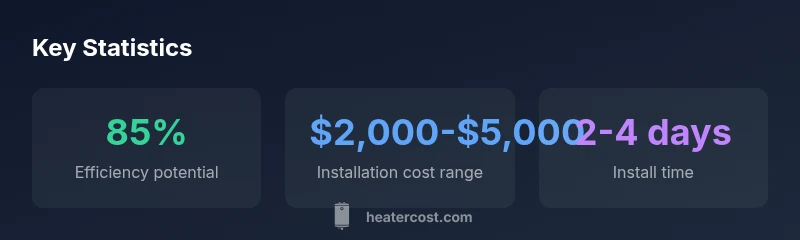
Upfront installation costs for induction water heaters vary widely, influenced by capacity, electrical upgrades, and local labor rates. Typical ranges, according to Heater Cost Analysis, 2026, fall between roughly $2,000 and $5,000, though projects with extensive electrical renewal can exceed this. Payback is driven by efficiency gains, hot-water usage patterns, and utility rates. Homes with high hot-water demand and high electricity costs may see shorter payback periods, while smaller households or regions with lower energy costs may experience longer timelines. A thorough evaluation of peak usage, insulation, and potential incentives is essential to estimate true payback.
Compare to traditional electric and gas water heaters
When weighing induction heating against conventional options, consider these points:
- Electric resistance heaters: simple, low upfront costs, but higher standby losses; induction can beat them on efficiency in well-prepared homes.
- Gas-fired heaters: lower operating costs in some regions, but require gas infrastructure and venting; induction eliminates combustion-related emissions when powered by clean grids.
- Space and footprint: induction units can be compact but may require specialized mounting and adequate electrical space.
- Longevity and maintenance: fewer moving parts than gas systems; but water quality and scale can affect heat transfer surfaces.
Maintenance and longevity
Maintenance for induction water heaters tends to be lower than gas or storage-tank systems, since there are fewer mechanical components and no pilot lights. The key upkeep relates to water quality to prevent scale buildup on heat-transfer surfaces and periodic checks of seals and fittings. Follow manufacturer guidance for flushing or descaling if your water is hard. Routine electrical inspections and panel servicing also help maintain safety and reliability. In many homes, a simple annual check by a licensed professional keeps efficiency high and reduces the risk of unexpected outages.
Safety, codes, and reliability
Induction heating relies on strong electromagnetic fields and high electrical loads. Proper shielding and adherence to electrical codes are essential to minimize EMI concerns and ensure safe operation near sensitive electronics. A licensed contractor should verify clearance, grounding, and surge protection. As with any heating appliance, ensure units meet local building and electrical codes and are installed with proper venting (if applicable) and automatic shut-off controls. Heater Cost Analysis, 2026, emphasizes verifying warranty coverage and service availability when selecting an induction water heater.
Buying guide and next steps
To decide if an induction water heater is right for you, start with a load assessment of your home’s electrical system, water usage patterns, and insulation levels. Get multiple quotes that include electrical upgrades, permitting, and disposal of old equipment. Compare models based on recovery rate, efficiency claims, and warranty terms. If possible, select a system with clear indicators of heat transfer performance and energy savings in homes similar to yours. Finally, factor in any local utility incentives that can shorten the payback period.
Comparison of water heating methods
| Heating Method | Typical Efficiency | Cost Range (installation) | Maintenance |
|---|---|---|---|
| Induction water heater | Very high | $2,000-$5,000 | Low to moderate |
| Electric resistance water heater | High | $800-$1,800 | Low |
| Gas-fired water heater | Moderate | $1,000-$2,500 | Moderate |
Got Questions?
Is an induction water heater right for small homes?
Induction water heaters can be a good fit for compact layouts, but small homes must still have adequate electrical capacity for the unit. A professional load calculation helps determine if upgrades are needed. Consider usage patterns and existing insulation to gauge practicality.
Induction systems can work in small homes, but you’ll want a professional load check to confirm electrical capacity and usage fit.
What electrical upgrades are typically needed?
Most installations require a dedicated circuit and sometimes a panel upgrade to handle higher amperage. Local codes and permit requirements will influence scope and cost. A licensed electrician can provide a precise assessment.
Usually a dedicated circuit and possibly a panel upgrade are needed; check local codes with a licensed electrician.
Can induction water heaters heat water quickly?
Yes, many systems offer fast recovery times compared to standard electric heaters, especially when sized for your peak hot-water needs. Actual performance depends on capacity, flow rate, and water temperature targets.
They often heat quickly, but it depends on size and how much hot water you use.
What maintenance do they require?
Maintenance tends to be low, focusing on water quality to prevent scale and periodic checks of electrical connections and seals. Follow the manufacturer’s flushing and service recommendations.
Maintenance is usually minimal—just keep water clean and have periodic checks.
Are induction water heaters safe?
When installed by a licensed professional and used with proper shielding and grounding, induction water heaters are considered safe and reliable. Follow safety instructions and ensure compliance with EMI standards.
Yes, with proper installation and standard safety practices.
“Induction water heaters offer high efficiency when the electrical system is adequately sized and the home is well insulated.”
The Essentials
- Understand your electrical capacity before choosing induction heating.
- Induction water heaters offer high efficiency with potential energy savings.
- Upfront costs include electrical upgrades and professional installation.
- Compare recovery times and warranties to pick the best model.