Propane Heater vs Kerosene Heater: A Practical 2026 Comparison
An in-depth, objective comparison of propane and kerosene heaters for homeowners, renters, and property managers seeking safety, cost, maintenance, and practicality guidance.


Propane heaters and kerosene heaters both deliver portable warmth, but propane typically offers safer operation, cleaner emissions, faster startup, and easier fueling. Kerosene can provide longer run times in certain emergency or off-grid scenarios. Overall, propane is usually the stronger all-around choice for most homes with proper ventilation.
Core Differences and Use-Case Distinctions
When evaluating propane heater vs kerosene heater, start by identifying your space, fuel access, and safety requirements. Propane units are widely used for home heating, camping, and emergency backup due to clean-burning fuel and quick response times. Kerosene units excel in off-grid scenarios where propane isn't readily available, such as remote cabins or disaster preparedness kits. According to Heater Cost, propane heaters generally offer safer operation, easier fueling, and better indoor air management when used with proper ventilation. The Heater Cost team found that most households reach a practical balance by choosing propane for everyday warmth and keeping a kerosene option for rare needs. In both cases, understand the type of heater (vented vs ventless) and how it integrates with your space.
Fuel Type, Availability, and Energy Content Considerations
Fuel type drives cost stability, refill logistics, and safety handling. Propane is stored in cylinders or lines and is extremely common in many regions, with broad distribution networks and predictable performance. Kerosene is stored as a liquid fuel and can be more readily available in remote areas or during disruptions when gas supply is limited. In terms of energy content, propane typically provides quick, high heat output with precise control via regulator settings; kerosene offers strong heat but can show variability based on fuel grade and wick condition. For homeowners, the key takeaway is that propane fuel tends to be more convenient and consistent, while kerosene may suit off-grid homes or where cylinder supply chains are uncertain. As always, check local regulations and supplier options before purchasing.
Ventilation, Emissions, and Indoor Air Quality
Ventilation is a critical factor for any heater rated for indoor use. Propane heaters, when used with proper ventilation, can maintain safer indoor air quality and reduce odor buildup associated with burning fuels. Kerosene heaters often produce noticeable odors and particulates, especially in poorly ventilated rooms; this makes robust ventilation, CO monitoring, and regular maintenance essential. The choice between propane heater vs kerosene heater hinges on your space, occupant sensitivity, and how you plan to manage exhaust. In smaller rooms, consider using a carbon monoxide detector and following manufacturer guidelines to maintain safe air levels.
Ignition, Start-Up Speed, and Operational Realities
Start-up speed differs between propane and kerosene models. Propane heaters typically offer fast ignition, reliable performance, and simple adjustment through gas regulators and thermostats. Kerosene units may rely on wick-based ignition and can take longer to reach comfort temperature, particularly in cold spaces. Wick condition, fuel grade, and maintenance quality influence performance for kerosene heaters. For many users, propane provides a more predictable, user-friendly experience, while kerosene may be acceptable in controlled environments where refilling and wick upkeep are manageable.
Maintenance, Refueling, and Longevity
Maintenance needs vary significantly between the two fuels. Propane systems benefit from straightforward refueling logistics in most regions, with many modern units featuring sealed combustion and lower odor concerns. Kerosene systems require regular wick replacement, careful fuel handling, and soot management to maintain efficiency and safety. Proper storage of fuel and adherence to cleaning schedules can extend the life of a kerosene heater but adds ongoing responsibility. Heater longevity depends on usage patterns, ventilation, and routine inspections for leaks or corrosion in both types.
Safety, Codes, and Compliance
Safety considerations are central to any propane heater vs kerosene heater decision. Propane systems generally emphasize leak detection, proper hose connections, and adherence to local codes for vented vs unvented units. Kerosene appliances demand stringent handling practices, including clean fuel, wick maintenance, and adequate ventilation to mitigate odor and particulate emissions. Always install the unit per manufacturer instructions and abide by local electrical and fire codes. The presence of CO detectors and fire extinguishers in the living space adds an essential safety margin for both options.
Cost Considerations and Value Proposition
Cost dynamics for propane vs kerosene hinge on fuel prices, tank availability, storage space, and replacement parts. Propane often presents lower per-hour operating costs in regions with stable price structures and easy access to refills. Kerosene costs can fluctuate with market conditions and fuel quality, impacting long-term economics. When evaluating value, consider initial purchase price, tank or cylinder storage needs, maintenance costs, and expected lifetime of the unit. Across typical home-use scenarios, propane generally offers more predictable costs and simpler upkeep, while kerosene can be valuable in off-grid or supply-constrained contexts.
Scenario-Based Guidance: Homeowners, Renters, and Property Managers
For homeowners, a propane heater typically delivers reliable comfort with easier logistics and maintenance. Renters may favor propane for its portability and minimal structural modifications, provided landlord permissions are in place. Property managers weighing safety, tenant experience, and lifecycle costs should model several rooms per property and account for common areas where outdoor-rated units may be appropriate. In off-grid properties, kerosene can fill a niche role when propane infrastructure is limited; however, ensure adequate ventilation and regular maintenance to minimize odor and emissions.
Availability, Storage, and Handling Considerations
Propane is widely stored in cylinders or integrated supply lines, offering a robust distribution network and consumer convenience. Kerosene storage requires safe container handling and awareness of volatility and odor. Both fuels demand secure storage away from heat sources, with kerosene needing careful wick management and fuel quality checks to prevent performance degradation. The decision should factor in storage space, refill accessibility, and local regulations governing fuel storage to avoid compliance issues.
Installation Footprint, Size, and Portability
Space planning matters for propane heater vs kerosene heater. Propane units come in compact, portable designs suitable for apartments, workshops, and small rooms, with accessible refill options. Kerosene heaters can be bulkier and heavier, often occupying more floor space and requiring ventilation clearances. For renters or frequent movers, weigh the ease of relocation and the availability of safe mounting or placement areas in your floor plan. Proper clearance from walls, cabinets, and combustibles remains essential for both fuel types.
Real-World Scenarios and Quick-Start Guidance
In practice, many households adopt propane as the main heating option for daily use and keep a kerosene setup as an emergency or off-grid backup. If you expect frequent power outages, plan for fuel storage and rotation to avoid degraded kerosene quality. For new installations, start with a propane unit in a well-ventilated space, then assess a kerosene option only if your living situation justifies its particular strengths. Always consult professional guidance for your space and fuel availability.
Practical Checklists and Quick Picks
Before purchasing, run through a practical checklist: room size, ventilation capacity, local fuel availability, maintenance willingness, and safety devices such as CO detectors and fire extinguishers. If you value ease of use and readily available refills, a propane heater ranks highly. If you require off-grid reliability and can commit to wick maintenance and proper storage, kerosene may serve you better in the right context. This framework keeps the decision aligned with your space and lifestyle.
Comparison
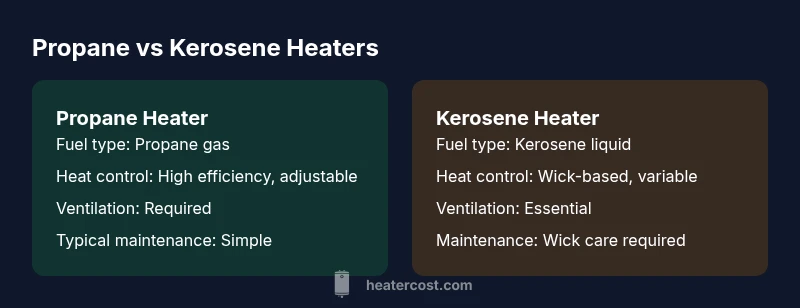
| Feature | Propane Heater | Kerosene Heater |
|---|---|---|
| Fuel type | Propane gas (cylinder/line) | Kerosene liquid |
| Heat output and control | High, adjustable models with precise regulation | High to mid-range output, depends on wick and model |
| Startup speed | Fast ignition and temperature rise | Slower to heat, may need pre-warmth |
| Fuel availability | Widely stocked; easy refills | Common in off-grid supply networks |
| Ventilation and emissions | Requires ventilation; CO monitoring recommended | Ventilation essential; odor and soot possible |
| Operating cost considerations | Typically lower cost per hour where fuel is affordable | Fuel price fluctuations affect running costs |
| Maintenance needs | Minimal wick maintenance; broad service support | Regular wick care and soot management |
| Portability and footprint | Compact, lightweight; various sizes | Heavier, less portable; footprint larger |
The Good
- Faster heat delivery and easier ignition
- Cleaner combustion with proper ventilation
- Widespread fuel availability and service networks
- Lower maintenance friction for many models
- Compact, portable solutions for small spaces
Negatives
- Kerosene requires careful handling and more frequent wick maintenance
- Propane storage adds tank management and refill logistics
- Kerosene odor and soot risks if not vented properly
- Ventilation requirements can constrain placement in small spaces
Propane heater wins for everyday use in typical homes; kerosene serves niche off-grid or specialty scenarios
Propane offers safer operation, easier fueling, and better indoor air management with proper ventilation, making it the default choice for most households. Kerosene can be valuable when propane is unavailable or impractical, but it demands more maintenance, odor management, and ventilation discipline.
Got Questions?
Is propane safer than kerosene for indoor use?
Generally yes, when used with proper ventilation and CO detectors. Propane produces fewer odors and particulates under normal conditions. Kerosene can emit odor and soot if not vented and maintained.
Propane is usually safer indoors with ventilation and safety detectors; kerosene carries odor and soot risks that require careful venting.
Which heater is cheaper to run?
Propane often offers more predictable operating costs where fuel prices are stable. Kerosene costs vary with fuel prices and usage efficiency, which can raise long-term expenses.
Propane tends to be cheaper to run in steady markets; kerosene price fluctuations can make it more expensive over time.
Can renters use these heaters in apartments?
Many apartments allow propane or kerosene space heaters if the unit complies with safety rules and ventilation. Always check with the landlord and follow local fire codes.
Renters should check with their landlord and follow safety codes before using either heater.
Do these heaters require ventilation?
Yes for both fuels, but kerosene generally needs stricter venting due to odor and emissions. Use CO detectors and ensure adequate airflow.
Yes, you should ventilate any space using these heaters and monitor for CO and odors.
What maintenance is required?
Propane units typically require less frequent maintenance besides refills. Kerosene units need wick care, cleaning, and periodic maintenance to prevent odor and smoke.
Propane is usually lower maintenance; kerosene needs wick upkeep and cleaning.
Are there emissions or odor concerns with kerosene vs propane?
Kerosene can produce more odor and soot if not vented properly, while propane tends to burn cleaner with good ventilation.
Kerosene may smell and leave soot without good ventilation; propane burns cleaner with proper setup.
The Essentials
- Choose propane for everyday comfort and ease
- Factor ventilation and CO monitoring into every setup
- Expect more maintenance with kerosene, especially wick care
- Propane typically offers lower ongoing fuel hassles in stable markets
- Use kerosene only when off-grid reliability justifies the extra care