Natural Gas Tankless Water Heaters: Costs, Efficiency, and Installation Guide
Explore natural gas tankless water heaters: how they work, energy efficiency, installation costs, and maintenance tips for homeowners, renters, and property managers seeking reliable on-demand hot water.


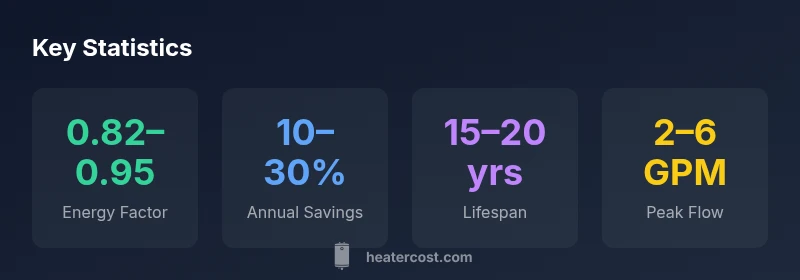
Natural gas tankless water heaters deliver hot water on demand with no storage, and typical energy factors range from 0.82 to 0.95, reducing standby losses compared with storage tanks. According to Heater Cost Analysis, 2026, households often see 10–30% lower annual water-heating costs, depending on usage and climate, and installation quality. These units shine when hot water is needed in short bursts rather than for long, uninterrupted draws.
What is a natural gas tankless water heater?
A natural gas tankless water heater is a compact on-demand system that heats water as it flows through a heat exchanger, rather than storing hot water in a tank. This design eliminates standby heat loss, which is common in storage tanks. For homeowners and property managers, these units can deliver steady hot water for a shower, sink, or appliance without keeping a large tank heated all day. While the upfront cost may be higher than a conventional storage unit, the long-term energy savings can be meaningful when used in the right-sized home. The Heater Cost team notes that the on-demand approach pairs well with modern homes that have good insulation and predictable hot-water needs. When sizing is done correctly, you can avoid the common pitfall of undersized units that run cold when multiple fixtures draw water at once.
How it works: on-demand heating and venting
Gas-powered tankless heaters operate by drawing cold water through a cold-water inlet, where it passes over a high-efficiency gas-fired heat exchanger. The burner heats the water to the set temperature, and the heated water exits through the outlet on demand. Because there is no storage tank, the unit only consumes energy when hot water is needed, which reduces standby losses. Venting is a critical consideration for natural gas models: improper venting can lead to combustion byproducts accumulating indoors. Most installations require a dedicated vent system that complies with local codes and manufacturer guidelines. In tight mechanical rooms, proper clearance and vent routing are essential to avoid backdrafts and ensure safe operation. A professional installer should evaluate gas supply capacity, venting diameter, and clearance to maintain performance and safety.
Energy efficiency and cost implications
Energy efficiency for natural gas tankless units is often described using an energy factor (EF) in the mid-to-high 0.8s and sometimes higher for advanced models. The absence of a storage tank means there is no standby heat loss, which translates into potential operating-cost reductions over time. The actual savings depend on how you use hot water: households with high simultaneous demand may need multiple units or a larger model to maintain consistent temperature. Fuel costs, maintenance intervals, and venting requirements also influence total cost of ownership. The Heater Cost analysis highlights that efficiency gains tend to improve when the unit is properly sized for peak demand and when regular descaling is performed to prevent mineral buildup that can reduce heat transfer.
Sizing, gas supply, and installation considerations
Sizing a gas tankless heater correctly is critical for meeting peak hot-water needs without overworking the unit. A professional will assess your household’s peak flow rate (the combined GPM needed during simultaneous draws) and match it to a unit’s recovery rate and electrical needs. Gas supply must meet the unit’s BTU requirements; insufficient gas pressure or under-sized gas lines can throttle performance. Venting must be planned to minimize pressure drops and ensure safe venting of combustion gases. In many jurisdictions, permits and inspections are required for gas work, and local codes may specify vent type, diameter, and setback.
Maintenance and lifespan
Routine maintenance can extend the life of a natural gas tankless water heater. Most manufacturers recommend annual or biannual descaling to remove mineral buildup, especially in areas with hard water. Regular inspection of venting and connections helps prevent gas leaks or CO risks. With proper care and professional servicing, tankless units commonly offer 15–20 years of reliable operation, sometimes longer with newer models and proactive maintenance. The long lifespan should be weighed against replacement costs and the potential for significant efficiency improvements with newer technology.
Comparing with storage tank and electric options
Compared with traditional storage-tank heaters, natural gas tankless models typically provide greater energy efficiency and continuous hot water on demand, but require higher upfront costs and more complex installation. Electric tankless heaters avoid gas venting but demand substantial electrical capacity and may be limited by home electrical service, affecting performance. For homes with limited gas availability or where electrical upgrades are not feasible, storage-tank gas or electric options may be more practical. When evaluating options, consider your daily hot-water peak demand, comfort expectations, and future energy-cost trends to determine the best fit.
Choosing the right model and where to buy
Start with a sizing calculation that accounts for your household’s peak simultaneous demand. Look for models with good reliability ratings, solid warranty coverage, and Energy Star certifications if available. Factor installation complexity, venting requirements, and the space available for the unit and venting. Local plumbers or HVAC contractors can provide quotes that include gas-line checks, vent routing, and permit costs. It can also help to compare models from several manufacturers and read customer reviews focused on real-world performance and service availability. A well-chosen unit paired with professional installation often yields the best balance of comfort, energy savings, and long-term reliability.
Comparison: gas tankless vs storage tank vs electric tankless
| Model Type | Strengths | Considerations |
|---|---|---|
| Gas Tankless Water Heater | On-demand hot water; high energy efficiency; space-saving | Requires venting; higher upfront cost; professional installation |
| Gas Storage Tank Water Heater | Lower upfront cost; simple install | Standby losses; limited hot water when multiple fixtures run |
| Electric Tankless Water Heater | On-demand heat; no gas line needed | High electrical load; potential panel upgrades required |
Got Questions?
What is a natural gas tankless water heater?
A natural gas tankless water heater heats water on demand as it flows through a heat exchanger, avoiding the standby losses of storage tanks. Proper sizing and venting are crucial for reliable performance. Installation should be performed by a licensed professional.
A gas tankless heater warms water only when you need it, saving energy—just make sure it’s sized correctly and vented properly by a pro.
Is it cheaper to run than a storage tank?
Gas tankless units can reduce operating costs by cutting standby losses, but savings depend on usage patterns, local gas prices, and installation quality. A correctly sized unit with good venting typically improves efficiency compared with an old storage tank.
Yes, it can be cheaper to run, especially if you use hot water in bursts and have proper venting and sizing.
What venting is required for natural gas tankless water heaters?
Most natural gas tankless heaters require dedicated venting that meets code requirements and manufacturer specs. Vent type, diameter, and placement depend on model and installation layout. A licensed installer ensures safe, code-compliant venting.
They need proper venting—usually a dedicated vent—installed to code by a pro.
How long does a natural gas tankless water heater last?
With regular maintenance, many natural gas tankless heaters last roughly 15–20 years, sometimes longer. Periodic descaling and professional tune-ups help sustain performance.
Most will run well for 15 to 20 years with proper care.
Do natural gas tankless heaters require electricity?
Yes, most use electricity for controls and ignition, in addition to the gas supply. A healthy electrical panel helps ensure reliable operation and accurate temperature control.
They usually need some electricity for controls, on top of gas.
What maintenance is needed?
Annual or biannual descaling is recommended in areas with hard water. Periodic vent and burner inspections help prevent efficiency loss and safety issues. Follow the manufacturer’s maintenance schedule.
Descale yearly if you have hard water and keep an eye on venting.
“Natural gas tankless water heaters can deliver dependable on-demand hot water when installed with proper venting and gas supply. They offer energy efficiency gains that suit many homes when correctly sized.”
The Essentials
- Size the system to peak demand before purchase
- Plan proper venting and gas supply with a pro
- Expect higher upfront costs but lower operating costs over time
- Check warranty and service options in your area