Electric Tankless Water Heaters: Costs, Pros, and Installation
Explore electric tankless water heaters: how they operate, cost ranges, sizing tips, installation needs, and maintenance guidance for homes, rentals, and property managers from Heater Cost.


Electric tankless water heaters heat water only on demand, delivering hot water instantly and eliminating standby losses. They save space and can reduce energy use when properly sized for your family’s needs. However, performance depends on incoming water temperature and flow rate; many homes may require electrical upgrades or dedicated circuits, and professional installation is advised to ensure safety and code compliance.
How electric tankless water heaters work
Electric tankless water heaters heat water as it flows through a coil or exchanger, using electric resistance elements. Unlike traditional storage tanks, they do not keep a large volume of hot water warm 24/7, which eliminates standby losses and can reduce overall energy consumption. Performance hinges on three factors: the unit’s rated flow (measured in gallons per minute, or GPM), the temperature of incoming water, and the temperature rise you need (how hot you want the water). In colder climates or during peak demand, you may need more than one unit or a higher-capacity model to maintain consistent hot water availability. For the keyword focus, an electric tankless water heater is particularly suited to homes with modest hot-water needs or where space is at a premium.
Key takeaway: select a model with a GPM and temperature rise that meets your household’s simultaneous-use profile; oversizing can waste energy and overspending while undersizing leads to cold-water surprises. According to Heater Cost, careful sizing is essential to achieve the promised efficiency gains.
Sizing and performance: matching the unit to your home
Sizing is the most critical step when choosing an electric tankless water heater. Start by listing the fixtures most likely to operate at once: shower, faucet, dishwasher, and laundry. Estimate the maximum GPM required by summing the flow rates of overlapping demands, then select a model whose maximum GPM exceeds that sum at your typical incoming water temperature. Remember that water in winter is colder, so the temperature rise a unit can achieve at a given flow decreases with colder supply. Several manufacturers publish charts showing how many GPM a unit can deliver at different inlet temps; use these to guide selection. A common rule is to target a buffer above your peak demand to avoid rolling heat-offs during busy mornings.
Electrical requirements and installation considerations
Electric tankless systems demand substantial electrical service and dedicated circuits. Depending on the model, you may need 60–100A per unit or multiple circuits connected to a subpanel. Many homes require panel upgrades or wiring changes, which should be performed by a licensed electrician. In addition to electrical work, some installations require permits from local authorities. Because incorrect installation can lead to overheating, electrical hazards, or code violations, professional planning is essential. If you’re considering an upgrade, gather utility and contractor quotes that clearly separate labor from parts and any potential electrical work.
Costs, savings, and return on investment
Total installed cost for an electric tankless water heater varies widely by capacity, climate, and electrical work. Typical ranges you’ll encounter include equipment, labor, and potential panel upgrades. While the upfront cost is higher than a conventional storage heater, long-term savings stem from reduced standby losses and potentially lower energy bills during hot-water use. However, the actual savings depend on how people use hot water and how efficiently the system is sized and installed. Heater Cost’s analysis notes that payback periods can vary, and proper sizing is crucial to achieving favorable economics.
Maintenance, longevity, and reliability
These systems generally require less maintenance than storage tanks, but periodic actions remain important. Descale the heat exchanger in hard water areas, replace any inline filters, and have electrical connections inspected periodically. Most electric tankless units carry a lengthy service life when properly installed and maintained, though replacement costs may rise if electrical components or controls wear out. Proactive maintenance helps sustain efficiency and prolongs the unit’s useful life.
Choosing the right model for your home
No one-size-fits-all answer exists for electric tankless water heaters. Start with a precise assessment of your hot-water needs and climate, then compare models based on GPM ratings at representative inlet temperatures, energy efficiency, warranty terms, and available space. Consider whether you want a single high-capacity unit or multiple smaller units to distribute demand and reduce potential heat drop. Finally, obtain at least two quotes from licensed professionals to ensure you understand installation requirements, permitting, and any required electrical upgrades.
Electric tankless vs traditional storage water heater comparison
| Category | Electric Tankless (Typical) | Traditional Tank (Typical) |
|---|---|---|
| Heating approach | On-demand heating (no standby loss) | Stored hot water with standby losses |
| Space requirements | Compact wall-mounted unit | Bulky storage tank and closet space |
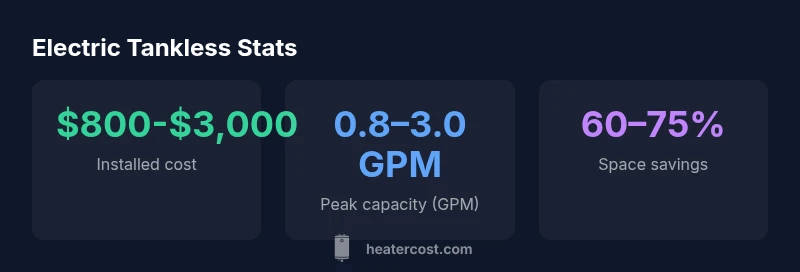
| Installation cost range | $800-$3,000 | $500-$2,000 per tank + install |
| Lifespan | 12-20 years | 8-12 years |
Got Questions?
Do electric tankless water heaters require a new electrical panel or service upgrade?
In many cases, yes. Depending on the unit’s capacity and your home's existing electrical service, you may need dedicated circuits or a panel upgrade to safely support the system. A licensed electrician can assess service upgrades and wiring requirements.
Most installations need some electrical work or a panel upgrade to handle the load.
How many fixtures can a single electric tankless heater supply at once?
Capacity varies by model and inlet water temperature. A unit rated for a higher GPM can support multiple simultaneous uses, but you may need more than one unit for large households or cold climates.
It depends on the unit’s flow rating and your hot-water demands.
Are electric tankless heaters effective in cold climates?
Cold climates reduce the achievable temperature rise at a given flow, which can limit max output. In such regions, multiple units or higher-capacity models are often needed to meet simultaneous demands.
Cold weather can reduce performance; plan for adequate capacity.
What maintenance is required for electric tankless water heaters?
Regular descaling in hard water areas and periodic inspection of electrical connections and filters are recommended. Most maintenance tasks are simple and can be done during routine home upkeep.
Keep it clean and check connections to stay efficient.
What is a realistic payback period for switching to an electric tankless heater?
Payback varies with usage, energy prices, and sizing. A typical range is several years, but exact timing depends on your hot-water needs and installation costs.
Payback depends on how much hot water you use and the install price.
“Electric tankless water heaters offer efficient, on-demand hot water, but performance hinges on correct sizing and proper electrical capacity. Poor sizing or underpowered service can negate energy savings.”
The Essentials
- Size to your peak concurrent use for best results
- Electric tankless heaters save space but may need electrical upgrades
- Expect installation to include panel work and permits
- Maintenance is simpler but plan for descaling in hard water
- Long-term savings depend on usage patterns and sizing