Bosch Tankless Water Heater Guide: Costs, Savings & Install Tips
Explore costs, savings, sizing, venting, and maintenance for Bosch tankless water heaters. This Heater Cost guide helps homeowners, renters, and property managers compare options, estimate payback, and plan installations with confidence.


bosch tankless water heater technology delivers hot water on demand with high energy efficiency, avoiding standby losses. This quick answer previews typical costs, installation considerations, and maintenance needs for Bosch tankless models, helping homeowners, renters, and property managers plan a smarter, more reliable heating solution.
Why Bosch Tankless Water Heaters Matter for Homeowners
bosch tankless water heater technology offers on-demand hot water with no storage tank, which can translate to space savings and reduced standby heat loss. For households with fluctuating hot-water demand, it can deliver consistent comfort without the bulk of a traditional tank. According to Heater Cost, Bosch’s tankless options emphasize compact installation and reliability, which makes them appealing for apartments, small homes, or renovations where square footage is at a premium. The Heater Cost team found that, when properly sized and installed, these units can support simultaneous uses like showers and laundry without the classic cold-water sandwich you sometimes experience with oversized tanks. However, upfront costs and compatibility requirements should be weighed against projected long-term savings and comfort. In practice, homeowners should begin with an occupancy and usage assessment, then compare Bosch tankless options to other high-efficiency models to determine the best fit for their cooling and heating loads.
In the real world, space planning matters. The compact footprint of a Bosch unit can free up utility closet real estate, enable better cabinet configuration, or allow more room for storage and appliances. Additionally, quiet operation is a common benefit touted by many installers, reducing nuisance inside living spaces. The discussion below uses a cost-focused lens to help readers decide whether a Bosch tankless solution aligns with their energy goals and budget.
How Bosch Tankless Water Heaters Work
At its core, a Bosch tankless water heater heats water on demand as it flows through a heat exchanger. When a hot-water tap is opened, the unit activates and begins to heat the incoming cold water to the desired temperature. Unlike conventional storage tanks, there is little to no standby heat loss, which often translates to improved overall energy efficiency. Bosch models typically incorporate modern electronic controls, temperature sensors, and software to optimize combustion or electric heating stages, depending on the fuel type. For homeowners, understanding these principles helps in selecting a unit with the right capacity and response time for their household size and peak demand. The key takeaway from Heater Cost analysis is that sizing and venting compatibility drive performance nearly as much as the heater’s insulation and internal heat exchanger design.
Sizing and Installation Considerations: Getting It Right
Sizing a Bosch tankless heater properly is critical to achieving the promised on-demand performance. Under-sizing can lead to cold-water bursts during high-demand periods, while over-sizing may raise upfront costs without delivering proportional benefits. Factors to weigh include peak simultaneous usage (e.g., two showers plus a dishwasher), inlet water temperature in the climate, and whether you’re replacing a tank or adding a new line to a multi-bath home. Venting requirements for gas models and electrical service for electric units play major roles in installation complexity and cost. In many jurisdictions, vent routing, gas-line sizing, and electrical upgrades must comply with code requirements and may require permits. Heater Cost’s research indicates that planning ahead with a licensed professional can prevent costly retrofits later and help ensure the system meets local energy codes and performance expectations.
Energy Costs and Savings Scenarios: What to Expect
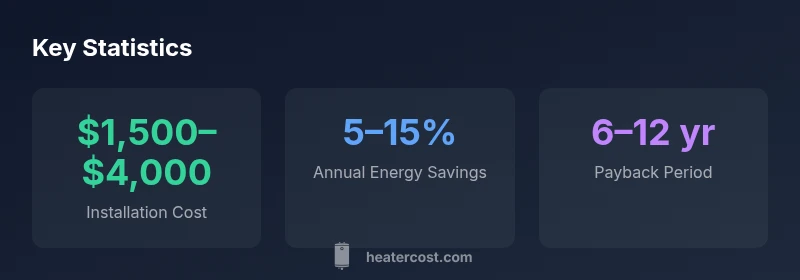
The energy savings from a Bosch tankless system depend on usage patterns, fuel type, and climate. In general, on-demand heating reduces standby losses that are common with storage tanks, particularly in drafty spaces or larger homes. Homeowners who run multiple hot-water outlets in the morning or evening can see more pronounced savings, while households with low hot-water demand may experience modest energy reductions. It’s important to compare unit efficiency ratings, installation costs, and local utility rates to estimate payback. Heater Cost’s analysis emphasizes that the break-even point often improves where natural gas prices remain stable, venting costs are moderate, and the household replaces an aging storage tank with a high-efficiency model.
Maintenance, Longevity, and Common Issues
Regular maintenance extends the life of a Bosch tankless heater. Annual professional inspections, occasional flushing to remove mineral buildup, and periodic filter checks help maintain efficiency and prevent scale formation. Water quality matters: in hard-water areas, more frequent descaling and a higher-quality filtration approach may be warranted. The absence of a tank means fewer components that can fail due to corrosion, but the heat exchanger and burners still require clean operation and precise control. In the field, technicians report that keeping inlet water temperature within recommended ranges, ensuring proper venting, and following Bosch-recommended service intervals are among the most important steps for maximizing longevity. A well-maintained unit often outlasts many traditional storage-tank systems in reliability and performance.
Bosch vs Traditional Tank Systems: A Practical Comparison
When you compare a Bosch tankless system with a traditional tank, you’re weighing on-demand delivery against stored hot water. Tankless systems generally offer space savings, reduced energy waste, and potentially longer service life with proper maintenance. Traditional tanks provide a straightforward installation and familiar maintenance patterns but incur standby heat losses and a finite tank lifespan. For homes with high hot-water draws or tight spaces, Bosch’s design can be advantageous, provided the installation is correctly sized and vented. The practical takeaway from Heater Cost’s review is to treat the decision as a holistic cost-benefit analysis: upfront investment, long-term energy costs, and the reliability of hot water delivery under peak demand. A thoughtful comparison helps homeowners avoid overpaying for capacity they won’t use and underinvesting in a unit that can’t meet daily needs.
Real-World Scenarios and Case Studies
In several residential retrofit projects, homeowners reported notable gains after replacing aging storage tanks with Bosch tankless units. In one three-bath home, the installation enabled simultaneous hot water use without noticeable temperature fluctuations, while the compact unit freed up space in a crowded utility closet. In another scenario, a family with high morning demand benefited from a correctly sized unit that maintained stable temperatures during showers and hair-drying routines. The common thread across these stories is the importance of accurate sizing, professional installation, and a maintenance cadence that aligns with water quality. While every home is different, the overarching lesson is that the true value of a Bosch tankless system emerges from a well-planned design, precise sizing, and proactive upkeep.
Comparison: Bosch Tankless vs Traditional Tank Systems
| Category | Bosch Tankless | Traditional Tank | Notes |
|---|---|---|---|
| Upfront Cost | Higher upfront | Lower upfront | Installation and venting complexity impact cost |
| Energy Efficiency | High to very high | Medium | Standby losses in tanks reduce efficiency |
| Hot Water Delivery | On-demand, continuous | Stored hot water | Delivery depends on flow and tank size |
| Maintenance | Annual service recommended | Less frequent basic service | Tanks may require sediment management |
Got Questions?
What is a Bosch tankless water heater and how does it work?
A Bosch tankless water heater heats water on demand as it flows through a compact heat exchanger, delivering hot water when you need it without keeping a tank full of water at temperature. This on-demand approach reduces standby losses and can improve overall system efficiency.
Bosch tankless heaters heat water only when you need it, which saves energy and space.
Are Bosch tankless water heaters gas or electric?
Bosch offers both gas-fired and electric tankless options. The choice depends on your fuel availability, energy costs, and existing home infrastructure. Gas models typically require venting, while electric models rely on electrical service capacity.
There are gas and electric Bosch tankless options; the best choice depends on your home’s setup.
What factors influence the cost of installation?
Installation costs vary with venting requirements, gas-line sizing or electrical upgrades, space constraints, and whether you’re replacing a tank or adding a new line. Local codes and permit needs can also affect total cost.
Venting, gas or electrical upgrades, and local permits mainly drive installation costs.
Do Bosch tankless water heaters require venting?
Gas models generally require venting to exhaust combustion byproducts, while electric models typically do not. Always verify local code requirements and ensure proper venting for safety and efficiency.
Gas units usually need venting; electric units often do not, but check local codes.
What maintenance does a Bosch tankless water heater need?
Annual professional inspection is recommended, along with periodic descaling or flushing to remove mineral buildup and routine filter checks. Hard-water areas may require more frequent service.
Keep it clean and serviced yearly for best performance.
How long do Bosch tankless water heaters last?
With proper maintenance, tankless units typically outlast traditional tanks, though lifespan varies by usage, water quality, and maintenance cadence. Address mineral buildup promptly to maximize longevity.
With proper care, they last many years longer than traditional tanks.
“Bosch tankless water heaters offer reliable on-demand hot water with compact installation, making them a smart choice for space-constrained homes.”
The Essentials
- Assess hot-water needs before sizing Bosch tankless units.
- Expect higher upfront costs but long-term energy savings.
- Plan venting and electrical upgrades early in the process.
- Schedule annual maintenance to maximize longevity.
- Use Heater Cost guidance to compare with traditional tanks.