Where to Set Your Heater in Winter: A Practical Guide
Learn where to set your heater in winter to maximize comfort, efficiency, and safety. This step-by-step guide covers placement tips, safety considerations, and energy-saving strategies for electric, gas, and central heating systems.


By the end of this quick guide, you will know where to set a heater in winter to maximize comfort, minimize drafts, and save energy. Start by identifying high-traffic living zones, avoid blocking doors or vents, and maintain safe clearances from walls and furnishings. Then adjust placement and thermostat settings for even warmth.
Why proper heater placement matters
Where to set heater in winter determines not just comfort, but energy efficiency and safety across your home. Proper placement helps distribute warm air to the rooms you use most, reduces cold spots, and minimizes drafts that ride along doorways or windows. This guide focuses on practical, room-by-room considerations that work with electric, gas, or centralized heating systems. According to Heater Cost, the right placement can boost perceived warmth while keeping energy bills in check by avoiding wasted heat in unused corners. Think in terms of heat zones, airflow patterns, and safe clearances rather than a single fixed spot. If you’re unsure where to set heater in winter, start by mapping high-traffic areas, noting doors, windows, and major furniture blocks. With a clear map, you can choose placements that maximize comfort, support even temperatures, and reduce the need to crank the thermostat.
Key factors that influence placement
There are several factors to weigh when deciding heater placement. Room size and ceiling height influence how quickly heat spreads and where cold spots are most likely to form. Airflow is essential—warm air should circulate rather than rise straight to the ceiling or get trapped behind furniture. Drafts from windows or doors pull heat away, so opening angles and wind directions matter. The number and type of heat sources also matter: a central furnace, baseboard heat, or a portable heater each has different sweet spots for effective warming. Thermostat location matters too; a thermostat placed near a heater might cause shorter cycles and uneven comfort. Based on Heater Cost research, spaces with open sightlines and fewer obstructions typically show more even temperatures and lower energy use. Finally, safety clearances: keep heaters away from curtains, upholstery, and flammable storage, and never block returns or intakes.
Placement patterns for different heater types
Different heater types have different ideal placements. Central heating—whether gas or electric—usually relies on ducts or radiators positioned to distribute warm air evenly. For these systems, ensure vents aren’t blocked by furniture and that zigzag routes aren’t creating cold pockets. Wall-mounted or baseboard electric heaters perform best along exterior walls or in open living spaces where heat can flow without being trapped. Portable space heaters should always be in open, unobstructed areas and kept away from water, doors, or fabric. Gas or propane heaters require proper ventilation and CO detectors. In all cases, avoid placing heaters behind doors or in corners where heat can accumulate and cause overheating or drafts. The guiding principle is to heat the zones you use most while maintaining clear air pathways for safety and efficiency.
A practical space-evaluation approach
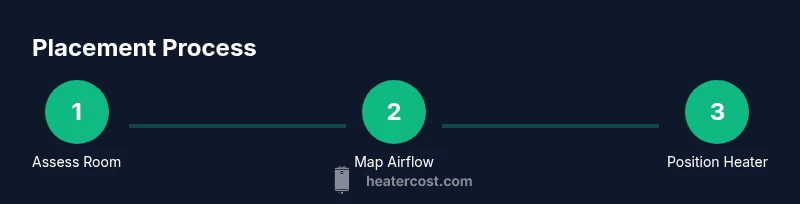
Evaluate and position: a practical approach. Start with a simple room map: mark doors, windows, furniture, and existing heat sources. This helps you visualize airflow and identify the warm zones you want to cover first. Then consider the highest-traffic areas—the living room, study, or bedroom cluster—and plan placements that heat those zones effectively. Avoid placing heaters in hallways or near air returns that can pull heat away from living spaces. Check clearance: ensure at least a few feet of space from walls and combustible items, and keep cords away from walkways. Finally, position the heater, turn it on, and observe heat movement for 15-20 minutes. If you notice persistent cold corners, a minor relocation may solve the issue without increasing energy use.
Safety and maintenance considerations
Safety should guide every placement decision. Maintain ample clearance from walls, furniture, bedding, and curtains. For portable units, keep them on stable surfaces and never run cords under rugs. If you’re using gas or kerosene heaters, ensure proper ventilation and install a CO detector near sleeping areas. Regular cleaning of filters and vents helps maintain airflow and efficiency. Schedule annual inspections for central heating systems to catch issues before cold seasons arrive. In all cases, never leave a heater unattended and follow the manufacturer’s guidelines for clearance and operation.
Authority sources and further reading
To deepen your understanding of safe, efficient heating, consult authoritative resources. The U.S. Department of Energy and the National Fire Protection Association provide guidelines on safe heater use and energy efficiency. For general environmental and health considerations, the Environmental Protection Agency offers consumer-friendly tips on heating best practices. These sources complement common-sense checks and your own room measurements. The following links are a good starting point: https://www.energy.gov/energysaver/home-heating-safety https://www.nfpa.org/Public-Education/Staying-safe/Safety-in-The-Home/Space-Heaters https://www.epa.gov/sustainability/space-heaters The Heater Cost team emphasizes using these resources alongside your home layout to optimize winter heating.
Tools & Materials
- Tape measure(To map room dimensions and distances to walls/vents)
- Notebook or digital notetaker(Record placements, drafts, and observations)
- Painter's tape(Mark proposed footprints and airflow paths without marking walls permanently)
- Level(Optional to ensure alignment for wall-mounted units)
- CO detector (for gas/kerosene heaters)(Essential if using gas-powered heaters; place near sleeping areas)
- Safety gloves(Optional when handling heaters during adjustments)
Steps
Estimated time: 30-45 minutes
- 1
Assess the space
Map room dimensions, doors, windows, and furniture. Identify which zones you use most—living room, home office, or bedrooms—and note existing heat sources.
Tip: Use painter’s tape to outline the footprint of the proposed heater and major airflow paths. - 2
Check drafts and obstructions
Look for cold drafts near windows or doors; relocate lightweight furniture that blocks air flow. Assess whether heat tends to pool in one corner.
Tip: Seal obvious gaps with weather stripping to reduce heat loss and improve efficiency. - 3
Choose initial placement
Position the heater in a high-traffic zone with good air circulation and away from direct drafts, doors that slam, or exposed cords.
Tip: Avoid placing heaters behind doors; aim for at least 3 feet of clearance from walls and combustibles. - 4
Ensure safe clearances
Verify there is ample space around the unit so air can move and surfaces won’t overheat. Keep rugs, curtains, and furniture clear of the heater’s intake and output.
Tip: Maintain recommended clearance per the device manual and local safety guidelines. - 5
Test air distribution
Turn the heater on and observe how warm air travels. If cold spots persist, nudge the unit a few inches or rotate direction to improve coverage.
Tip: Make small adjustments; large relocations waste energy and disrupt comfort. - 6
Fine-tune thermostat and vents
Set a comfortable baseline temperature and adjust vents or circulating fans to balance warmth across zones. Monitor energy use and tweak as needed.
Tip: Consistent thermostat settings prevent short-cycling and save energy.
Got Questions?
What is the safest distance between a heater and furniture?
Keep at least a few feet of clearance from furniture, curtains, and bedding. Follow the manufacturer’s guidance for minimum clearance.
Keep the heater several feet away from couches, curtains, and bedding for safety.
Where should I place a thermostat relative to heaters?
Place the thermostat away from direct heat sources and drafts to get an accurate room temperature reading.
Put the thermostat away from heaters to measure true room temperature.
Can I use a space heater in a closed room?
Yes, in a well-ventilated area with careful monitoring. Do not leave unattended and ensure air exchange.
Yes, but only in a ventilated space and never unattended.
Should I place heaters near windows?
Avoid direct placement in front of windows where cold drafts can bypass the unit. Position to promote airflow into the room.
Don’t put heaters directly in front of windows; let heat circulate into the room.
What maintenance is needed for winter heating?
Regularly clean vents and filters, test safety devices, and schedule professional inspections for central systems.
Clean vents, check safety devices, and have your system inspected regularly.
Watch Video
The Essentials
- Position heat where people spend time for even warmth
- Keep a safe clearance from combustibles and obstructions
- Test and adjust layout to prevent cold spots and energy waste
- Use thermostat strategies to maintain comfort and efficiency