How to Protect a Tankless Water Heater From Freezing
Learn practical, seasonal steps to prevent freezing in tankless water heaters. From insulation and temperature settings to winterization tips, this guide by Heater Cost helps homeowners keep hot water flowing during cold months.


Protecting a tankless water heater from freezing is essential to avoid costly damage and outages. This guide outlines practical, seasonal steps you can take—inspection, insulation, and safe operation adjustments—to minimize freeze risk. According to Heater Cost, start with a routine warm-up check, then apply targeted pipe insulation and a simple outdoor shutoff strategy when temperatures drop.
Understanding Freeze Risks for Tankless Water Heaters
Tankless water heaters are compact, efficient units that heat water on demand. They typically rely on a continuous water flow to keep internal components above freezing. When temperatures plummet and water flow slows or stops, frost can form on cold-water pipes and, in unheated spaces, the heat exchanger and condensate lines may be exposed to damaging ice. According to Heater Cost, the most common freeze scenarios occur in outdoor enclosures, uninsulated basements, and garages where ambient temperatures dip below freezing for extended periods. Recognizing these risk zones helps homeowners target the right protections and avoid costly repairs. A little planning now can prevent leaks, service calls, and lost hot water later in the season.
Climate Awareness and Installation Location
Before implementing any protections, assess your local climate and where your tankless unit is installed. If the heater sits in an unheated crawl space or an exterior wall cavity, the odds of freezing increase during sustained cold snaps. Heaters mounted indoors in dry, heated rooms generally face lower risk, but drafts and utility gaps can still chill exposed pipes. The Heater Cost team recommends mapping the shortest routes for water lines between the unit and fixtures, then prioritizing insulation for the most exposed segments. This upfront work saves time and money when the thermometer drops.
Insulation for Pipes and Access Points
Insulating cold-water supply lines and hot-water return lines is one of the most cost-effective freeze protections. Use foam pipe insulation sleeves or flexible foam wrap with foil tape to seal seams and connectors. For exposed sections in unheated spaces, consider a weatherproof pipe jacket or enclosure. Proper insulation reduces a heat loss rate and keeps pipes above freezing during nights or cold fronts. Remember to insulate any gaps around the heater cabinet and any nearby cold air vents. As Heater Cost analysis shows, a well-sealed insulation strategy yields the best balance of protection and energy efficiency.
Temperature Settings and Flow Management
Routinely, setting the water heater to a modestly higher temperature can help reduce the risk of frost on pipes by maintaining a safer surrounding temperature. A common target is around 120°F, which balances comfort and energy use. Do not drastically raise temperatures, as this can increase energy consumption and scald risk. When possible, keep hot-water draw distances short and ensure there is adequate water flow to prevent stagnation in cold periods. Small adjustments to flow and temperature can have outsized effects on freeze protection, especially in extended cold spells.
Supplemental Heating Options and Safe Additions
In some climates, additional heating methods are warranted. Self-regulating heat tape can be applied to exposed pipes inside unheated spaces, with a dedicated power source and proper clearance from flammable materials. A small space heater should only be used if it is rated for indoor use and placed away from combustibles, never near the tankless unit or its vent. The goal is to provide a controlled, localized warm zone around the pipes without creating fire hazards. Heaters and tapes should be installed following the manufacturer’s instructions and local codes.
Seasonal Maintenance Checklists and Routine Inspections
Create a winter-prep checklist that includes inspecting insulation integrity, testing heat tape operation, and verifying that intake vents and exhaust paths remain clear. Schedule a pre-winter inspection and a mid-winter check to verify that temperatures remain stable. Document any weather-related changes in the installation area, such as new drafts or moisture buildup. Regular checks, even during milder spells, help catch emerging problems before they become failures.
Winterization for Extended Absences and Extreme Cold
If you will be away for an extended period during winter, consider a formal winterization plan. Shut off the primary water supply to reduce risk from potential pipe bursts, then drain isolated sections such as outdoor lines and any stagnant pockets. Do not turn off the heater if you need it for comfort; instead, reduce its energy consumption and ensure the space remains above freezing. For tenants and property managers, coordinating with building management to ensure common areas stay heated can prevent shared-system freezes.
Safety, Codes, and When to Call a Pro
Always follow local building codes and the tankless heater manufacturer’s guidelines. If you notice frost buildup, unusual noises, leaks, or inconsistent hot water output, contact a licensed technician. Electrical components near water lines require careful handling; do not modify circuits beyond your level of training. The Heater Cost team emphasizes safety first: when in doubt, hire a professional to assess and implement the proper freeze-protection measures.
Common Mistakes That Increase Freeze Risk and How to Avoid Them
Avoid common errors like relying on a single piece of insulation, neglecting to seal air gaps, and ignoring outdoor pipes altogether. Do not assume that a heater in a heated space is immune to freezing—drafts can chill areas unexpectedly. Avoid using temporary cables or extension cords for heat tape; always use a rated outlet and keep connections dry. Following a deliberate, well-planned approach reduces risk and helps preserve your unit’s longevity.
A Practical Quick-Start Freeze-Protection Plan
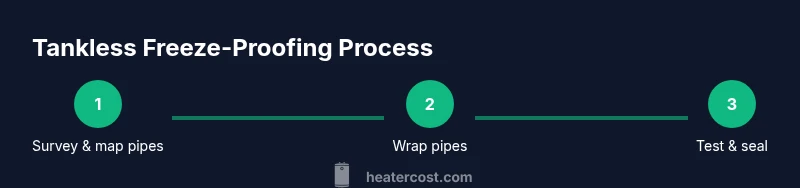
For homeowners in a rush, start with a 4-step plan: map exposed lines, wrap pipes with insulation, install heat tape on vulnerable segments, and set the water heater to a safe morning temperature. After implementing, run hot water for several minutes to confirm proper flow. This plan gives you immediate protection while you finalize a full seasonal maintenance routine.
Tools & Materials
- Foam pipe insulation sleeves(Pre-cut or flexible; cover both cold and hot lines; seal seams.)
- Self-regulating heat tape(Rated for indoor/outdoor use; follow manufacturer instructions.)
- Weatherproof pipe jacket or enclosure(Use for exposed segments in unheated spaces.)
- Silicone caulk or caulk-like sealant(Seal gaps around insulation to prevent drafts.)
- Zip ties and foil tape(Secure insulation and heat tape without damaging surfaces.)
- Digital thermometer or temperature gauge(Monitor ambient and pipe temperatures during cold spells.)
Steps
Estimated time: 60-90 minutes
- 1
Survey and map exposed pipes
Walk the system and identify all pipes that enter or leave the tankless unit, noting which segments run through unheated spaces or exterior walls. This step establishes the protection priorities and prevents missed vulnerabilities.
Tip: Mark risk zones with removable tape or stickers for easy reference. - 2
Gather materials and tools
Collect insulation wraps, heat tape, sealant, and mounting hardware before you start. Having everything on hand reduces the chance of leaving a vulnerable section exposed mid-project.
Tip: Check that heat tape is rated for the temperature range you expect. - 3
Install pipe insulation on cold and hot lines
Slip insulation sleeves over all cold-water supply lines and hot-water return lines. Seal seams with foil tape to prevent air leaks and ensure a snug fit.
Tip: Test fit first; trim pieces to avoid gaps that could channel cold air. - 4
Apply heat tape to exposed sections
Wrap heat tape along the length of exposed runs, following the manufacturer’s instructions. Ensure the tape covers the full length of the vulnerable area and keeps power connections dry.
Tip: Do not overlap heat tape; space segments as directed to avoid overheating. - 5
Seal openings and protect the heater cabinet area
Caulk gaps around access panels and seal the cabinet or alcove that houses the unit to minimize drafts. Keep the area ventilated as required by the unit’s installation manual.
Tip: Keep clearance around vents clear for safe operation. - 6
Set safe heater temperature and monitor
Aim for a steady operating temperature around 120°F, which supports typical use while reducing energy waste. Verify there is adequate flow of hot water during a test run.
Tip: Avoid setting the temperature too high, which can raise energy costs. - 7
Create a weather-protected environment for outdoors
If the unit or lines are outdoors, install a weatherproof enclosure and seal any maintenance openings. Ensure the enclosure does not trap moisture or cause overheating.
Tip: Check the enclosure for cracks or gaps after heavy snows. - 8
Winterize for extended absences
If you’ll be away, consider shutting off the water supply and draining exposed lines to prevent freezing. Leave the heater on a minimal, continuous heat setting if necessary to avoid completely cold conditions.
Tip: Consult local codes or a plumber before altering a building’s water system. - 9
Test the system post-installation
Run hot water fixtures to confirm consistent flow and pressure. Listen for unusual noises, check for leaks, and ensure heat tape connections remain dry.
Tip: Document test results for future winter inspections. - 10
Schedule ongoing checks during cold spells
Plan periodic inspections during the winter—especially after temperature dips or storms—to ensure all protections remain intact.
Tip: Keep a winter-protection calendar and set reminders.
Got Questions?
Can a tankless water heater freeze?
Yes. In freezing temperatures, frost can form on pipes and components, potentially damaging the unit and interrupting hot water flow. Proper insulation and proactive winterization reduce this risk.
Yes. Freezing can cause damage if pipes freeze or components crack, so insulation and winter prep help prevent problems.
What temperature should I set the heater to during winter?
Aim for about 120 degrees Fahrenheit for frequent use. This provides enough heat for comfort while keeping energy use reasonable and reducing frost risk in exposed areas.
Set around 120 degrees Fahrenheit for winter; it balances safety and energy use.
Do I need to drain lines if I’m leaving the home for an extended period?
If you’ll be away for a while, consider draining outdoor or unheated lines and shutting off the main water supply to prevent freezing. Follow local codes and manufacturer guidance.
If you’re leaving, drain vulnerable lines and shut the main supply to prevent freezing.
Is heat tape safe for tankless water heaters?
Heat tape is generally safe when used as directed and rated for the environment. Do not install it on damaged insulation and avoid moist or exposed outlets without proper enclosure.
Heat tape is safe when installed per the manual and kept away from moisture and damaged insulation.
How often should I inspect and maintain for freezing protection?
Inspect protections at least once per season and after major temperature swings or storms. Regular checks help catch wear or damage before a freeze occurs.
Check protections each season and after big cold snaps to catch issues early.
What common mistakes increase freeze risk?
Common mistakes include skipping insulation, neglecting air gaps, and underestimating outdoor exposure. Correcting these reduces risk and extends unit life.
Common mistakes are skipping insulation and ignoring drafts; fix these to lower freeze risk.
Watch Video
The Essentials
- Insulate exposed pipes to reduce frost risk
- Balance temperature settings with energy efficiency
- Create a practical winterization plan for absences
- Safety first: follow codes and avoid DIY electrical risks
- Heater Cost recommends proactive prevention over reactive repairs