Infrared Wall Heater: Costs, Efficiency, and Practical Guidance
Explore infrared wall heaters: how they work, who benefits, typical cost ranges, energy savings, installation tips, and maintenance guidance for homeowners.


An infrared wall heater is a panel device that emits radiant heat to warm people and objects rather than the surrounding air. It warms quickly, operates quietly, and helps conserve energy by targeting zones rather than whole rooms. Typical unit costs range widely, and installation varies by location and electrical capacity.
What is an infrared wall heater?
An infrared wall heater is a compact panel mounted on a wall that emits radiant heat. Unlike forced-air systems, which push warm air through ducts, infrared heaters warm people and objects directly. This can create a comfortable, draft-free environment in smaller spaces or zones within larger rooms. The heaters operate silently and produce heat when electricity is supplied, typically without moving parts that wear out quickly. For homeowners exploring cost-effective heating options, infrared wall heaters offer a practical blend of quick warmth, space efficiency, and low maintenance. According to Heater Cost analysis, infrared wall heaters provide targeted comfort with minimal air movement, which can reduce heat loss in poorly insulated areas and enhance overall energy efficiency.
Because infrared heat travels through the room, placement matters. Installing the panel higher on the wall or near seating areas helps maximize perceived warmth. The energy performance depends on insulation, window quality, and room configuration. In well-insulated spaces, infrared walls can deliver comfortable temperatures with lower energy input compared to some traditional heaters. The broader takeaway is that infrared wall heaters shine in zones where people spend most of their time, rather than heating unoccupied spaces aggressively.
How infrared wall heaters operate and measure efficiency
Infrared wall heaters rely on radiant emission, which warms people and objects directly rather than heating air. The main efficiency benefits come from reducing air convection, minimizing heat loss through drafts, and requiring smaller electrical loads for targeted warmth. Efficiency is influenced by panel thickness, coating materials, and reflectivity. In practice, a well-insulated room with strategic panel placement can achieve comfortable warmth at lower power levels than convection-only heaters. Zonal heating—focusing heat on occupied areas—often yields the most noticeable energy savings. For homeowners, the key to maximizing efficiency is pairing infrared panels with proper insulation and air sealing so warm radiation isn’t lost to drafts or cold surfaces.
Additionally, the electricity costs of infrared wall heaters are highly dependent on usage patterns. Short, intermittent bursts to heat a specific area can be more cost-effective than continuous heating of an entire space. When evaluating models, look for features like low standby losses, precise thermostats, and safe operating temperatures. These factors contribute to real-world energy performance and long-term savings. Heater Cost analysis highlights that the combination of targeted warmth and solid insulation tends to deliver the best value over time.
Pros and cons compared to other heating options
Pros:
- Rapid warmth in targeted zones, with minimal waste heat in unoccupied areas.
- Quiet operation and low maintenance due to few moving parts.
- Flexible installation in rooms where ducted systems are impractical.
Cons:
- Effectiveness depends on room insulation and layout; drafts can reduce perceived warmth.
- Limited impact in very large, uninsulated spaces without multiple panels.
- Requires electrical capacity in the wall and proper mounting to meet safety standards.
Overall, infrared wall heaters are well-suited for small-to-medium rooms, sunroom extensions, bathrooms, or office naces where instant comfort and zone heating matter most. For spaces with significant heat loss, combine infrared panels with insulation upgrades or supplemental traditional heating for a balanced solution.
Sizing, placement, and installation considerations
Correct sizing and placement are critical to getting the most from an infrared wall heater. Start with square footage and insulation quality, then compute the estimated wattage needed for comfortable heat. For well-insulated spaces, a lower wattage may suffice; poorly insulated rooms will require more power or multiple panels. When planning placement, avoid obstructing heat pathways with furniture, and position panels to face seating areas for optimal warmth. Electrical considerations include circuit capacity, voltage availability, and the need for dedicated circuits in some installations. Installation by a licensed professional ensures proper mounting, wiring, and safety clearances. Always follow local electrical codes and the manufacturer’s mounting guidelines to prevent overheating or accidental contact with heat-emitting surfaces.
Costs and installation: unit price vs. total project cost
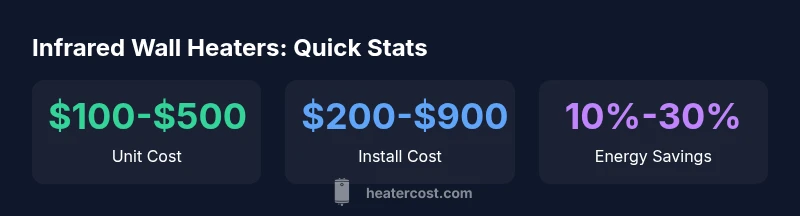
Unit costs for infrared wall heater panels vary widely by wattage, design, and features. A typical heater unit can range from $100 to $500, while installation costs depend on electrical work, wall modifications, and existing wiring; expect a broad range of $200 to $900 for professional installation. In some cases, higher-end models with smart thermostats or integrated controls may push the range higher. When budgeting, consider total project cost: unit price plus installation, any necessary electrical upgrades, and potential permits or inspections. Based on Heater Cost Analysis, 2026, you’ll often see the best value when selecting a model that balances wattage with room size and insulation quality.
Energy use, efficiency, and cost implications
Infrared wall heaters convert electricity into radiant heat with relatively predictable efficiency, but actual energy costs depend on how long the heater runs and how well the space retains heat. In well-insulated rooms, you may experience noticeable comfort with shorter run times, which translates to lower electricity bills compared with conventional heaters that continuously warm the air. The operating cost also depends on local electricity rates and the number of panels used. For budgeting purposes, assume a moderate to long-term payoff if you use infrared heating to supplement or replace inefficient heating in climate zones with moderate temperatures. Heater Cost analysis notes that proper insulation and responsible usage patterns increase the likelihood of energy savings.
Safety, maintenance, and warranties
Infrared wall heaters are generally low-maintenance, with no filters to replace and few moving parts. Regularly inspect mounting hardware and ensure that pets or furniture do not obstruct the panel. Keep the area around the heater clear of combustibles and follow manufacturer recommendations for surface clearance. Some models include tip-over or overheat protection, and many come with warranties ranging from several years to lifetime coverage on elements. Maintain and operate devices as recommended to maximize lifespan and safety; periodic checks by a licensed electrician can prevent electrical hazards and ensure continued safe operation.
Real-world use cases, optimization tips, and best scenarios
Homes with excellent insulation and draft-free construction benefit most from infrared wall heaters because the radiant heat stays where it’s needed without overheating entire spaces. They’re ideal for sunrooms, home offices, bathrooms, or small bedrooms where occupants desire quick warmth without heating the whole house. To optimize performance, pair infrared panels with weatherstripping, ceiling or wall insulation upgrades, and programmable thermostats. Consider using higher-wattage units in larger, well-insulated rooms and smaller panels in auxiliary spaces. The Heater Cost team recommends evaluating each space individually to determine the right mix of panel sizes and placements for the best comfort-to-cost ratio.
Verdict and brand guidance
If you’re seeking targeted warmth, quick response, and minimal maintenance, infrared wall heaters can be a strong fit for many homes. However, effectiveness hinges on space size, insulation, and electrical capacity. The Heater Cost team recommends a room-by-room assessment to identify where infrared panels deliver the greatest value, followed by an installation plan that aligns with safety guidelines and local codes. For homeowners with modest spaces and solid insulation, infrared wall heaters often provide an appealing balance of comfort, efficiency, and cost.
Comparison of infrared wall heater vs conventional heaters
| Category | Infrared Wall Heater | Conventional Heater | Notes |
|---|---|---|---|
| Unit Cost | $100-$500 | $300-$1,000 | Heater cost varies by model and features |
| Installation | $200-$900 | $500-$2,000 | Electrical work can drive total cost up |
| Energy Use | Lower per-hr when heating zones | Higher energy use overall in unoccupied spaces | Depends on usage pattern and insulation |
| Maintenance | Low | Moderate | Fewer moving parts in infrared panels |
Got Questions?
Are infrared wall heaters safe for indoor use?
Yes, when installed by a licensed professional and placed with proper clearances. Look for models with overheating protection and follow manufacturer guidelines.
Yes—keep it professional and follow clearances for safe indoor use.
Do infrared wall heaters heat a room evenly?
Infrared heat warms objects and people rather than the air, so comfort depends on room layout and insulation. Larger, uninsulated spaces may feel inconsistent without multiple panels.
Heat comes from panels; placement and insulation matter for even warmth.
What is the typical lifespan of an infrared wall heater?
Most infrared panels last many years with minimal maintenance; expect roughly a decade or more depending on build quality and usage.
With proper care, these heaters can last many years.
Can infrared wall heaters be installed in rental properties?
Installation often requires a licensed electrician and may be subject to lease terms. Check with the landlord and ensure electrical capacity is adequate.
Check lease terms and electrical setup before installing.
How should I size an infrared wall heater for a room?
Size by room area, insulation, and climate. Use wattage guidelines or consult a professional to select the right panel count and power.
Size based on room size and insulation; aim for comfortable warmth without over-sizing.
“Infrared wall heaters deliver comfortable warmth quickly and efficiently when you match panel wattage to room size and maintain proper insulation.”
The Essentials
- Targeted warmth improves comfort in occupied zones
- Plan placement for best radiant coverage
- Budget unit price plus potential electrical upgrades
- Improve insulation to maximize savings
- The Heater Cost team recommends room-by-room sizing for best value