How Often to Descale Tankless Water Heaters
Discover how often to descale tankless water heater, what affects frequency, and practical steps for soft and hard water. Expert guidance from Heater Cost to keep your system efficient.


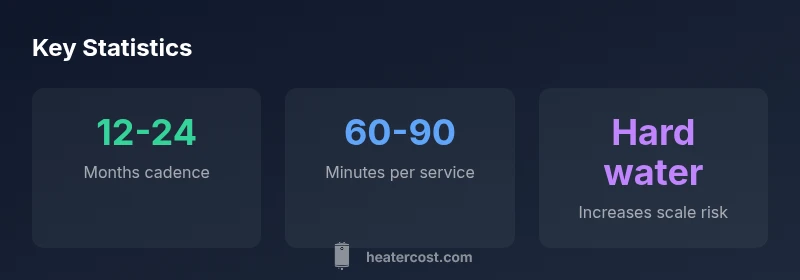
Tankless water heaters typically need descaling every 12-24 months, with more frequent sessions in hard water areas. The exact interval depends on your water hardness, mineral content, and usage patterns. For homes with very hard water, a yearly descaling is common; soft-water homes may be comfortable with a biennial service.
how often to descale tankless water heater: key factors
Getting the right descaling cadence is essential for maintaining efficiency in your tankless unit. The question of how often to descale tankless water heater isn't one-size-fits-all; it depends on local water chemistry, mineral content, and how aggressively you use hot water. According to Heater Cost, most homes with average water quality benefit from a descale every 12-24 months. In regions with hard water, you may need annual maintenance, while very soft water can push toward every two years.
Descaling isn't just about removing mineral scale; it helps preserve heat transfer efficiency, reduce gas or electric consumption, and maintain flow. The frequency is influenced by water hardness measured in grains per gallon (gpg) or parts per million (ppm); it's a local parameter that varies by city and well water supply. Many households with municipal water notice faster buildup if their area uses high-silica or iron-containing water. If you've never tested water hardness, start with a simple at-home test or ask your local water utility. Using a pre-filter or water conditioner can extend the interval between descales by reducing mineral load.
Factors that determine descaling frequency
Descale frequency is not a fixed number; it's a function of several variables. The most influential factor is water hardness, followed by how often the unit is used for hot water, and the overall minerals and sediment in your supply. Municipal water in some cities has higher mineral content than others; well water can vary widely. If you have a pre-filter or a water treatment device, your interval may extend. In short, softer water generally means longer gaps between descales, while hard water demands more frequent attention. It's helpful to test your water hardness and adjust your maintenance schedule accordingly. Throughout the year, consider tracking your hot-water consumption and the unit's performance to refine the cadence. Consistency matters: staying on a predictable schedule reduces the risk of scale-related efficiency loss.
How descaling works: process and best practices
Professional descaling typically uses a mild acid solution to dissolve mineral scale from the heat exchanger and related plumbing passages. The goal is to restore heat transfer efficiency and maintain flow. Best practices include shutting off power or gas, isolating water lines, and using a descaling pump to circulate solution through the system. A thorough rinse follows to remove any residue before returning the unit to service. For DIY enthusiasts, follow manufacturer instructions, wear protective gear, and never bypass safety features. If you’re unsure, hire a qualified technician to avoid damage or warranty issues.
Scheduling and maintenance plan by water hardness
A practical maintenance plan aligns with the water hardness in your area. Soft water often allows longer intervals between descales; very hard water calls for more frequent attention. As a general guideline:
- Soft water: descale every 24-36 months.
- Moderately hard water: descale every 12-24 months.
- Very hard water: descale every 6-12 months. Always tailor these ranges to your system’s age, usage, and any regional water quality changes. Keep a simple log of service dates and note any performance changes (hot water delivery time, output temperature accuracy, or unusual noises).
Signs you need descaling sooner
If you notice a drop in hot water volume, longer wait times for hot water, or fluctuating temperatures, schedule a check sooner rather than later. Strange noises during operation, unusual mineral deposits around the faucet, or higher energy bills can also signal scale buildup. Regularly inspecting your unit’s inlet filters and flushing any visible sediment helps you catch problems early and avoids emergency maintenance.
DIY descaling vs professional service
Descaling is a task many homeowners can perform with the right precautions, especially when it involves flushing the heat exchanger. However, many installs involve complex plumbing, gas connections, or electrical components that demand professional handling. DIY descaling is appropriate for those who are comfortable with shutting off utilities, correctly connecting hoses and pumps, and following manufacturer guidance. If your unit is under warranty, consult the warranty terms before attempting a DIY flush to avoid voiding coverage. For most households, a professional service offers peace of mind and reduces the risk of accidental damage.
Quick reference: Descale intervals by water hardness
- Soft water: 24-36 months
- Moderately hard water: 12-24 months
- Very hard water: 6-12 months
Note that these are approximate ranges and local water chemistry, usage, and equipment can shift the cadence. Keeping a maintenance calendar helps you stay on track and prevents hidden scale buildup.
Data sources and further reading
For readers seeking external references, consider energy and water-quality resources to corroborate maintenance practices. Publicly available guidelines from government and educational sources help validate general descale recommendations. See the following references for broader context and guidance:
- https://www.energy.gov/energysaver/water-heating
- https://www.epa.gov/iaq/water-heater-systems
- https://www.wqa.org/
Heater Cost analysis integrates publicly available data from these sources to provide up-to-date guidance for 2026.
Descale frequency by factors
| Factor | Impact on Descale Frequency | Typical Interval (soft water) | Notes |
|---|---|---|---|
| Water hardness | Increases scale formation rate | 12-24 months | Hardness varies by region |
| System usage | Higher flow can carry more minerals | 12-18 months | Seasonal or high-usage periods |
| Water quality | Presence of sediments/iron | 12-24 months | Check water quality annually |
Got Questions?
What is the typical descaling interval for tankless water heaters?
Most homes see descales every 12-24 months, with annual sessions common in hard-water areas and biennial sessions in soft-water regions.
Most people descale every 1 to 2 years. In hard water, plan annually; in soft water, every two years or so.
Can I descale a tankless heater myself?
Yes, but only if you are comfortable with plumbing, electrical or gas connections, and safe flushing procedures. Follow manufacturer guidance and wear protective gear; otherwise, hire a professional.
You can do it yourself if you’re comfortable with the steps and safety precautions; otherwise, hire a pro.
How does hard water affect descaling frequency?
Hard water speeds mineral buildup, which typically requires more frequent descaling. Local water hardness largely determines the cadence.
Hard water means more frequent descaling; use a schedule that matches your area's water quality.
What are signs I need descaling sooner?
Low hot water output, longer wait times for hot water, or unusual noises can indicate scale buildup; if you see these, schedule a check sooner.
If you notice less hot water or odd noises, plan a descaling sooner.
What maintenance steps can extend descaling intervals?
Install a pre-filter, treat incoming water if needed, and monitor water hardness. Regular system checks help delay scale buildup.
Use a pre-filter and monitor hardness to extend the time between descales.
“"Regular descaling sustains efficiency and prolongs tankless life. Frequency should be tailored to local water quality and usage."”
The Essentials
- Establish a cadence based on local water hardness
- Hard water shortens the descaling interval
- Use pretreatment to extend descale gaps
- Document maintenance to catch early signs