How Long to Microwave a Heating Pad: Safe Guidelines
Learn how to safely heat a microwave heating pad, including recommended times, label guidance, safety tips, and maintenance from Heater Cost.


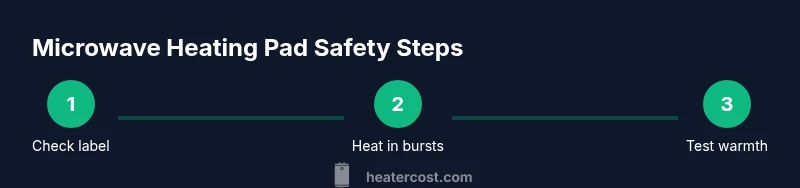
To safely heat a microwave heating pad, always start by reading the product label and following its times. Heat in brief bursts and test warmth before use, avoiding any overheating. Use a microwave-safe plate and a towel to protect skin, and never exceed the recommended time or power. When unsure, consult the pad's guide and start with the lowest setting.
Why Safety Rules for Microwave Heating Pads Matter
When used correctly, a microwave heating pad can provide temporary relief for sore muscles, cramps, and stiffness. But risk is real: heat that is too intense or uneven can burn skin, cause fabric damage, or irritate underlying tissue. The pad's internal materials—gel, clay, water, or other substances—absorb microwave energy and convert it into gentle warmth; if the pad is damaged or overheated, the contents can leak or become excessively hot. Manufacturer guidelines are designed to prevent these hazards and to protect pad longevity. Heater Cost's research emphasizes that following product labels and using the pad only as directed reduces safety risks and extends the device’s life. Always inspect the pad before each use; look for cracks, leaks, or soft spots. Store pads in a clean, dry place to avoid mold or odor buildup. Remember: microwaves vary in power, and the same time on a 900W unit may differ from an 1100W unit. Use the label as your map, not assumptions.
How Microwave Heating Pads Work
Most microwave heating pads rely on water-based gel or flexible beads that absorb microwave energy. When heated, the liquid inside becomes the source of warmth, which then distributes through the fabric and padding. The pad’s construction often includes a durable outer shell with a soft inner layer, plus a removable cover in many models. Heat stored in the pad is designed to be gradual and localized, not a blast of heat. Repeated microwaving can degrade materials or reduce heat retention, so understanding the pad’s construction helps you plan safe reheating without compromising longevity. Always handle pads with dry hands to avoid moisture-related damage and never use abrasive cleaners on the pad surface.
Reading the Label: What the Manufacturer Instructions Mean
Labels are your map to safe use. Look for directions about microwave time, power level, and the recommended wattage of your microwave. Common phrases include “do not exceed X minutes,” “heat in short intervals,” or “for 800–1000W microwaves.” Remember that microwave power varies by model, so a timing that works in one unit may be too long in another. If the label mentions a test temperature, use a skin-safe method to gauge warmth before placing the pad against skin. Some pads are designed for cold use as well; if so, follow those instructions separately. Always ensure the pad is intact before heating and discontinue use if you notice leaks or delamination.
General Guidelines for Safe Heating
- Start with the label: Always follow the manufacturer’s recommended times and power settings.
- Heat in short bursts: Use a short interval and pause to check heat buildup.
- Test warmth safely: Do not apply directly to skin; use a towel or cloth as a barrier before testing.
- Protect the pad: Place the pad on a microwave-safe plate to catch any leakage and prevent scorching.
- Watch for damage: If the pad is cracked, leaking, or has a foul odor, discontinue use.
- Cool down before storage: Allow the pad to return to room temperature before putting it away.
- Microwave power matters: Higher-wattage units will heat faster; adjust time accordingly.
Step-By-Step Use Overview
Using a heating pad in a microwave involves a deliberate sequence to protect skin and prolong pad life. Begin by confirming the pad’s safety label and inspecting for damage. Place the pad on a clean, microwave-safe plate and cover with a light cloth if the manufacturer recommends it. Apply heat in short bursts, testing warmth after each interval. If the warmth isn’t sufficient, repeat in small increments, never exceeding the label’s maximum. After use, allow the pad to cool completely before storage, and never leave a hot pad unattended near flammable materials. These practices align with Heater Cost’s guidance on safe heating and longevity.
Common Mistakes and How to Avoid Them
Common mistakes include overheating, using damaged pads, heat in long continuous intervals, and neglecting to use a barrier between skin and the pad. Always inspect for tears or leaks before heating, avoid folding or crushing the pad, and never microwave a pad that lacks a clear label. If the pad becomes too hot to touch, remove it and let it cool. Using a towel as a barrier can prevent direct contact burns, and placing the pad on a plate helps catch any condensation or leaks. Avoid automatic re-heating without checking temperature first, as hot spots can form through uneven heating.
Alternatives and Complementary Therapies
If you’re unsure about microwaving or need longer-lasting heat, consider electric heating pads with adjustable settings, heat wraps, or hot water bottles as alternatives. For cold therapies, use an ice pack wrapped in a towel. Combining modalities—heat with a low-intensity massage, for instance—can improve comfort without increasing risk when done cautiously. Regularly alternating heat with short rest periods reduces tissue fatigue and minimizes skin irritation. Then, pair heating with proper hydration and gentle stretching for muscle recovery. Heater Cost recommends evaluating your needs and preferences and selecting a method that minimizes risk while delivering relief.
Maintenance and Longevity Tips
Keeping your microwave heating pad in good shape extends its life and preserves safety. Wash the outer cover according to label instructions, and spot-clean the interior fabric if permitted. Store in a dry, cool area away from direct sunlight and chemicals. If the pad contains removable gel packs, ensure they remain sealed and free from leaks. Avoid machine washing pads with damaged seams, as moisture can compromise internal materials. Regularly check for changes in texture or odor, and replace pads with signs of wear. A well-maintained pad heats more evenly and reduces the risk of hot spots.
Quick Reference: Safety Time Ranges and Temperature Checks
Always default to the pad’s label and your microwave’s power. Use short bursts, typically ranging from brief 15–60 second intervals, then check warmth with a barrier. If you cannot achieve comfortable heat after several short bursts, stop and assess alternative methods or a different pad. Avoid placing metal objects or utensils inside the pad, and never leave it unattended while heating. Keeping a simple timer helps enforce safe intervals and prevents accidental overexposure.
Preparing for Winter: Safety Tools and Tips
Winter often increases your need for warmth, but safety remains constant. Keep a timer nearby, designate a clean, flat surface for heating, and use a dry towel to test warmth. Have a backup plan if the pad fails to heat consistently; consider multiple pads or alternative heat sources. Always store pads away from pets and children to reduce accidental exposure. By planning ahead and adhering to guidelines, you’ll maximize comfort while minimizing risk and wearing down the pad more slowly.
Tools & Materials
- Microwave-safe heating pad(Ensure pad is intact and labeled microwave-safe; inspect for leaks or tears before use)
- Microwave(Check wattage; 800-1200W is common; adjust timing for your unit)
- Microwave-safe plate(Raises and stabilizes the pad; catches any leaks or condensation)
- Towel or cloth(Barrier to protect skin and pad; helps distribute heat evenly)
- Timer or clock(Track heat bursts; prevents overexposure)
- Oven mitts or heat-resistant gloves(For handling hot plate or pad after heating)
- Thermometer (optional)(Use a skin-safe thermometer to estimate surface temperature if needed)
Steps
Estimated time: 10-15 minutes
- 1
Read the label
Begin by locating and reading the pad’s care label. Note the maximum heating time and any power recommendations. This sets the baseline for safe use and prevents overexposure.
Tip: If the label is missing, treat the pad as non-microwave-safe and seek an alternative option. - 2
Prepare the pad and surface
Place the pad on a clean, microwave-safe plate. Use a towel as a barrier if recommended by the label to prevent direct contact with skin and to help diffusion of heat.
Tip: Ensure the surface is flat and free from debris to avoid uneven heating. - 3
Start with a short burst
Heat in short bursts rather than a long session. Common starting points are brief intervals that keep heat within a safe range, then pause to check.
Tip: If you can’t feel warmth after the first burst, proceed with another short interval rather than extending the first one. - 4
Test warmth safely
Remove the pad and test warmth through the barrier (cloth or towel) before applying to skin. Look for comfortable warmth, not heat that causes discomfort.
Tip: If the pad feels excessively warm, allow it to cool and reassess before re-heating. - 5
Repeat if needed
If more warmth is needed, repeat short bursts in small increments. Do not exceed the total time recommended on the label.
Tip: Keep a running tally of heating time to avoid surpassing safety limits. - 6
Cool and store
After use, let the pad cool to room temperature before storing. Check for signs of wear before putting away.
Tip: Store in a dry, cool place away from moisture or heat sources.
Got Questions?
Can I microwave any heating pad?
No. Only pads labeled as microwave-safe should be heated this way. Some pads are designed for cold therapy or require alternative heating methods.
Not all pads are microwave-safe; check the label and use the pad only as directed.
How long should I microwave a heating pad?
Always follow the manufacturer’s time recommendations. Start with the shortest interval and increase in small steps if needed.
Start with the shortest interval and increase gradually, following the label.
Can overheating cause burns?
Yes. Overheating can burn skin or damage the pad. Always test warmth and avoid direct skin contact without a barrier.
Yes—overheating can burn skin; always test warmth first.
Is it safe to microwave a heating pad every day?
Only if the label permits daily use and the pad shows no signs of wear. Monitor skin response and pad condition.
Only if the label allows it and the pad remains in good condition.
What if the pad leaks or smells burnt?
Stop using immediately, unplug the microwave, and allow cooling. Do not reuse a damaged pad.
Stop using it and check for damage before deciding on replacement.
Are there safer alternatives to microwaving?
Yes. Consider electric heating pads with adjustable temps or cold packs for contrast therapy when appropriate.
There are safer alternatives like electric pads or cold packs when suitable.
Watch Video
The Essentials
- Follow the pad label precisely for timing and power.
- Heat in short bursts and test warmth before use.
- Inspect pad for damage and store properly when cool.
- If in doubt, consult the manufacturer’s guidelines and seek safer alternatives.