Heater or Brooder: A Practical Comparison for Poultry Heating
A detailed, data-driven comparison of heaters and brooders for poultry housing, covering warmth coverage, safety, energy use, and long-term costs. Heed practical guidance from Heater Cost to choose the best heating solution for your flock.


What is the difference between a heater and a brooder for poultry, and why the distinction matters
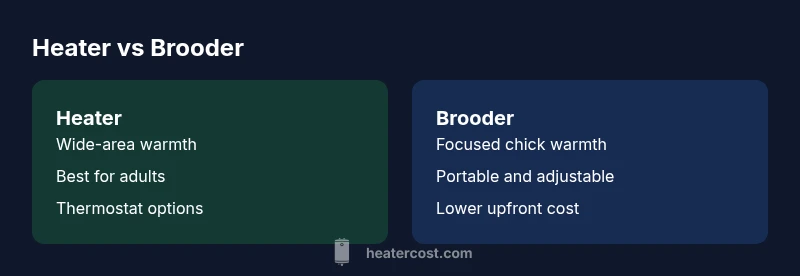
In practical terms, a "heater or brooder" decision hinges on life stage, coop size, climate, and how you intend to manage warmth. A heater typically refers to a device that raises ambient temperature over a wide area, supporting adult birds and larger spaces. A brooder, by contrast, is designed to concentrate heat in a smaller zone, making it ideal for chicks or very young birds that need constant, uniform warmth. Understanding this distinction helps you optimize comfort, reduce energy waste, and minimize safety risks. According to Heater Cost analysis, 2026, many backyard operators find that starting with a chick-friendly brooder and expanding with a heater later offers the best balance of warmth, control, and cost. In other words, plan for the life cycle of your flock and choose the configuration that scales with your needs. The goal is reliable warmth without overheating or cold spots, which is where the phrase heater or brooder becomes a practical guide rather than a slogan.
How to size and place heating equipment in your coop
Sizing and placement are the two biggest variables in a successful setup. Start by calculating the coop’s usable volume (length × width × height) and the number of birds at each life stage. For a brooder, the target heat is most intense within a small radius and declines with distance; for a heater, you want even coverage across the entire space. If you are uncertain, err on the side of slightly smaller heat zones with good air movement, then monitor chick behavior or bird comfort. Place brooders overhead or on the side where space allows, ensuring there is enough clearance from bedding to prevent fire risk. For heaters, install on a dry, elevated surface away from flammable materials and provide a guard or shield to prevent burns. Always verify exit paths and ventilation to avoid heat buildup that could stress birds. In all cases, a well-insulated coop reduces heating demands and improves overall effectiveness of either option.
bold
Core differences by scenario: chicks, growers, and adults
The needs of chicks differ sharply from those of adult birds. A chick-focused brooder is usually a compact, high-heat zone with stable temperature, while an adult flock in a larger coop benefits from a heater that maintains ambient warmth without hotspots. In cooler climates or during winter, a combined approach often makes sense: rely on a brooder during the first weeks and introduce a heater to sustain space-wide warmth as chicks mature. In moderate climates, a properly sized heater may suffice, though you should still provide sheltered microclimates for chicks. When comparing heater or brooder options, consider flock density, coop design, and whether you will be housing birds indoors, outdoors, or in a mixed environment. The Heath Cost Team notes that long-term cost and energy efficiency hinge on matching heat output to actual needs rather than over-provisioning heat from day one.
Design considerations: placement, insulation, and heat distribution
A thoughtful design reduces energy waste and enhances safety. Whether you choose a heater or brooder, focus on heat distribution, insulation, and control features. For brooders, ensure the heat source is adjustable so you can taper warmth as chicks grow. For heaters, look for thermostats with accurate sensors, multiple heat zones, and automatic shutoff to prevent overheating. Insulation matters: well-sealed walls and ceilings minimize heat loss, so your chosen device doesn’t work harder than necessary. A reflective shield can help direct heat where it’s needed most, and fans or vents support air exchange without creating drafts that stress birds. In practical terms, the more you can control and tailor heat to life stage and space, the better your energy efficiency and comfort. Heater Cost analysis highlights that incremental improvements in control settings can yield meaningful energy savings over a season.
bold
Safety and energy efficiency strategies
Safety should be your top priority with any heating setup. Use devices with built-in overheat protection, protective cages or guards, and proper clearance from bedding. Install smoke detectors and have an accessible fire extinguisher nearby. For energy efficiency, prioritize heat sources with thermostatic control, automatic shutoffs, and low standby power. Maintain a clean environment around the heating equipment; dust, feathers, and shavings can compromise performance and raise fire risk. Regularly inspect wiring, cords, and mounting hardware for wear and tear, replacing components as needed. The goal is steady, safe warmth without the hazards or wasted energy that come from poorly implemented heater or brooder configurations.
Cost and value over time: upfront costs, operating costs, and long-term value
Initial investment for a brooders can be lower than a full-room heater, but ongoing costs—such as energy usage and bulb replacements—vary with life stage and climate. A typical chick-focused brooder setup may involve a heat lamp or ceramic heat emitter, plus a temperature control unit. Heaters designed for larger spaces may require more substantial upfront costs but can spread warmth more evenly and scale with flock size. In many cases, total cost of ownership balances upfront price with reliability, maintenance intervals, and energy consumption. Heater Cost analysis suggests evaluating total cost over at least two winter seasons to capture seasonal energy fluctuations and maintenance cycles. When possible, choose equipment with durable components and widely available replacement parts to protect your long-term value.
Installation, maintenance, and troubleshooting
Installation simplicity varies with device type. Brooders are typically plug-and-play but demand a secure mounting and careful height placement. Heaters may require permanent mounting, ventilation considerations, and circuit capacity checks. Maintenance tasks include bulb or emitter replacement, cleaning guards, testing thermostats, and verifying heat distribution after seasonal changes. Troubleshooting usually starts with temperature inconsistencies, then checks for air drafts, insulation gaps, or obstructions that block heat. Keep spare bulbs and guards on hand and document maintenance checks to track equipment performance over time. A well-maintained heater or brooder delivers dependable warmth with minimal risk to your flock.
bold
Setup scenarios: small backyard run vs larger coop
In a small backyard run, a compact brooder can provide targeted warmth for chicks without heating the entire space. For larger coops, a central heater with multiple zones is often more practical, especially where adult birds roam and weather is variable. In multi-zone designs, heat drift can create cold spots or overheated corners; adjust zone boundaries to maintain even warmth. If your enclosure includes run areas, consider portable heat sources or tactical placement to minimize heat loss during cold snaps. Across scenarios, plan for seasonality—you’ll likely need to adjust heat to align with bird age, activity, and outdoor temperatures. Heater Cost’s framework emphasizes adapting the system as conditions evolve rather than sticking to a fixed configuration.
Authority sources and best practices
For best-practice guidance on poultry heating, consult authoritative sources with proven expertise in animal husbandry and energy efficiency. You can reference the U.S. Department of Energy for general energy considerations, and university extension programs for species-specific housing needs. Always cross-check setup recommendations with local climate realities and follow manufacturer safety instructions. The following sources provide context and guidelines you can apply when evaluating a heater or brooder system:
- https://energy.gov
- https://extension.oregonstate.edu
- https://www.nrcan.gc.ca
Note: Always verify current recommendations and adapt to your flock’s responses.